

Will the REDD+ Programme Protect KP’s Forests?
Shah Khalid Shah
Peshawar: Twenty years ago, the residents of Khar tehsil in Bajaur planted a vast eucalyptus forest across hundreds of hectares of communal mountain land with support from the Forest Department.
The plantation grew into a dense forest and became a valuable local asset. But four years ago, financial hardship forced the community to sell the forest to a timber merchant for millions of rupees.
Today, the same timber merchant has returned with another offer.
“For us, forests are often the only immediate source of cash during emergencies,” said Habib-ur-Rehman, a resident of Khar. “Poverty and underdevelopment are widespread in our area. The community decided to sell the forest and distribute the money among ourselves to meet urgent needs.”
Read More: https://thepenpk.com/why-are-bajaurs-fields-disappearing/
The story of Bajaur reflects a broader environmental crisis unfolding across Pakistan’s tribal districts and other underdeveloped regions. Forests planted over decades are increasingly being cut down to finance household expenses, weddings, medical emergencies, or migration.
Old trees surrounding homes are also routinely felled for fuel or sale, steadily eroding the natural landscape.
Environmental experts warn that deforestation not only destroys biodiversity and weakens ecosystems, but also contributes significantly to climate change. Globally, deforestation is estimated to account for between 17 and 29 percent of greenhouse gas emissions, as forests play a crucial role in absorbing atmospheric carbon dioxide.
Against this backdrop, Khyber Pakhtunkhwa is now moving toward implementing REDD+, an international climate mechanism designed to reduce emissions from deforestation and forest degradation while generating financial incentives for forest protection.
The central question, however, remains: can REDD+ realistically protect KP’s forests while also addressing the poverty that drives people to cut them down?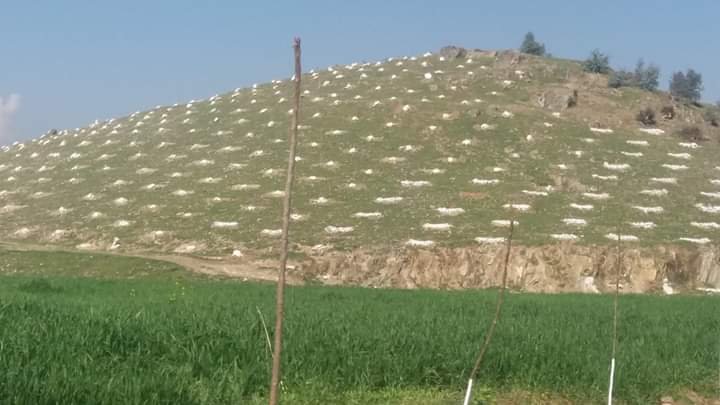 Pakistan’s Long Road to REDD+
The REDD+ programme was first introduced in Pakistan in 2013 in Sindh before later expanding to Khyber Pakhtunkhwa and Punjab.
According to Latif-ur-Rehman, spokesperson for the KP Department of Forestry, Environment, Climate Change and Wildlife, the province has spent nearly a decade laying the legal and institutional groundwork necessary for participation in international carbon markets.
“The Readiness Phase formally began in KP in 2014,” he explained. “This involved developing legal frameworks, institutional reforms, carbon policies, safeguard mechanisms and provincial strategies according to international standards.”
The process required coordination with Pakistan’s Ministry of Climate Change and alignment with United Nations climate frameworks linked to REDD+ and the Paris Agreement.
Legal amendments to provincial forestry laws were introduced in 2022 and 2024 to address issues such as land settlement, ownership rights, benefit-sharing systems and environmental safeguards.
Officials say these reforms were essential because international investors and verification agencies require strong legal protections before investing in carbon market projects.
Read More: https://thepenpk.com/wildlife-is-disappearing-in-bajaur/
A Carbon Framework was eventually developed in 2024, alongside mechanisms governing revenue sharing among the government, private investors and local communities.
Meanwhile, the Pakistan Forest Institute (PFI) in Peshawar conducted carbon inventory studies and generated baseline forest data required for future carbon credit projects.
the Promise of New Revenue
The second phase of the programme began between 2022 and 2023 and focuses on feasibility studies, project development and pilot initiatives.
A province-wide forest carbon stock feasibility survey, completed in September 2025, estimated the total carbon reserves stored within KP’s forests. The survey was later approved by the Chief Minister, formally paving the way for carbon marketing projects in the province.
Under the REDD+ mechanism, forests can generate “carbon credits” by storing carbon and preventing emissions from deforestation. One metric ton of stored carbon equals one carbon credit, which can be sold on international carbon markets. Prices fluctuate globally, ranging from approximately $3 to $30 per credit.
Credits can be earned through afforestation, forest protection and reforestation projects.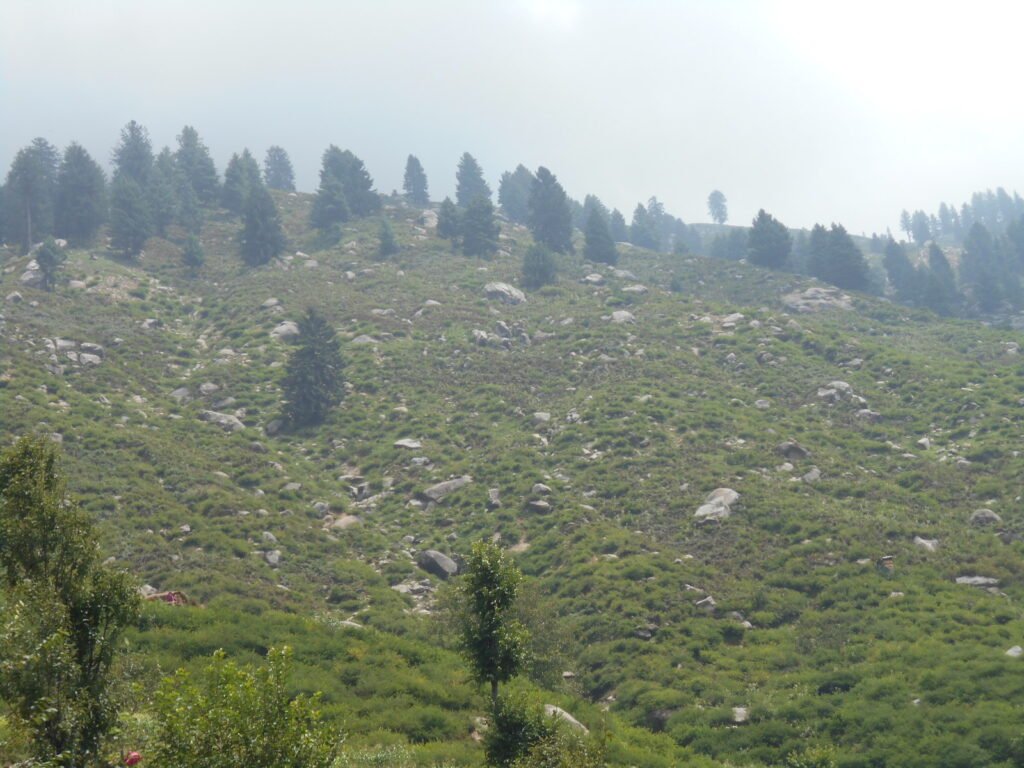 Officials believe KP’s forests, particularly in Hazara, Malakand and southern districts, possess significant potential for generating carbon revenue.
However, accessing global carbon markets is highly technical and expensive. Projects must first be designed by private consultants and investors, then registered with international certification bodies such as VERRA.
Independent organisations subsequently conduct monitoring, validation and verification before credits can be traded internationally.
Because of the high costs involved, the provincial government plans to rely heavily on private investors and consultants to manage the process.
Communities at the Centre or at the Margins?
For REDD+ to succeed, officials acknowledge that local communities must remain central participants.
Under international REDD+ rules, projects with weak community involvement are unlikely to receive approval. Provincial authorities say local populations will receive a share of carbon revenues through a formal Benefit-Sharing Mechanism.
Beyond direct payments, investors are expected to finance local welfare and climate-friendly initiatives under corporate social responsibility programmes. These may include plant nurseries, solar and micro-hydropower projects, mushroom farming and beekeeping schemes.
“The community stands to benefit immensely,” said Latif-ur-Rehman. “Without local participation, these projects cannot succeed.”
Yet the deeper challenge remains unresolved: can carbon finance generate enough stable income to compete with the immediate financial returns communities receive from cutting and selling forests?
Read More: https://thepenpk.com/a-hunters-lament-as-bajaurs-wetlands-disappear/
In districts like Bajaur, where poverty, unemployment and weak infrastructure dominate daily life, forests often function as informal savings accounts, assets that can quickly be converted into cash when crises arise.
This economic reality raises concerns among environmental observers that conservation alone cannot succeed without parallel investments in rural livelihoods and social development.
Sustainable Forestry or Restricted Access?
Officials insist REDD+ does not prohibit timber harvesting altogether.
Under international guidelines, controlled harvesting carried out through scientific forest management is considered compatible with carbon conservation. Authorities describe this approach as “Sustainable Forest Management,” allowing selective cutting, removal of fallen trees and forest maintenance without significantly reducing long-term carbon stocks.
At the same time, international investors generally prefer large-scale projects. Current feasibility assessments suggest that at least 10,000 hectares of forest area are needed to attract commercially viable investment.
This may create additional challenges in areas where forests are fragmented across communal ownership systems or disputed lands.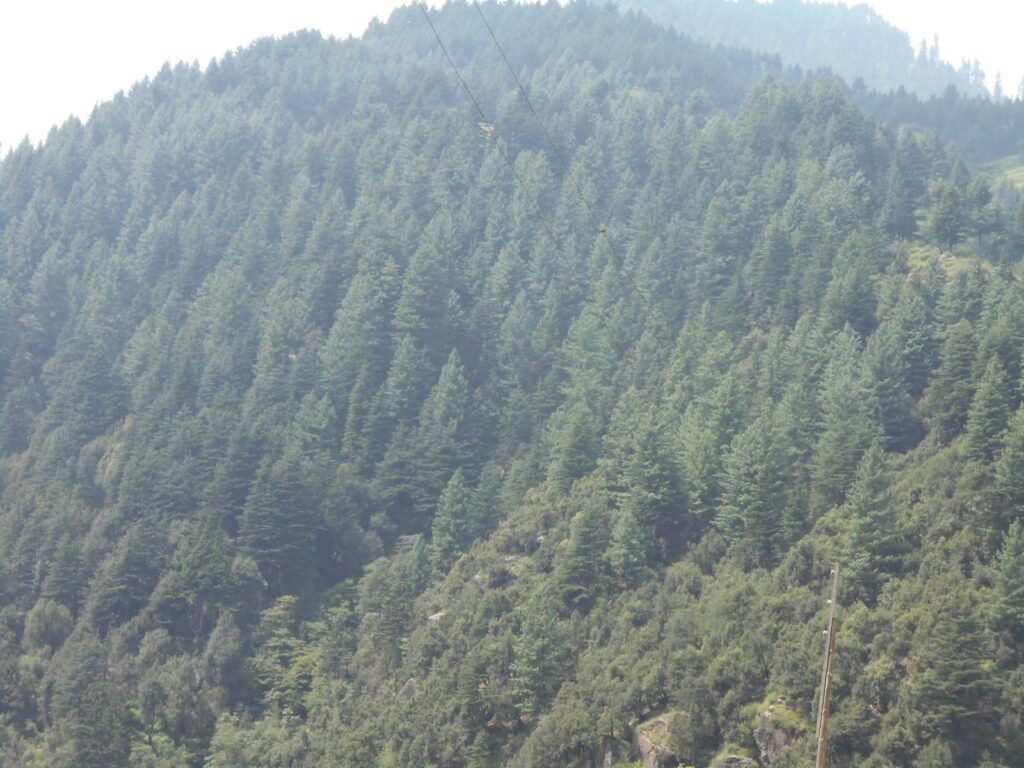
Why Did Implementation Take So Long?
Critics have questioned why REDD+ implementation in KP has taken more than a decade since its introduction.
Provincial officials argue that the delay was unavoidable due to the complexity of legal reforms required under international frameworks.
“Land settlement, ownership systems and forest governance had to be clarified first,” Latif-ur-Rehman explained. “When global investors commit resources, they examine every legal detail.”
These reforms, officials say, were necessary to create investor confidence and ensure compliance with international climate agreements.
A Five-Year Horizon
Despite the lengthy preparation period, provincial authorities remain optimistic.
“If the remaining technical stages proceed smoothly, environmental and financial benefits could begin appearing within the next five years,” Latif-ur-Rehman said. “If complications arise, it may take longer. But successful implementation can provide sustainable long-term benefits for both the government and local communities.”
For communities like Habib-ur-Rehman’s in Bajaur, however, the future of REDD+ may ultimately depend on whether climate finance can genuinely replace the economic pressures driving deforestation.
Until then, forests in many parts of Khyber Pakhtunkhwa will continue to stand at the intersection of poverty, survival and environmental protection.

Comments are closed.