

Wildlife is Disappearing in Bajaur
Shah Khalid Shah
Bajaur: In the rugged landscape of Bajaur District, memories of a once-thriving natural world still linger in the stories of its elders.
Eighty-five-year-old Malik Haroon Khan of Dele village in Khar Tehsil recalls a childhood surrounded by dense forests, wide deserts, and deep ravines teeming with wildlife.
“Bears were so common in our village that we could not go into the fields alone,” he says, describing a time when leopards, wolves, jackals, porcupines, monkeys, rabbits, and countless birds were part of everyday life.
Encounters with predators were not rare. He remembers a bear attack that injured a child in his village, leading residents to kill the animal. He also recalls a friend’s face-to-face encounter with a leopard in the valleys of Bajaur, an encounter that ended only when the animal quietly walked away.
Today, such stories sound like distant echoes from another era.
Wildlife, experts explain, refers to all non-domesticated animals living in natural habitats, including forests and deserts. These ecosystems depend on animals not just for ecological balance but also for their beauty and resilience.
In countries that have invested in conservation, wildlife has become a powerful economic asset. Nations such as Kenya, Tanzania, Madagascar, Uganda, Thailand, Sri Lanka, Vietnam, and Cambodia earn significant revenue through wildlife-based tourism. Without animals, forests and deserts lose both their ecological function and their attraction.
A Twenty-Year Decline Driven by Hunting and Climate Stress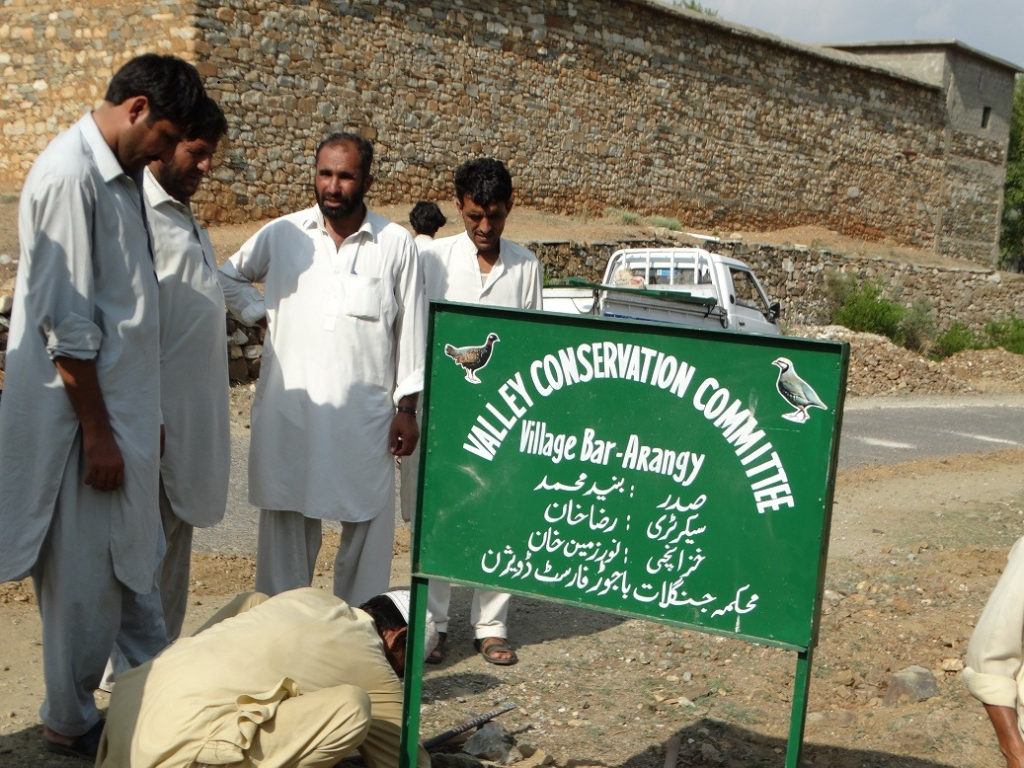 Over the past two decades, Bajaur’s wildlife has faced severe pressure from illegal hunting and worsening climate change impacts.
Environmental experts note that Pakistan is among the most climate-affected countries globally, ranking seventh among the ten most vulnerable nations.
In Khyber Pakhtunkhwa, wildlife experts describe how the province is divided into nine ecological zones supporting around 450 bird species.
In the merged districts, species such as Chakor, Quail, Murabi, Tanzre, Taro, and Sisai once flourished alongside seasonal and migratory birds. However, unchecked hunting and habitat loss have drastically reduced their numbers.
Muhammad Safdar, a wildlife expert, warns that migratory birds arriving from Central Asia have fallen from millions to only a few thousand in recent years.
The Vanishing Quail of Bajaur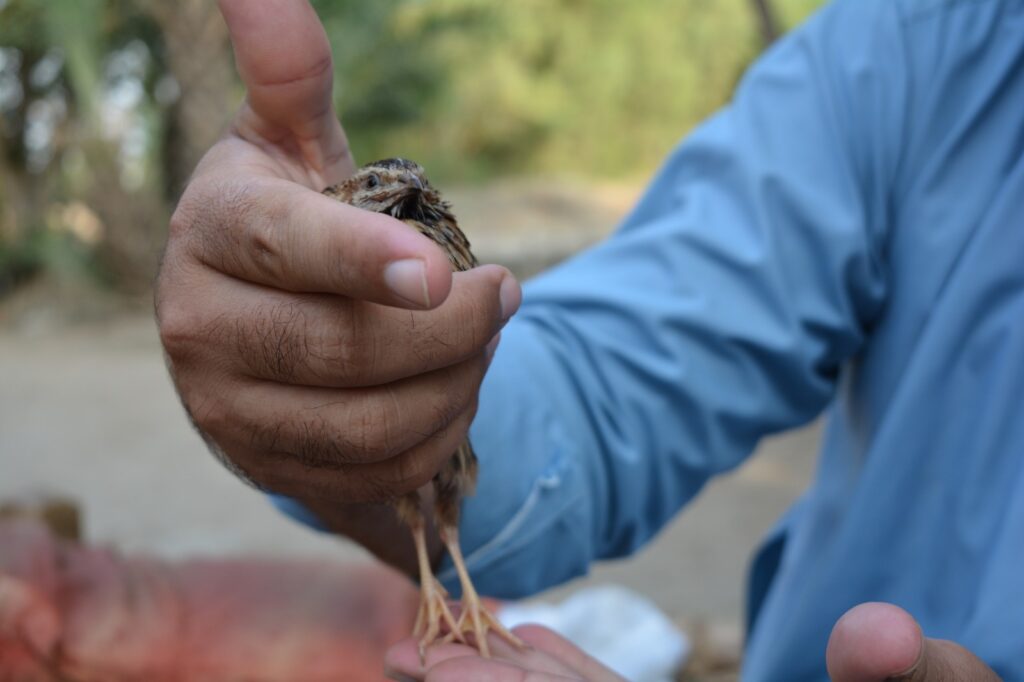
Few examples illustrate the crisis more clearly than the quail population. Abdul Rauf Khan, locally known as “Multan Baba,” has hunted quail for nearly five decades. He remembers a time when the “Quail Fair” in Khar tehsil was filled with activity, including bird gatherings and large catches.
“Ten years ago, a hunter could catch 300 quails in a single season,” he says. “Last year, I caught only two.”
He attributes the dramatic decline to modern hunting techniques such as net strips and electronic bird-call recordings, along with shrinking habitats caused by population growth.
Seventy-five-year-old Muhammad Muzaffar Khan recalls another lost species—the large vulture locally known as Qajirbaz. In the 1970s in Charmang Valley, he once tried to catch one himself.
“When it landed near me, I grabbed its legs,” he remembers. “But it dragged me across a field before escaping.”
Today, vultures have completely disappeared from the region, victims of habitat changes, human expansion, and shifting environmental conditions.
Field Evidence: Arang Valley Survey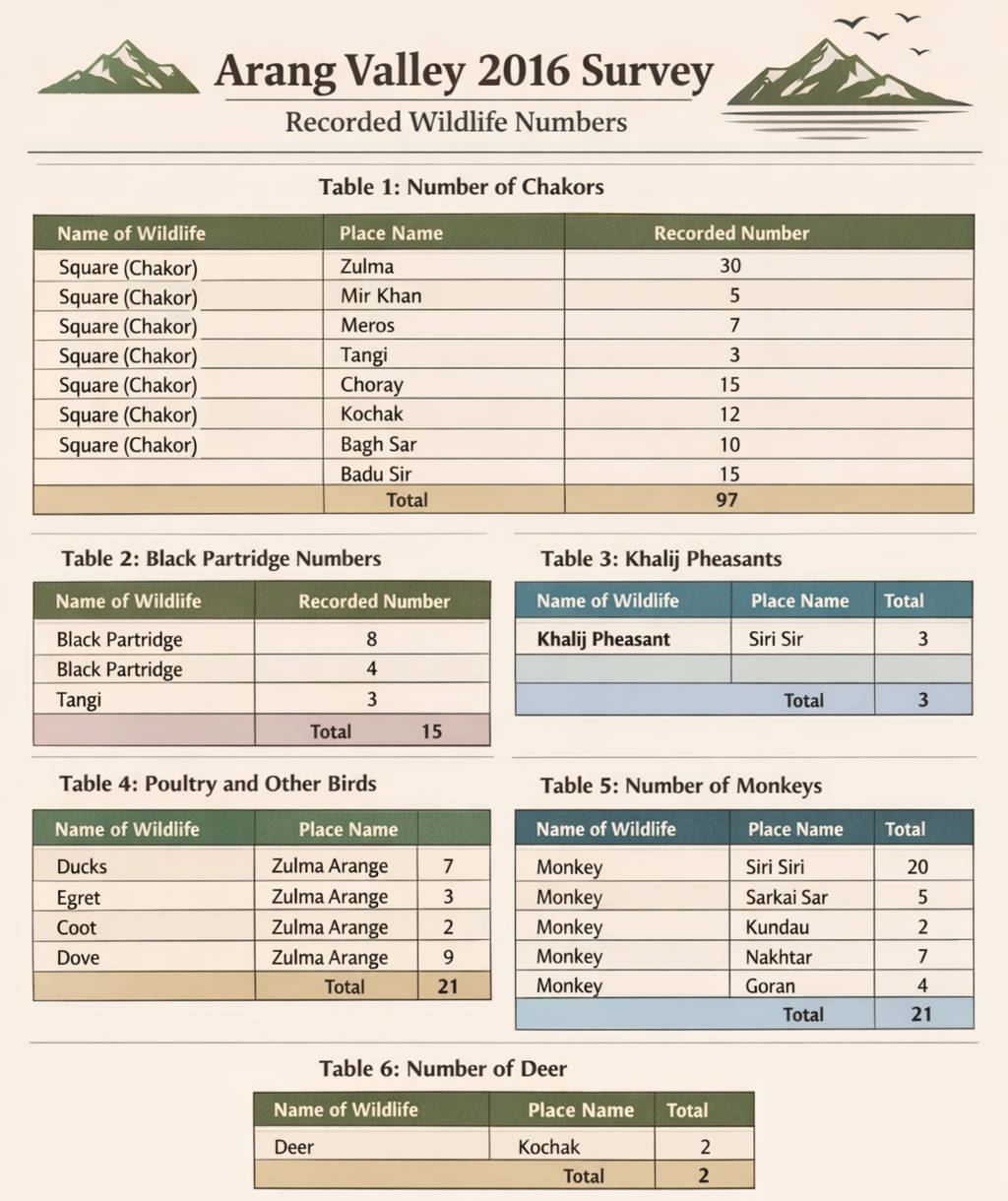 A wildlife survey conducted in 2016 by the Bajaur Forest Department in Arang Valley documented remaining species across the region. The findings revealed declining populations of both mammals and birds, reinforcing concerns raised by local communities.
Elders note that in the 1960s and 70s, species such as markhor and snow wolf were still present in Arang Valley, often deterring herders from grazing livestock in mountainous areas. By contrast, these species have now disappeared from the landscape.
Residents also recall a snow leopard sighting in 1998 in nearby Serisar forest, evidence that the ecosystem once supported high-altitude predators. Today, however, both forests and snowfall patterns have drastically changed.
Extinction at the Local LevelDeforestation, population pressure, and climate extremes have pushed several species to local extinction. Falcons, once valuable and widely traded, have also vanished as river systems dried up and habitats deteriorated.
Wildlife such as the wild cat, black bear, and common leopard are now considered extinct in the region. Others, including sable, fox, jackal, and wild rooster—are now classified as endangered and struggling to survive.
Read More: https://thepenpk.com/why-are-turtle-deaths-rising-on-balochistans-coast/
Despite the alarming decline, conservation efforts are underway. The Wildlife Department of Bajaur has initiated community-based programs, forming local conservation committees in Mamond, Arang, and Salarzai.
Muhammad Tayyab, a social organizer, says awareness campaigns in schools and villages are beginning to change attitudes toward hunting and conservation. In one recent example, residents successfully rescued a gray deer near Kaimur Mountain, signaling a growing sense of environmental responsibility. Attempts at restoration have faced setbacks. Bird breeding centers established in 2012 have not been fully revitalized since birds were relocated several years ago. Experts warn that without urgent intervention, more species will disappear permanently.
Protected breeding zones have now been identified in Barang, Mamond, and Salarzai valleys, where hunting is strictly prohibited in an effort to allow ecosystems to recover.
Yet zoologist Imdad Khan warns that time is running out. Species such as wild cats, black bears, and leopards have already been lost locally, and remaining populations are fragile.
A Landscape at a Crossroads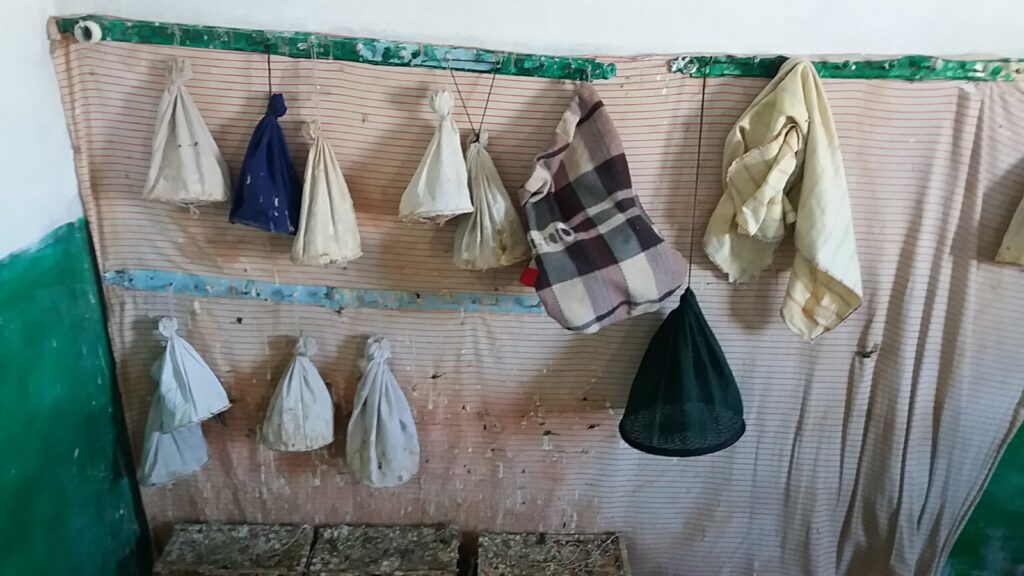 From abundant forests filled with predators and birds to silent valleys where wildlife has nearly vanished, Bajaur’s ecological transformation reflects a broader environmental crisis across Pakistan.
For local communities and conservation officials alike, the message is clear: without urgent and sustained action, the natural heritage of Bajaur may survive only in memory.
Photos credit: Shah Khalid Shah

Comments are closed.