

Children of Quetta Living with Asthma in Polluted Air
Nadeem Khan
Quetta: In Pakistan’s southwest city of Quetta, dust often hangs visibly in the air. For many residents, breathing has become a daily struggle, especially for children suffering from asthma.
Outside the doctor’s room at the Children’s Hospital Quetta, 11-year-old Khalida sits with her mother, waiting for her turn.
She is an asthma patient and frequently visits the hospital when breathing becomes difficult.
“My daughter’s health gets worse when she goes outside or when there is too much dust,” says her mother, Noureen.
“She starts coughing, wheezing, and becomes short of breath.”
She adds that the family tries to keep Khalida indoors as much as possible and ensures she uses a mask outdoors. “But dust still enters the house. Sometimes she suddenly becomes breathless.”
Quetta, the capital of Balochistan, lies in a dry valley surrounded by mountains.
The region is among the most climate-vulnerable areas of Pakistan. Although the city is often considered less polluted than major industrial centres due to the absence of heavy industry, experts say its air quality is still significantly affected by multiple factors.
Dust from the surrounding arid terrain remains a constant natural contributor. This is compounded by vehicular emissions, diesel engines, and the burning of wood and coal in some households. Fine particulate matter, PM2.5 and PM10, is particularly harmful, as it can penetrate deep into the lungs and trigger inflammation.
At the Children’s Hospital Quetta, Dr Rizwana Tareen, a child specialist, says asthma cases among children remain consistently high, with environmental factors playing a major role.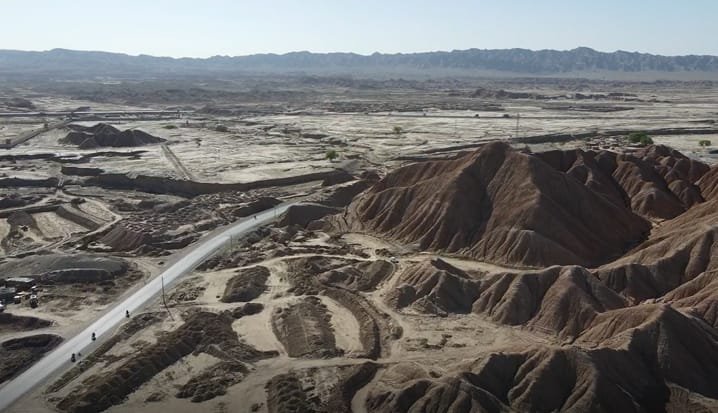
“Most of the children we see with asthma have clear environmental triggers,” she explains. “Dust, smoke, and polluted air are the most common causes behind their symptoms.”
She describes a recurring clinical pattern in which children admitted with severe breathing difficulties often have a history of repeated wheezing and shortness of breath, especially after outdoor exposure. This, she says, reflects environmentally triggered asthma, where continuous exposure to polluted air contributes to chronic respiratory illness.
Asthma, she explains, is a long-term respiratory disease that makes breathing difficult. Medical experts widely recognize environmental triggers, particularly air pollution, as key factors that worsen symptoms and increase the frequency of attacks.
Read More: https://thepenpk.com/the-looming-ecological-crisis-in-sindh/
Quetta sits at an elevation of around 1,680 meters above sea level. Experts note that its dry air, suspended dust particles, and lower oxygen levels can further aggravate respiratory conditions such as asthma.
Recent air quality readings reported by monitoring platforms like AccuWeather have shown that Quetta occasionally reaches “very unhealthy” Air Quality Index (AQI) levels, largely due to high concentrations of particulate matter, especially PM10 dust.
Professor Sanaullah, an expert in public health geography, says Quetta’s deteriorating air quality is driven by both natural dust and human activity, including vehicle emissions and fuel burning. He warns that particulate pollution is emerging as a serious public health concern in the region.
“Air quality data show that pollution levels in Quetta remain a concern,” he says. “Reducing exposure to PM2.5 and PM10 pollutants is important to prevent respiratory illnesses and protect public health.”
According to the Journal of the Pakistan Medical Association (JPMA), asthma is one of the major non-communicable diseases in Pakistan, with air pollution identified as a key contributor to rising hospital admissions.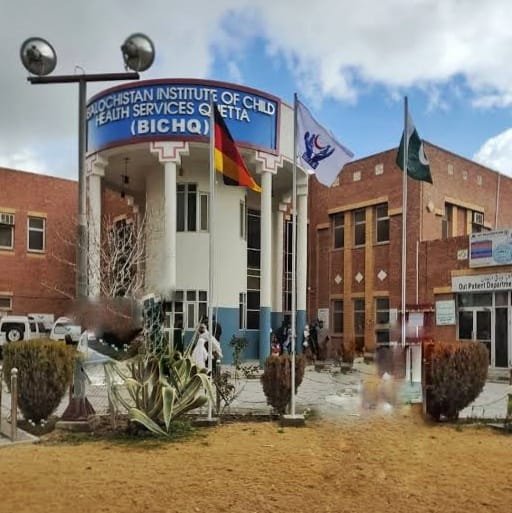
The World Health Organization (WHO) reports that air pollution causes millions of premature deaths globally each year and remains one of the leading environmental risk factors for disease.
It identifies fine particulate matter as a major driver of respiratory and cardiovascular illnesses, particularly affecting low- and middle-income countries like Pakistan.
Across the country, air pollution has become a widespread public health challenge beyond Quetta. Major cities such as Lahore, Karachi, Peshawar, and Islamabad frequently experience poor air quality, especially during winter smog seasons.
High vehicle emissions, industrial activity, construction dust, and crop residue burning combine to intensify pollution levels.
Experts note that in many cases, conditions in these larger cities can be even more severe, contributing to rising respiratory illnesses nationwide.
Health experts emphasize that addressing asthma in Quetta requires a multi-layered response, including stronger air quality monitoring and stricter enforcement of emission controls.
“From a clinical perspective, most asthma cases can be managed with treatment and inhalers,” says Dr Tareen. “However, repeated exposure to polluted air continues to trigger relapses and worsen patient outcomes.”
The Balochistan Environmental Protection Agency (EPA) says it is working to strengthen air quality monitoring across the province. According to Director General Ibrahim Baloch, the agency is establishing 10 environmental testing laboratories and introducing an AI-based Air Quality Index system aimed at improving pollution control, enforcing environmental laws, and enhancing public health protection.
For families like Khalida’s, however, the reality remains difficult.
“There are no warnings. We don’t know when the air is worse,” says Noureen. “We only realize it when her breathing gets bad.”
In Quetta’s dusty air, this uncertainty has become part of everyday life, where breathing itself is no longer guaranteed to be easy.

Comments are closed.