

When Heat Steals Milk
Shah Khalid Shah
Bajaur: As the first light of dawn spreads across the mountains of Bajaur, 55-year-old dairy farmer Shaal Pacha begins another day among the cows that have sustained his family for decades.
Inside his dairy farm in the Gang area of Khar tehsil, eighteen high-quality cows wait to be fed, watered and cared for.
For more than 20 years, these animals have provided not only a livelihood for Shaal Pacha but also employment for five other workers.
Yet despite his years of experience and careful management, something has changed.
The cows that once produced abundant milk are no longer yielding what they used to.
“I don’t know much about climate change,” Shaal Pacha admits, “but I know my cows are producing less milk than before.”
His observation reflects a growing reality faced by dairy farmers across Pakistan.
While climate change is often discussed in terms of melting glaciers, floods and droughts, another quieter crisis is unfolding inside cattle sheds, where rising temperatures, changing seasons and shrinking fodder supplies are steadily reducing milk production.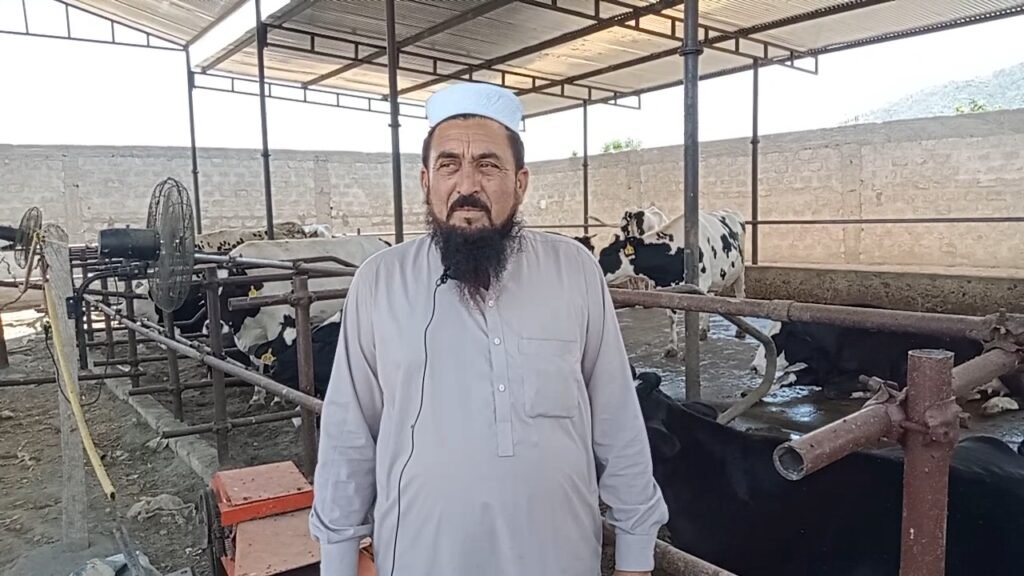 A Business Under Pressure
For three decades, Shaal Pacha’s family has been involved in selling milk, and for the last twenty years they have operated their own dairy farm. The business represents an investment of around Rs8 million.
The farm currently produces around 300 kilograms of milk every day, but that figure has been declining over the past three to four years.
“We take every precaution to protect our cows from disease,” he says. “But summers have become extremely hot and winters much colder. The animals don’t get the environment or feed they need, and milk production has dropped.”
Each of his imported high-yield cows previously produced between 15 and 25 kilograms of milk daily. Now, every animal produces three to four kilograms less on average.
Earlier, milk production mainly declined during winter. Today, even the summer season brings lower yields.
Heat has created another problem. Mosquitoes multiply rapidly during the hotter months, disturbing the cattle and affecting their health.
“I’ve sprayed every insecticide available,” Shaal Pacha says. “But the mosquitoes keep increasing.”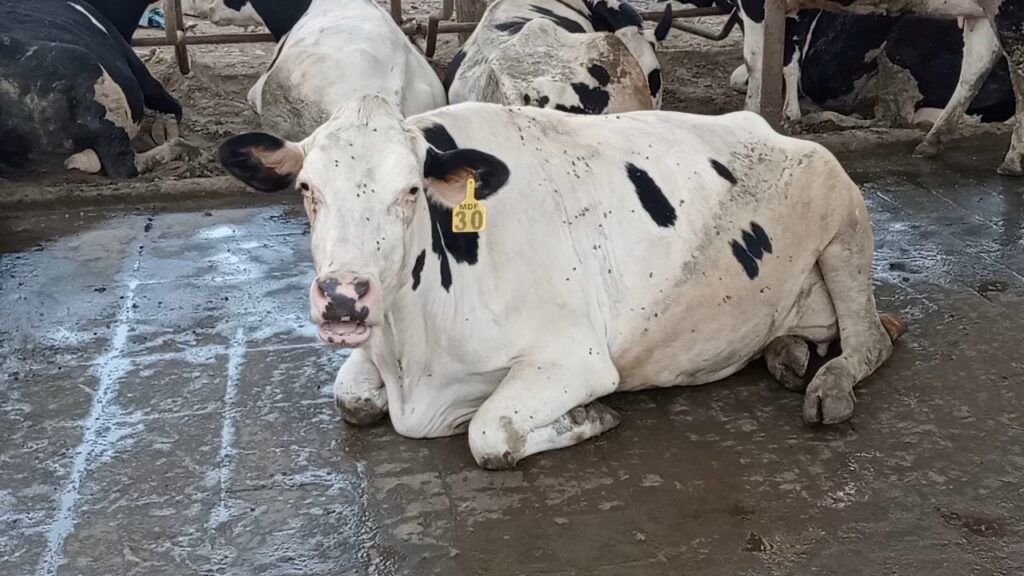 Climate Change Hits Close to Home
Although farmers may not use scientific terms like “heat stress” or “climate resilience,” they are witnessing climate change firsthand.
In Bajaur, temperatures have become increasingly unpredictable. Hotter summers require dairy farmers to install fans and continuously spray water over their animals to keep them cool.
“Fans now run twenty-four hours a day,” Shaal Pacha explains. “That means much higher electricity costs, and we still can’t stop production from falling.”
Feed has become another challenge.
Silage and green fodder are often unavailable during extreme weather, making it difficult to provide balanced nutrition to dairy animals.
More Than Farmer’s Problem
Livestock is one of the most important sources of income in Bajaur.
According to the 2023 census, Bajaur district has a population of 1,287,960. After agriculture, livestock is the district’s second-largest source of livelihood.
A 2021 livestock baseline survey conducted by the Livestock Department recorded more than 300,000 cattle, over 10,000 buffaloes, around 74,000 sheep and approximately 158,000 goats across the district.
The department estimates annual milk production at around 350 million litres, while local demand stands at approximately 130 million litres, making dairy farming an essential contributor to both household incomes and food security.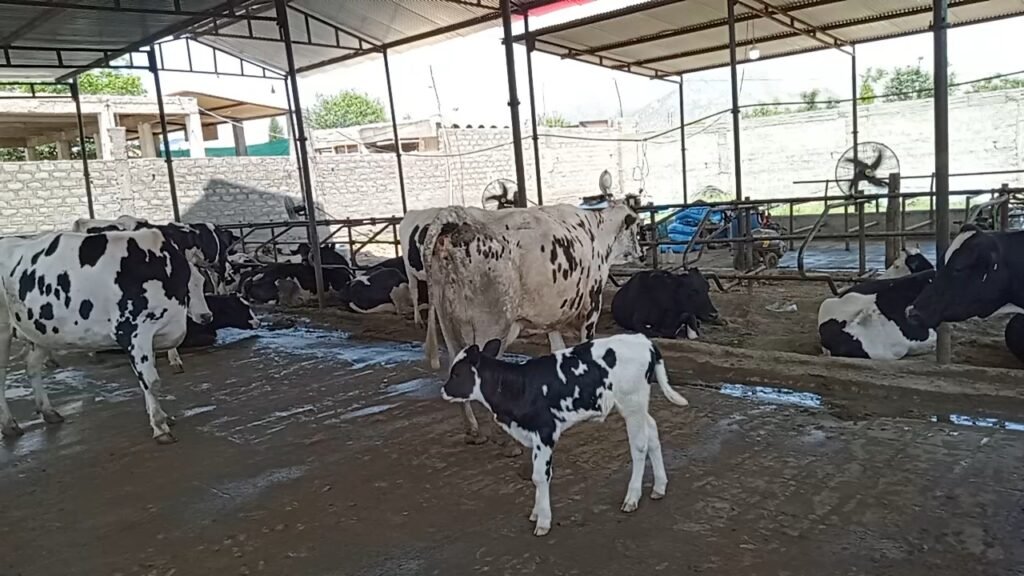 Small Farmers Feel Impact
The changing climate is not only affecting commercial dairy farms.
Fawad Khan keeps a cross-bred cow at his home that once produced four kilograms of milk every day.
One kilogram was sold in the local market while the remaining milk met his family’s daily needs.
“The income from selling just one kilogram covered the cost of keeping the cow,” he says.
But within four months, milk production fell by half.
Now he has stopped selling milk altogether and keeps the remaining supply for his household.
“I feed the cow properly,” he says. “I don’t understand why the milk has decreased.”
Like many small livestock owners, he is considering buying another cow, believing perhaps the current breed is not suited to the local climate.
A Shrinking Supply Chain
The effects of declining milk production are also visible in Bajaur’s markets.
For fifteen years, Haji Naimat Khan has operated a milk shop in Siddiqabad Phatak Bazaar.
Every day, milk collectors bring him around 600 kilograms of milk from different parts of the district.
But during winter, that amount often falls to just 300 kilograms.
“My customers keep demanding more milk,” he says. “But the suppliers tell me their cows simply aren’t producing as much anymore.”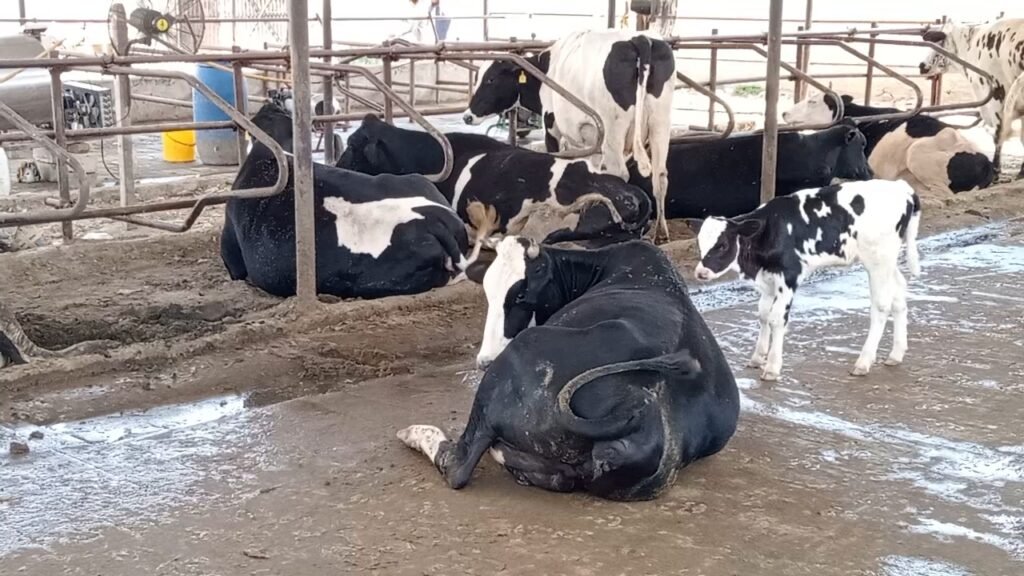 Why Heat Reduces Milk
Dr. Qazi Zia-ur-Rehman, an artificial insemination specialist for dairy cattle in Khyber Pakhtunkhwa, says scientific evidence strongly supports what farmers are observing.
According to him, dairy animals experience much greater stress during hot weather than during cold seasons.
“Cows need feed equal to about ten percent of their body weight to achieve optimum milk production,” he explains.
For every kilogram of milk produced, approximately two kilograms of feed should be provided.
That feed should include both green fodder and dry roughage.
However, climate change is disrupting this balance.
June and July often bring shortages of fresh fodder, leaving animals without sufficient nutrition exactly when high temperatures increase their physical stress.
Pakistan also imports high-yield dairy breeds, particularly Friesian and Jersey cattle, originally developed in cooler countries such as Australia and parts of Europe.
Although these breeds possess excellent genetic potential, they rarely produce the same quantity of milk under Pakistan’s hotter climatic conditions.
“When these animals come here, their production declines because our summers are much hotter than the environments they were bred for,” Dr Rehman says.
“The combination of heat stress, changing weather patterns and feed shortages is reducing milk production.”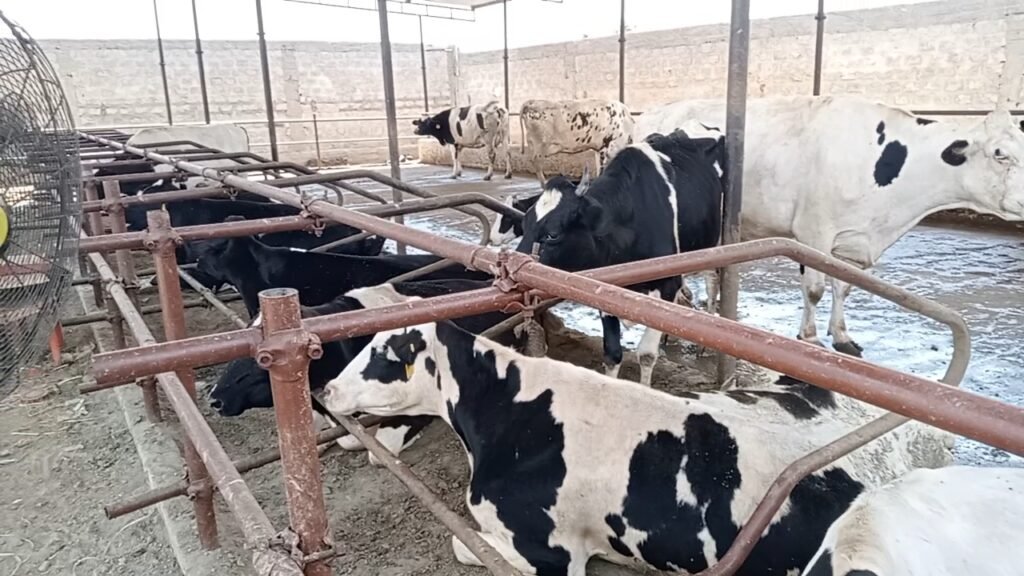 Improving Genetics
To improve dairy productivity in the former tribal districts, the government has established an artificial insemination centre in Jamrud, Khyber District.
The centre maintains high-quality foreign bulls whose semen is used to inseminate local cows through cross-breeding.
The objective is to develop animals that combine higher milk production with better adaptation to local environmental conditions.
Several years ago, the government introduced a Dairy Development Scheme in Bajaur.
Twenty dairy farms were established, with each receiving five cows.
Shaal Pacha was among the beneficiaries.
Today, however, only four or five of those farms remain operational.
According to him, many recipients had little experience in dairy farming.
Protecting cattle from disease, ensuring proper nutrition and managing animals under increasingly difficult weather conditions proved too challenging.
Many eventually sold their livestock and abandoned the business.
Living With Changing Climate
Dr. Qazi Zia-ur-Rehman believes that while climate change cannot be prevented at the farm level, its effects can be significantly reduced through better livestock management.
He recommends several practical measures:
Protect dairy animals from extreme heat by providing shade and reducing heat stress.
Bathe cows and buffaloes regularly during hot weather.
Ensure proper ventilation in animal shelters.
Keep barns clean and dry to prevent seasonal diseases.
Provide nutritional supplements during periods when green fodder is scarce, particularly in June and July, under veterinary guidance.
Closely monitor animal health and seek veterinary care whenever necessary.
Vaccinate cattle against seasonal diseases on time.
“If farmers adopt even seventy percent of these practices,” he says, “they will see significant improvements.”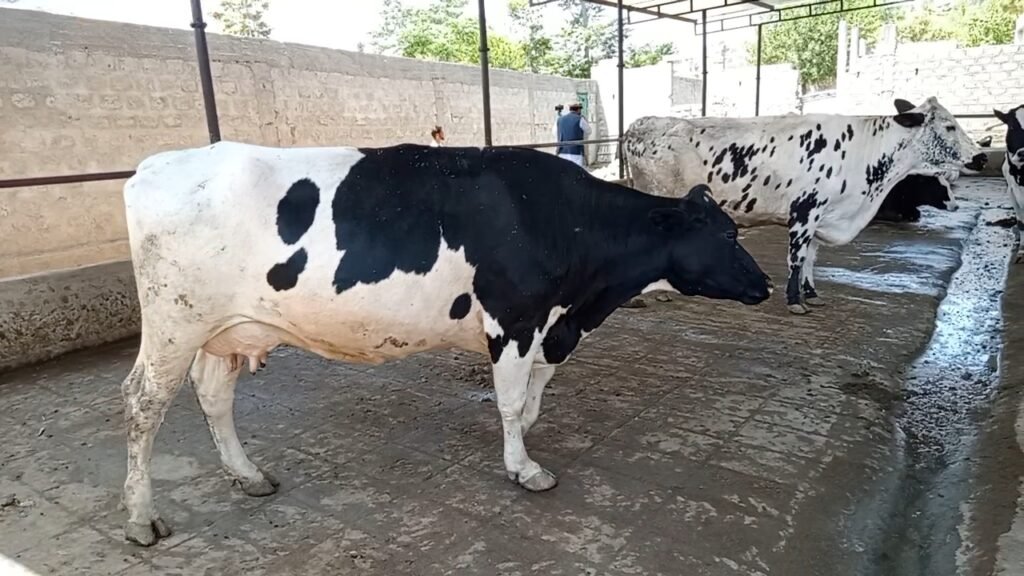 An Unseen Climate Crisis
For many people, climate change is measured by rising temperatures, shrinking glaciers or devastating floods.
For farmers like Shaal Pacha, it is measured differently, in the few litres of milk that disappear from every cow each day.
Those missing litres mean lower incomes, higher production costs and greater uncertainty for thousands of families whose livelihoods depend on livestock.
In Bajaur’s cattle sheds, climate change is not a distant environmental debate. It is a daily struggle unfolding quietly with every passing season, reminding farmers that the changing climate is reaching even the most ordinary corners of rural life.

Comments are closed.