

Pasni’s Sun-Dried Fish Trade Finds New Life
Zareef Baloch
Pasni: Beneath the harsh summer sun of Pasni, a centuries-old coastal tradition continues to survive, although its role has changed dramatically over the years.
The dried fish industry, once a major source of income for coastal communities, is now adapting to new market realities while still providing livelihoods for hundreds of people.
“We earn just enough here to keep our household running. Drying fish during the scorching summer is extremely difficult work, but because of unemployment, we have no other option. We earn between Rs35,000 and 50,000 a month,” says Mubarak, a worker associated with the dried fish business in Pasni for the past four years.
Originally from Karachi, Mubarak travels to Pasni for seasonal employment. He says business conditions have remained satisfactory in recent months. “As long as there are fish in the sea, this business will survive,” he adds.
Near Pasni Hor, small and low-quality fish that cannot be exported fresh are spread across open areas and dried naturally under the Sun. Once dried, the fish are transported to Karachi, where they are processed and used in poultry feed production.
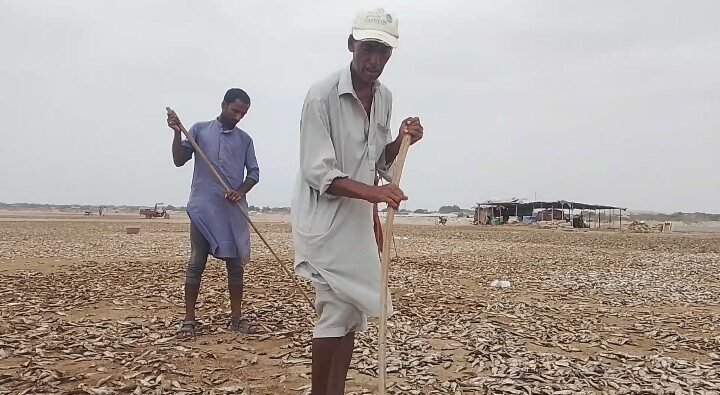
A fading industry with a long historyThe dried fish trade was once one of Pasni’s important economic activities. Before the introduction of cold storage facilities, fish caught from the Arabian Sea were cleaned, salted and dried under sunlight before being exported to Sri Lanka and other countries.
Since the 1970s, the industry provided employment to many families and contributed significantly to the local economy. However, technological advancements gradually transformed the fishing sector.
The arrival of cold storage facilities and refrigerated transportation made it easier to preserve and export fresh fish. As international markets increasingly preferred fresh seafood, demand for traditionally dried fish declined.
The expansion of modern fishing boats equipped with onboard cooling systems further reduced dependence on traditional preservation methods. Meanwhile, the growing use of household freezers also changed local consumption patterns, with communities shifting towards fresh fish.
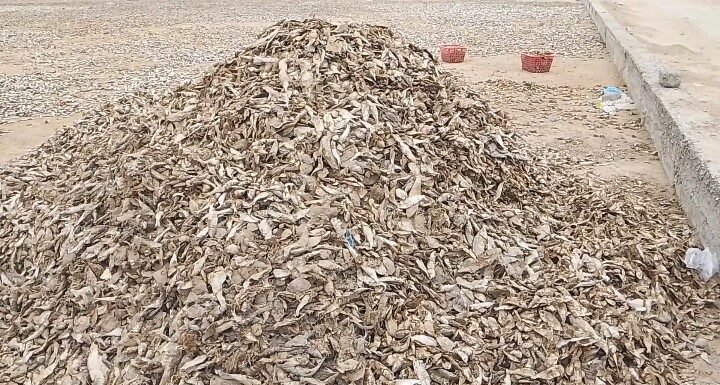
A business that found a new purposeDespite losing its former status, the dried fish trade did not disappear. Instead, it found a new role.
When large catches exceed market demand, or when a shortage of ice affects the quality required for fresh fish exports, the remaining catch is not wasted. Instead, it is dried under the sun and supplied to poultry feed manufacturers.
According to Mubarak, around 200 families in Pasni are still connected with this work. Every week, trucks carrying dried fish travel to Ibrahim Hyderi in Karachi, where the product is processed for poultry feed.
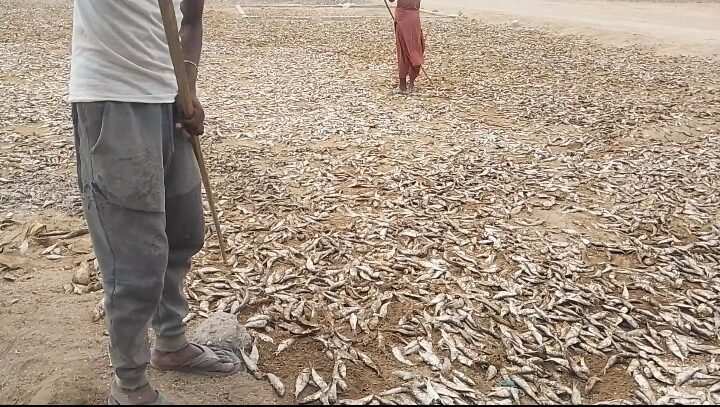
Hard work under open sky
For workers involved in the drying process, the job remains physically demanding. Labourers spend long hours outdoors, exposed to extreme heat while handling fish under the open sky.
An elderly worker at one of the drying sites says he earns around Rs1,000 per day, although work is not available regularly. He says unemployment has pushed many people towards this difficult occupation, where income depends on seasonal availability and fish supply.
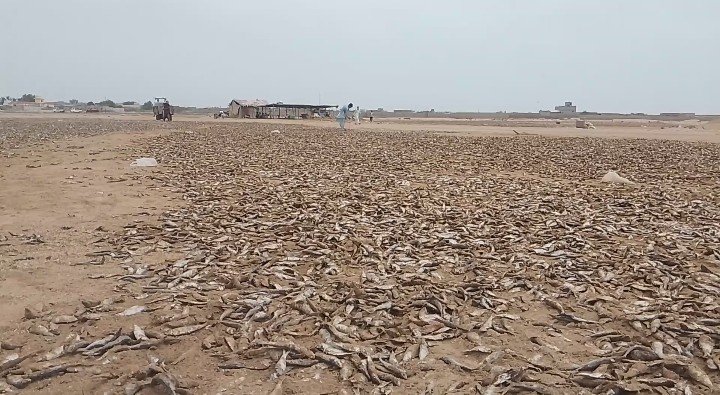
Calls for revivalMalik Jan KD, a writer and analyst from Pasni, believes the industry has lost much of its former importance but still holds economic potential.
He says introducing modern techniques, improving infrastructure and providing better facilities could help revive the traditional sector and create more sustainable employment opportunities.
Despite challenges and rising costs, he believes the dried fish business continues to support local families and indirectly benefits transport workers, including Suzuki pickup and rickshaw operators.
With investment, improved processing facilities and modern technology, Pasni’s dried fish industry could once again become a stronger contributor to the region’s economy while preserving a valuable part of the coastal community’s heritage.

Comments are closed.