

Nanawate: The Tradition Turning Blood Feuds into Forgiveness
Shah Khalid Shah
Bajaur: In the rugged tribal valleys of Bajaur, where disputes have historically escalated into generations of blood feuds, 80-year-old Muhammad Gul recalls a moment that still defines the moral fabric of his community: a killer forgiven, a family spared, and an enmity transformed into peace.
At the center of this transformation lies an ancient Pashtun institution known as Nanawate—a tradition of reconciliation in which even grave crimes, including murder, can be forgiven through collective mediation and appeals for mercy in the name of faith and honor.
Gul describes a case from Ghando area, where a man committed murder and immediately plunged his entire family into fear and social isolation.
Read More: https://thepenpk.com/a-hunters-lament-as-bajaurs-wetlands-disappear/
In tribal custom, responsibility extends beyond the individual; the entire family becomes vulnerable once a conflict begins. The accused admitted his guilt and was prepared to face punishment, but his family remained trapped in collective anxiety.
It was then that Gul, along with other village elders and a religious scholar, stepped in. Acting as mediators, they approached the victim’s family on behalf of the accused, urging forgiveness “for the sake of Allah” and emphasizing the spiritual reward of mercy over revenge.
The plea worked. The victim’s family agreed to forgive, bringing an abrupt end to the cycle of retaliation. In return, the jirga—traditional council of elders—was honored for its role in restoring peace, and prayers were offered for the bereaved family.
For communities like Bajaur, such moments are not exceptions but expressions of a deeply rooted system of conflict resolution.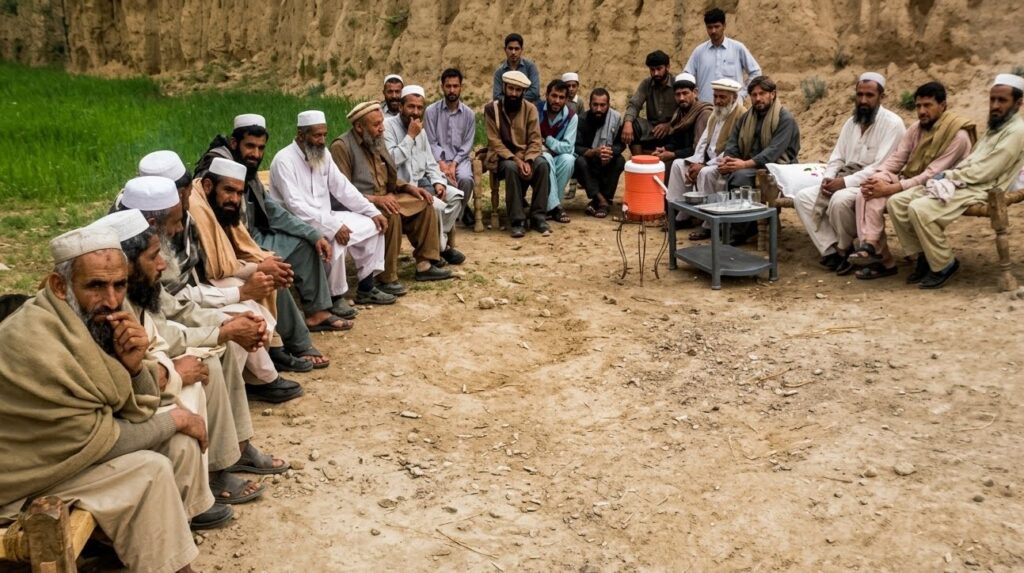 A Tradition Rooted in Reconciliation
According to local scholars, Nanawate is one of the most significant pillars of Pashtun social structure. Dr. Anwar Nigar, a researcher from Khyber Pakhtunkhwa, describes it as a mechanism that “eradicates hostility and social breakdown swiftly,” even in cases of homicide.
While the principle of retributive justice—often summarized as “an eye for an eye”—still holds cultural weight, Nanawate provides a parallel path: one grounded in forgiveness, honor, and religious appeal.
Depending on the severity of the crime, compensation may include symbolic offerings such as livestock or financial restitution. But its essence lies not in payment, rather in the public act of seeking pardon and restoring dignity between families.
How Nanawate Works
The process typically begins when the offender acknowledges wrongdoing and gathers a jirga of respected elders, scholars, and community figures—sometimes including women and children of the family. This delegation, often numbering between eight and fifteen people, travels to the victim’s home to formally seek forgiveness.
Read More: https://thepenpk.com/wildlife-is-disappearing-in-bajaur/
Elders ensure the meeting is witnessed by family members to maintain transparency. The visiting delegation humbly appeals for mercy, often stating that the offender is ready to accept any punishment, but urging forgiveness as a moral and spiritual act.
In many cases, the emotional weight of the elders’ presence and religious appeal leads the victim’s family to forgive. When hesitation remains, the jirga allows time for reflection before returning for a final decision.
Once reconciliation is achieved, both families are often brought together in a ceremonial gathering, where peace is publicly reaffirmed. A communal feast follows, usually hosted by the party seeking forgiveness, symbolizing the end of hostility and the beginning of renewed social ties.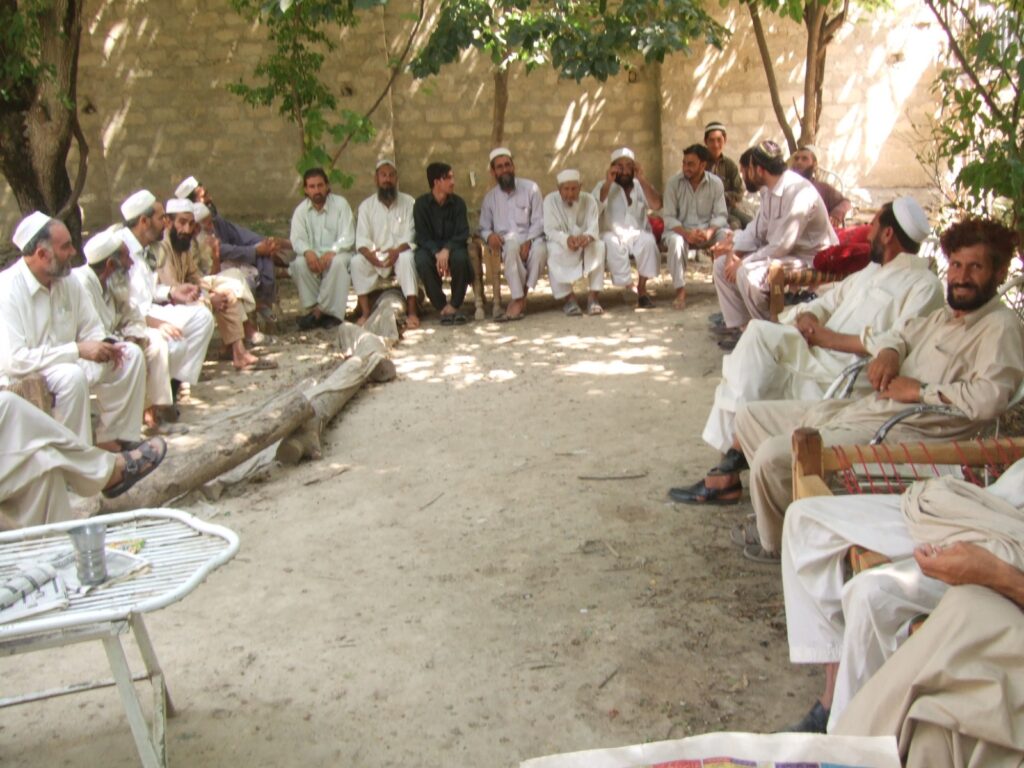 From Feud to Friendship
In Bajaur, such resolutions have repeatedly turned long-standing rivalries into peaceful coexistence.
Haji Sheeraghzam recalls a recent land dispute that escalated into a fatal shooting but was eventually resolved through Nanawate. The accused party accepted responsibility, paid compensation, and relinquished its claim, ending years of hostility.
In another case from Arang Atmankhel, a family sat outside a rival household for ten consecutive days, refusing to leave until forgiveness was granted. Their persistence ultimately led to reconciliation after years of enmity.
Read More: https://thepenpk.com/why-are-bajaurs-fields-disappearing/
Muhammad Gul notes that the tradition is not limited to murder cases alone. It is also used to resolve land disputes, financial disagreements, and even domestic conflicts—often restoring peace within weeks where formal legal systems struggle.
A Living Social Institution
Despite modernization and changing social dynamics, Nanawate continues to hold firm in many tribal communities. Its endurance, Dr Nigar argues, lies in its flexibility and shared cultural legitimacy.
“In a society where conflict can easily spiral, Nanawate remains a vital social safety valve,” he says.
For elders like Muhammad Gul, its meaning is simple yet profound: a system where even the deepest wounds can be healed, not through courts or prisons alone, but through humility, honor, and forgiveness.

Comments are closed.