

Gorsal Border Closure: What It Means for Pak-Afghan Trade
Murad Khan
Bajaur: Mohmand District has two important trade routes with the neighboring Muslim country Afghanistan, namely Gorsal and Nawa Pass border points.
However, the major trade route was Gorsal, which has been closed since 2011 due to a tense law and order situation. The closure of this route has badly affected the businesses and lives of thousands of people living on both sides of the border.
Before the closure, small and medium enterprises (SMEs) and business centers were established in different parts of Mohmand District, supporting imports and exports worth billions at both local and national levels between the two countries.
Lal Zada, a trader from Mian Mandi Bazaar who was engaged in import and export with Afghanistan, said that hundreds of drivers, helpers, and laborers became unemployed due to the closure of trade routes.
Sharing his experience, Lal Zada said that they used to leave early in the morning from Mohmand District and reach Kabul or Jalalabad by night, and during the summer season, they would even return the same day.
“At that time, inflation was not so high, and people were very happy as they could buy fruits, vegetables, and other goods even on low incomes. There were so many business opportunities that even a laborer working on a trailer was earning 2,000 to 4,000 rupees per day,” he added.
Read More: https://thepenpk.com/wildlife-is-disappearing-in-bajaur/
He said that reopening the trade routes with Kabul would be a ray of hope and the beginning of a new life for thousands of unemployed people living below the poverty line on both sides of the border.
Thirty-six-year-old driver Nusrat Khan, belonging to the Barokhel area of Tehsil Haleemzai in Mohmand District, said that the Gorsal border between Pakistan and Afghanistan has been closed since 2011.
He stated that the closure of this route was a huge loss for the poor people of the tribal area, as business communities shut down their operations, adversely affecting drivers, shopkeepers, and other workers.
He said that he used to transport agricultural commodities, fertilizers, and food and non-food items from Pakistan to Afghanistan, and would return with fresh fruits, dry fruits, vegetable oil, cosmetics, soap, and utensils made in the UAE, Turkey, Iran, and other countries.
Senator Hilal Rehman Mohmand said that reopening the Gorsal border is essential because the trade route is very important for business and the transportation of people and goods between the two countries, which would improve the economic situation of the area. However, he added that since this is an international issue, both countries must work together to resolve it.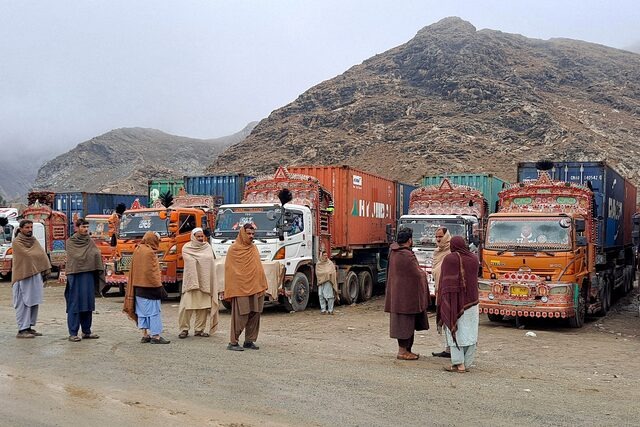
“To reopen the Gorsal border, Pakistan and Afghanistan will have to sit together and formulate terms and conditions (TORs),” he said.
Hilal Rehman further stated that after the 2018 general elections, he wrote a letter to then Prime Minister Imran Khan to formulate a strategy for reopening the Gorsal border by involving all stakeholders and resolving the issue with the Afghan government.
However, in response, the Afghan government demanded the alignment of the Gorsal border, and this issue still persists, which is why Afghanistan has not agreed to reopen the route.
He added that during his visit to Afghanistan, he met with the Afghan Foreign Minister and discussed the Gorsal trade route issue. However, due to a change in regime, the new minister was not clear about the matter. Although the minister expressed willingness to open all international trade routes, including the Chitral border, he maintained that the Gorsal border could not be reopened until the alignment issue was resolved.
Siraj Khan, a 38-year-old shopkeeper from District Headquarters Ghallanai, said that before the closure of the route, foreign-made goods such as oil, soap, perfume, tea, electronic gadgets, generators, and shampoo were available at low prices. However, now there is a shortage of these goods, and prices have increased significantly.
MNA from Mohmand District, Sajid Mohmand, said that PTI had a clear stance on reopening the Gorsal border. During their tenure, the Speaker of the National Assembly formed a special committee to engage all stakeholders from both sides and attempt to reopen trade routes, including Kharlachi and others with Afghanistan.
Read More:https://thepenpk.com/why-are-bajaurs-fields-disappearing/
He added that he was also a member of that committee, but when they reached Kabul, security issues prevented the meeting from taking place.
Sajid Mohmand emphasized that reopening the Gorsal trade route would bring immense benefits by creating business and trade opportunities, ultimately leading to prosperity. He added that this route could also provide access to Central Asian countries such as Tajikistan, Uzbekistan, and Kazakhstan.
He urged the present government to make serious efforts to reopen all closed trade routes, as this would bring development and happiness to Khyber Pakhtunkhwa and the entire country.
He further stated that neighboring countries are geographically close, and if routes remain open, travel between them could be completed within hours, creating opportunities in tourism, hospitality, and other sectors.
Former Member of the Khyber Pakhtunkhwa Provincial Assembly, Nisar Mohmand, said that reopening all trade routes with Afghanistan is a clear policy of the Awami National Party. He stated that the party’s manifesto is to secure the rights of Pashtuns and strengthen their economic stability on both sides of the border.
He added that reopening the Gorsal and Nawa Pass trade routes would economically strengthen the entire district. People working in other parts of the country would return to Mohmand and start their own businesses, benefiting laborers, businessmen, hotel owners, and all segments of society. He further said that he raised his voice for reopening the Gorsal border on the assembly floor and also staged protests near the border.
Former Senator Hafiz Rasheed Ahmad stated that Gorsal is one of the most important borders with Afghanistan and should be reopened to enhance business opportunities for both countries.
He said that JUI supports keeping the border open in the interest of both Pakistan and Afghanistan.
He added that the border remained open for about one and a half years during his tenure but was later closed due to law and order issues and has remained shut since then.
Hazrat Ullah, a 38-year-old MBA graduate from the Barokhel area of Tehsil Haleemzai, said that the border was highly beneficial for local people, as they were engaged in grassroots-level trade with Afghanistan.
They exported Pakistani-made utensils and imported foreign-made goods such as utensils, soap, cosmetics, fruits, and other products.
He said, “When this route was closed, people were badly affected. Some shifted their businesses to other cities, while many migrated abroad in search of employment.”
He added that if the Gorsal trade route reopens, these people would return to their country, establish businesses, and create employment opportunities, ultimately leading to financial prosperity.
He also noted that the area was once a popular recreational spot, where people would travel on weekends.
Businessmen in Bajaur and Mohmand districts believe that trade routes should be reopened, especially after the establishment of the Taliban government in Afghanistan, as it maintains friendly relations with Pakistan.
Representatives of the cross-border business community believe that a deal can be reached if both governments resume talks on border alignment and reopening trade routes, including Gorsal and Nawa Pass.
They say that reopening these routes would create countless business opportunities, not only for local populations but also for international trade, ultimately bringing peace, happiness, and economic prosperity to the war-affected province of Khyber Pakhtunkhwa.
Economic experts also believe that reopening these routes would help establish a chain of trade linking South Asia with Central Asia.
The Writer is a Radio Producer and freelance Journalist.

Comments are closed.