

Football Fever Sweeps Through Dhaka Streets
Md Jahidul Islam
Dhaka: Bangladesh may be thousands of kilometres from the FIFA World Cup venues, but football fever has already taken over the streets of Dhaka as fans prepare for the tournament’s opening match.
With the 2026 World Cup set to begin across Mexico, the United States and Canada, the Bangladeshi capital has been transformed into a sea of football colours. Rooftops and streets are adorned with giant Argentine and Brazilian flags, while banners, murals and team decorations have appeared across neighbourhoods.
The tournament has become a major cultural event in Bangladesh despite the national team never having qualified for the World Cup. Every four years, supporters passionately follow their preferred international teams, turning local streets and neighbourhoods into unofficial football fan zones.
Old Dhaka is among the areas where the celebrations are most visible. Supporters have arranged processions, displayed oversized flags and decorated homes in the colours of their favourite teams.
Tea stalls and roadside gatherings have also become centres of football debate, with fans discussing team form, star players, tournament predictions and long-standing rivalries.
For many supporters, the passion is rooted in childhood memories and family traditions rather than national participation in the tournament.
“I’ve supported Argentina since childhood,” said Titumir, a Dhaka resident preparing to hang a 30-foot Argentine flag from his rooftop.
The scenes underline the unusual place football occupies in Bangladesh, where a tournament featuring teams from across the world can generate celebrations on a scale resembling a national festival, despite the country having no team in the competition.
As the opening whistle approaches, Dhaka’s streets are offering a reminder that the global appeal of the World Cup extends far beyond the countries competing for the trophy.
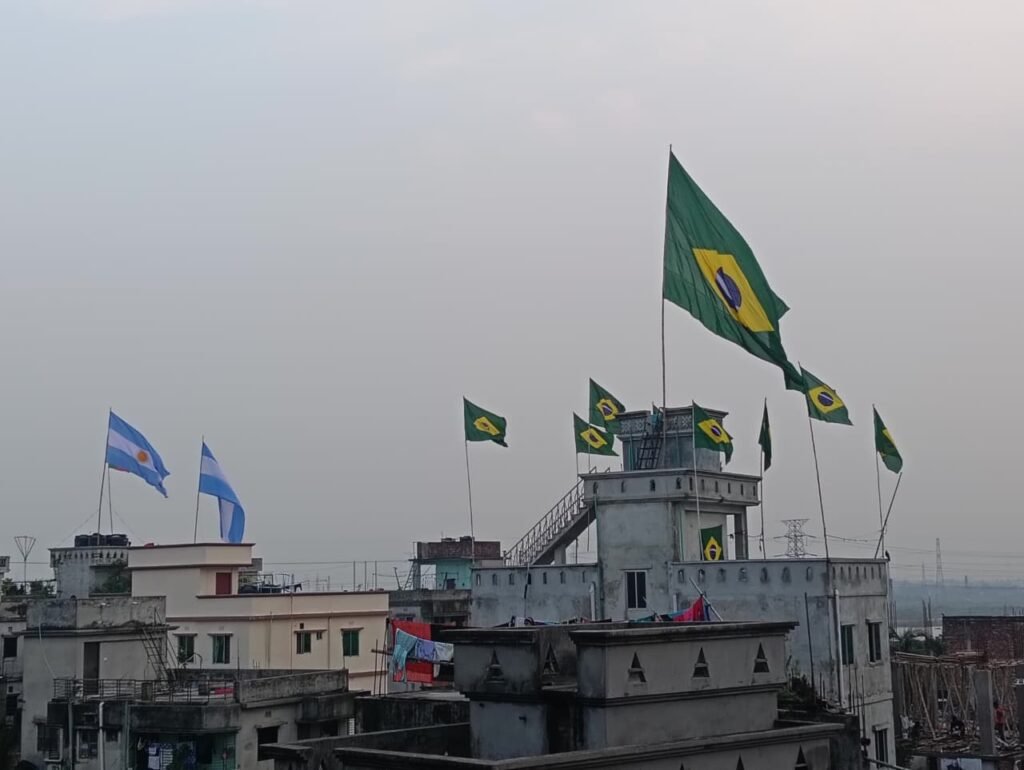
For many Bangladeshis, the FIFA World Cup is more than a sporting tournament, it is a tradition that brings families, friends and entire neighbourhoods together.
The celebrations often begin weeks before the first match, with supporters preparing flags, jerseys and decorations while debating their favourite teams. Late-night match screenings, group discussions and celebrations after victories have become part of the World Cup experience for football fans across Dhaka.
Football loyalties are also frequently passed from one generation to another. Jamiul Islam, a Brazil supporter from Old Dhaka, said he now follows the matches with his children, continuing a tradition he shared with his father and older brothers.
“Teams may be different, but football brings everyone together,” he said.
Among Dhaka’s best-known football landmarks is KM Das Lane in Tikatuli, popularly called “FIFA Lane”. The area has become a visual tribute to the sport, with walls covered in portraits of legendary players and colourful football murals.
Local children continue to play football in the streets, while residents are preparing giant screens to bring neighbours together for World Cup matches.
The excitement extends far beyond Old Dhaka. Areas including Mirpur, Mohammadpur, Motijheel, Uttara, Badda, Khilgaon, Jatrabari, Gulshan and Banani are also displaying flags and football-themed decorations.
In Aminbazar, on the western edge of Dhaka, organisers have decorated a bridge with flags representing all the participating World Cup nations, turning the location into an attraction for football enthusiasts.
The tournament is also providing a temporary boost to local businesses. Markets in Mirpur, Farmgate and Gulistan have seen increased demand for team jerseys, flags, whistles and other football merchandise.
Argentina and Brazil remain among the biggest sellers, with supporters particularly seeking the teams’ distinctive colours and oversized flags for rooftops.
Flag seller Yasin Rana in Agargaon said sales had increased several times ahead of the tournament.
“Many customers are looking for oversized flags to display on rooftops. It feels like the football festival has already begun,” he said.
As fans prepare for the matches, Dhaka’s World Cup enthusiasm is generating more than colourful streets. It is creating a seasonal cycle of family traditions, community gatherings and commercial activity centred around a tournament in which Bangladesh itself is not competing.
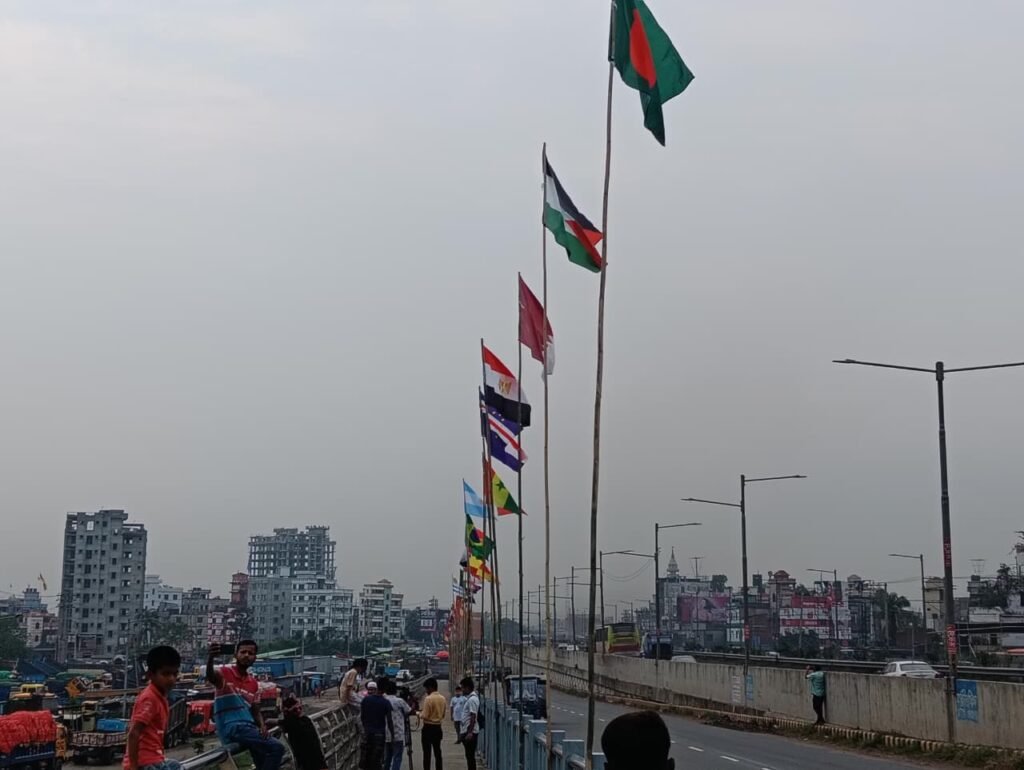 The FIFA World Cup is turning everyday spaces across Dhaka into lively football arenas, with family living rooms, neighbourhood tea stalls and public gatherings becoming centres of debate and celebration.
Football loyalties often differ within the same household. A father may cheer for Brazil while his son backs Argentina, another family member supports Germany and an older sibling follows Portugal. When the matches begin, these competing loyalties transform living rooms into miniature stadiums filled with cheers, arguments and friendly banter.
The same passion spills into Dhaka’s tea stalls, where football fans gather for hours to analyse team tactics, debate star players and predict which country will lift the trophy. For many supporters, these informal discussions are almost as important as watching the matches themselves.
Beyond the rivalries, the tournament has become a rare social occasion capable of bringing people from different generations and backgrounds together. Political and economic differences often fade temporarily as fans share a common enthusiasm for football.
The connection is particularly striking in a country whose national team is absent from the World Cup.
Yet the tournament has developed a deep cultural following, with Bangladeshi supporters forming strong emotional attachments to teams from South America and Europe.
During the tournament, Dhaka’s streets and rooftops can take on the colours of Buenos Aires, Rio de Janeiro, Lisbon and other football capitals, demonstrating how far the game’s influence travels beyond the countries competing.
With flags decorating buildings and football murals appearing across neighbourhoods, anticipation is already at a peak ahead of the opening match.
The 2026 World Cup will officially begin in Mexico City, where hosts Mexico will face South Africa. The opening celebrations will feature international performers, including J Balvin and Maná, while separate festivities are planned in the United States and Canada.
For Dhaka’s football fans, however, the World Cup celebration has already begun — in homes, tea stalls, streets and neighbourhoods across the capital.
Md Jahidul Islam is an award-winning journalist based in Dhaka, Bangladesh and currently serves as Senior Reporter at The Daily Kaler Kantho. He also contributes to several international media outlets. His work focuses on environment, climate change, biodiversity, urban development, politics, governance, migration, human rights, and social justice. He can be contacted at jahid.cou.edu@gmail.com
Photo Credit: Md Jahidul Islam

Comments are closed.