

How Climate Change Is Hitting Farmers in KP
Islam Gul Afridi
Khyber Bara: On a scorching July afternoon, when temperatures in Khyber-Pakhtunkhwa’s Khyber district rise from 42 to 46 degrees Celsius, Muhammad Shafiq Khan is not just running a cattle farm, he is fighting a daily battle against extreme heat.
At his farm in Khyber Bara, Shafiq and his workers continuously spray water on cattle, replace drinking water tubs, arrange green fodder and provide glucose supplements. These measures are no longer part of normal farm management; they have become essential survival steps for his animals.
Shafiq owns around ten cows, each valued between Rs600,000 and Rs800,000. His biggest challenge is not only protecting the animals from heat stress but also maintaining milk production and ensuring the safety of pregnant cows and newborn calves.
“Temperatures have crossed 45 degrees Celsius, which is extremely dangerous for cattle. We have to ensure water sprinklers, fresh drinking water, green fodder and glucose are available all the time,” he says.
But every rise in temperature brings additional costs and uncertainty. Electricity bills, extra water requirements, fodder expenses, medicines and cooling arrangements are putting increasing financial pressure on livestock farmers.
Shafiq says many farmers have shifted from local breeds to imported or crossbred cows because of their higher milk production, but these animals are more vulnerable to Pakistan’s harsh climate.
“Every heat wave creates fear that an animal may die, milk production may fall, or pregnant cows and calves may suffer,” he says.
A Growing Climate Threat to Livestock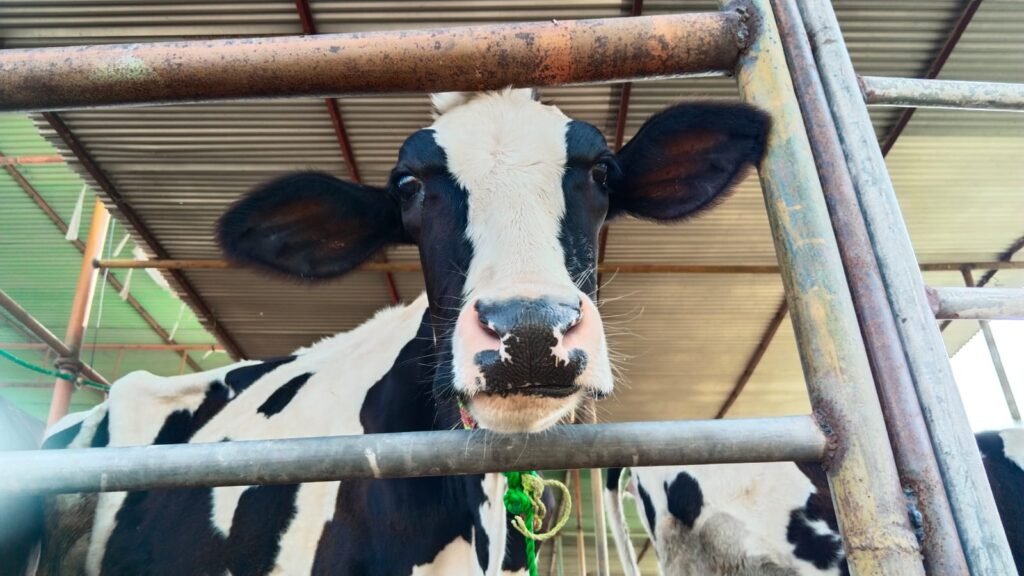 The impact of climate change is no longer limited to humans. Across Pakistan, rising temperatures, irregular rainfall, droughts and floods are creating serious challenges for the livestock sector, a key pillar of the rural economy.
According to the Food and Agriculture Organization of the United Nations (FAO), extreme heat directly affects animal health, reproduction and productivity. Heat stress reduces feed intake among cows and buffaloes, lowers milk production, affects body weight and weakens reproductive performance.
Experts say adopting climate-smart livestock farming practices has become essential to protect food security and rural livelihoods.
According to the Pakistan Economic Survey 2025-26, livestock remains the largest sub-sector of agriculture, growing at 3.75 percent compared with overall agricultural growth of 2.89 percent. However, the survey also recorded a 4.5 percent decline in green fodder availability, linked to rising temperatures, water shortages and changing rainfall patterns.
More than eight million rural families in Pakistan depend on livestock farming, with around 35 to 40 percent of their household income coming from animals.
The livestock sector contributes 14.6 percent to Pakistan’s Gross Domestic Product (GDP) and plays a larger role in agriculture than many major crops through milk, meat, eggs, leather and other products.
Heat Waves Turning Into Financial Losses
For many farmers, climate change has already become a costly reality.
Thirty-year-old Atif Khan received five cows through a government scheme three years ago. He contributed Rs350,000 from his own pocket and spent Rs1.5 million on sheds and farm construction.
However, most of the animals died, leaving only one cow alive.
“All the cows were pregnant, but a few weeks before giving birth, three of them became seriously ill. Despite treatment, they could not survive,” he says.
Atif says summer has become the most difficult season for livestock owners.
“These foreign breeds are not suited to our climate. During extreme heat, instead of eating 20 kilograms of feed, they consume around 10 kilograms. Their milk production is reduced by half and they become physically weak,” he says.
After suffering losses, Atif built a new farm costing Rs7 million and received 20 cows through another government scheme, but he says the risks remain high.
Livestock Backbone of KP’s Rural Economy
In Khyber Pakhtunkhwa, livestock is considered a major source of income, food and employment, particularly in rural and tribal areas.
Around 70 percent of the rural population is involved in livestock-related activities, while the sector contributes significantly to the provincial agricultural economy.
The province has millions of livestock animals, including cows, buffaloes, sheep, goats, camels and poultry, producing millions of tons of milk and meat annually.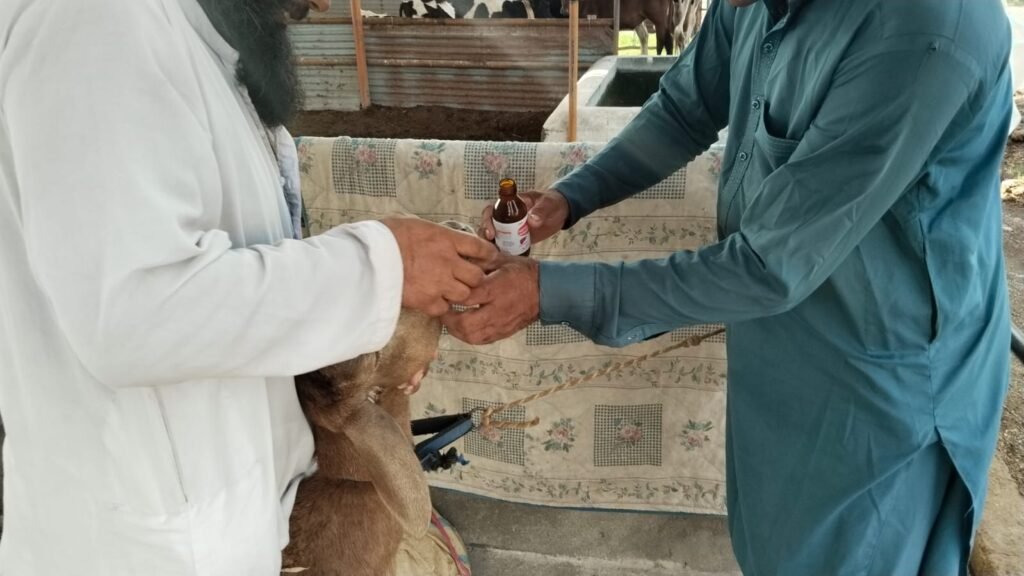 However, rising temperatures are increasing cases of heat stress among animals. Farmers in districts including Peshawar, Nowshera, Mardan, Swabi, Khyber, Bannu, Lakki Marwat, Kohat and Dera Ismail Khan are reporting declining milk production, reduced feed intake, higher water requirements, reproductive problems and increased disease risks.
Veterinary experts say heat stress can reduce milk production by 10 to 30 percent, while also increasing pregnancy losses and calf mortality.
Climate Change Increasing Disease Risks
For farmers like Sher Ali Khan from Orakzai district, climate change has brought another challenge, the spread of livestock diseases.
Sher Ali, who supports a family of 12 through agriculture and livestock, lost a cow worth Rs600,000 after it became seriously ill.
“The doctors said its liver was damaged. I spent more than Rs80,000 on treatment, but it did not recover,” he says.
He says veterinary facilities remain limited in remote areas, making it difficult for farmers to protect their animals.
According to the Khyber Pakhtunkhwa Livestock Department, rising temperatures have increased the spread of diseases such as lumpy skin disease, foot-and-mouth disease, tick-borne infections, black quarter and liver fluke.
Dr. Hamidullah, a research officer at the Livestock Department, says disease cases increase sharply during summer.
“The research centers receive up to 80 cases daily in summer, compared with around 20 cases in winter,” he says.
According to him, higher temperatures and humidity create favorable conditions for flies, mosquitoes, ticks and other disease-carrying insects, increasing infections among livestock.
Foreign Breeds vs Climate Reality
Experts say local breeds such as Achai, Sahiwal and Red Sindhi have greater resistance to heat and diseases, but their milk production is lower compared with foreign breeds like Holstein Friesian and Jersey.
Dr. Hamidullah says farmers prefer imported breeds for commercial reasons, but these animals require better climate control and management.
“Local breeds can survive harsh conditions, but their production is lower. Foreign breeds produce more milk but face greater health risks during extreme weather,” he explains.
He says the Livestock Department is working to protect local breeds and promote climate-resilient farming practices.
Possible Solutions
Experts believe climate change impacts on livestock cannot be completely eliminated, but their effects can be reduced through scientific measures.
The FAO, World Organisation for Animal Health (WOAH) and other research institutions recommend:
- Building shaded and well-ventilated animal sheds
- Installing fans and water cooling systems
- Providing clean drinking water at all times
- Using electrolytes, minerals and balanced feed during heat waves
- Feeding animals during cooler morning and evening hours
- Promoting heat-tolerant local breeds
- Improving vaccination and disease monitoring systems
- Controlling ticks, flies and other parasites
- Managing water and grazing resources sustainably
- Using early weather warning systems
Forty-year-old livestock farmer Wajid Khan says farmers are already adopting many of these methods to protect their animals.
“Local breeds do not provide enough income, so we have to keep foreign breeds. During summer, we use green fodder, glucose, water sprinklers and other methods to reduce heat stress,” he says.
Experts believe protecting livestock from climate change is not only about saving animals, it is about safeguarding the livelihoods of millions of rural families who depend on them.
As temperatures continue to rise, the future of Pakistan’s livestock economy will depend on how quickly farmers, communities and authorities adapt to a changing climate.

Comments are closed.