

How Bajaur Is Turning Wild Olive Trees Into Opportunity
Shah Khalid Shah
Bajaur: Across the rugged landscape of Bajaur, millions of wild olive trees are already growing without having been deliberately planted as commercial orchards. Now, agriculture officials and local farmers are trying to transform this natural resource into a major source of income by grafting cultivated olive varieties onto the wild trees.
The potential is significant. According to the Agriculture Extension Department of Bajaur, around 11 million wild olive trees are scattered across the district’s tehsils. Grafting has been underway since 2005, but the campaign has gained momentum in recent years as demand for olive products has increased and farmers have become more aware of the crop’s economic potential.
This year alone, officials plan to graft around 140,000 wild olive trees.
The initiative is raising a bigger question: Can Bajaur turn its naturally abundant wild olive trees into the foundation of an “Olive Valley” — creating jobs, increasing farm incomes and developing a new local industry?
From wild trees to productive orchards
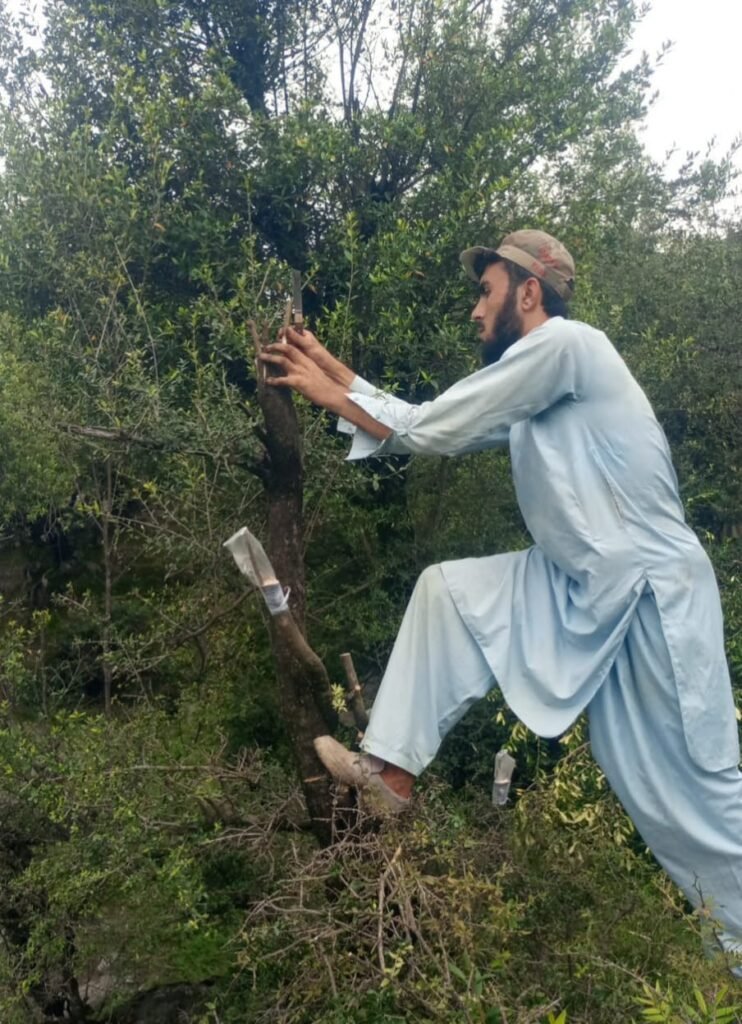
The basic idea is relatively simple. Instead of cutting down wild olive trees and establishing new orchards, farmers can graft productive olive varieties onto existing trees.
Agriculture officials say around 600,000 wild olive trees have already been grafted in Bajaur. Many of those trees have begun producing fruit, with the resulting olives being used for oil production.
Agriculture Officer Dr Subhanuddin said the department has been conducting training and awareness programmes for farmers, field staff and the wider community on grafting, orchard management and the economic potential of olives.
The department believes greater awareness has encouraged more landowners to participate in the programme.
District Agriculture Extension Director Islamul Haq said the department also plans to provide quality olive seedlings to landowners free of cost. Another 70 acres is expected to be brought under new olive plantations this year.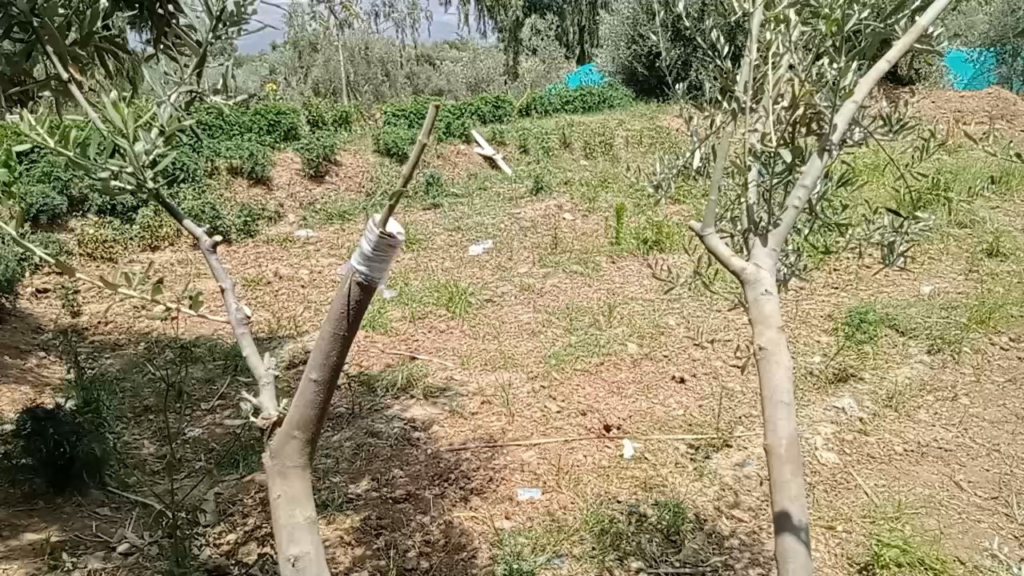 Photo credit: Shah Khalid Shah
A climate-friendly crop?
The olive project is not only being promoted as an agricultural opportunity.
Officials and agricultural experts say olives may also offer advantages in a region experiencing changing weather patterns and water pressures.
Bajaur has experienced changes in rainfall patterns and declining water availability in recent years. Agriculture officials argue that olive trees, which are relatively drought-tolerant once established, could be suitable for the district’s changing conditions.
The crop is also evergreen, meaning olive plantations can provide year-round vegetation and contribute to maintaining green cover.
For farmers facing uncertain rainfall and limited water resources, that characteristic could make olives an increasingly attractive long-term crop.
Why Bajaur?
Agriculture officials believe the district has particularly favourable conditions for olive cultivation because of its soil and climate.
Provincial Secretary Agriculture and Livestock Bakhtiar Khan has said Bajaur could soon develop into an olive-producing valley, pointing to the area’s fertile land and hardworking farming communities.
The Agriculture Extension Department has already established plantations in different parts of the district. Around 40,000 olive trees have been planted across 450 kanals, with some seedlings imported from Italy and distributed to landowners.
Officials say varieties including Arbequina, Leccino, Arbosana, Pendulina and Frantoio are being cultivated or considered for local production. Arbequina, in particular, is being planted extensively because of its reported yield.
From fruit to oil — and potentially much more
Bajaur is not stopping at cultivation.
The district has modern machinery for extracting oil from olives, allowing farmers to process their produce locally. Farmers from neighbouring districts, including Dir, Swat and Mohmand, also reportedly bring olives to Bajaur for oil extraction.
Agriculture officials see this processing capacity as an important part of building a local olive economy.
The potential goes beyond selling fresh fruit. Olive oil, pickles and other products can create opportunities for processing, packaging, marketing and small businesses, potentially generating employment beyond the farm itself.
For a district where agricultural livelihoods remain important, such an industry could create an additional source of income for rural households.
Farmers want the process accelerated
Despite the enthusiasm, farmers say the pace of grafting needs to increase.
With millions of wild olive trees spread across virtually every tehsil, local growers believe a faster grafting programme could bring more trees into production and allow communities to benefit from a resource that already exists on their land.
Their argument is straightforward: the trees are already there; the challenge is to turn them into productive commercial assets.
Agriculture officials say the government is working to expand grafting, establish new orchards, provide training and improve access to processing facilities.
An opportunity still waiting to be fully realised
Bajaur’s olive story is therefore less about planting millions of new trees than about ‘unlocking the potential of millions that already exist’.
If grafting expands successfully, the district could develop a wider value chain, from farmers and nurseries to oil extraction, packaging, marketing and potentially tourism.
But turning the vision of an “Olive Valley” into a sustainable industry will require more than grafting trees. Farmers will need continued technical support, quality planting material, reliable processing facilities, market access and effective management of orchards.
For now, the first step is already underway.
Every wild olive tree successfully grafted represents another potential source of fruit, oil and income and for Bajaur’s farmers, the hope is that millions of such trees can eventually help reshape the district’s rural economy.

Comments are closed.