

The Leopard That Became Victim of Human-Wildlife War
Shah Khalid Shah
Bajaur: In the rugged mountains of Bajaur, where communities live close to nature and depend heavily on livestock for survival, a tragic war between humans and wildlife has reignited a long-standing debate: how can endangered animals be protected when local communities are struggling to protect their own livelihoods?
In the remote area of Spray Mandogai in Warr Mamond tehsil, villagers killed a common leopard after weeks of alleged attacks on their livestock. Videos shared on social media showed the dead leopard, while residents claimed the animal had killed several valuable livestock, causing losses worth hundreds of thousands of rupees.
For mountain communities, livestock are not just animals, they are their main source of income and financial security. Villagers said repeated leopard attacks threatened their livelihood, leaving them with fears of further economic losses and possible danger to human lives.
However, the incident has raised alarm among wildlife experts, as the common leopard is already facing serious survival challenges in Pakistan.
Wildlife Department Steps In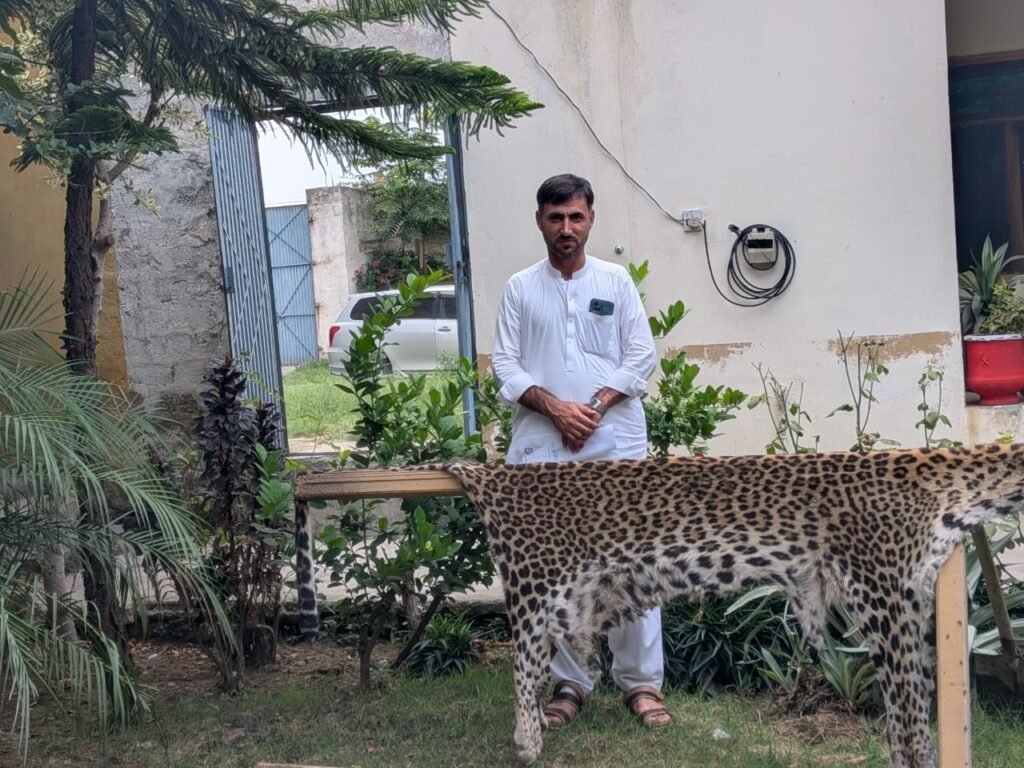 Following the incident, the Bajaur Wildlife Department launched an investigation and dispatched a team to the area with the support of the district administration.
Divisional Forest and Wildlife Officer Bajaur, Naveed Ali, said officials recovered the leopard’s skin from villagers after it had been separated from the body. The remains were brought to the department’s office in Khar for further legal and scientific procedures.
Calling the killing a tragic incident, Naveed Ali said a committee has been formed to investigate the matter and action will be taken against those responsible under the Wildlife Protection Act.
Could Compensation Have Prevented Killing?
The incident has also brought attention to an important question: do communities have any support when wild animals damage their property or kill livestock?
According to Muhammad Tayyab, social organizer and zoologist at the Bajaur Wildlife Department, a compensation mechanism already exists under the Wildlife Act.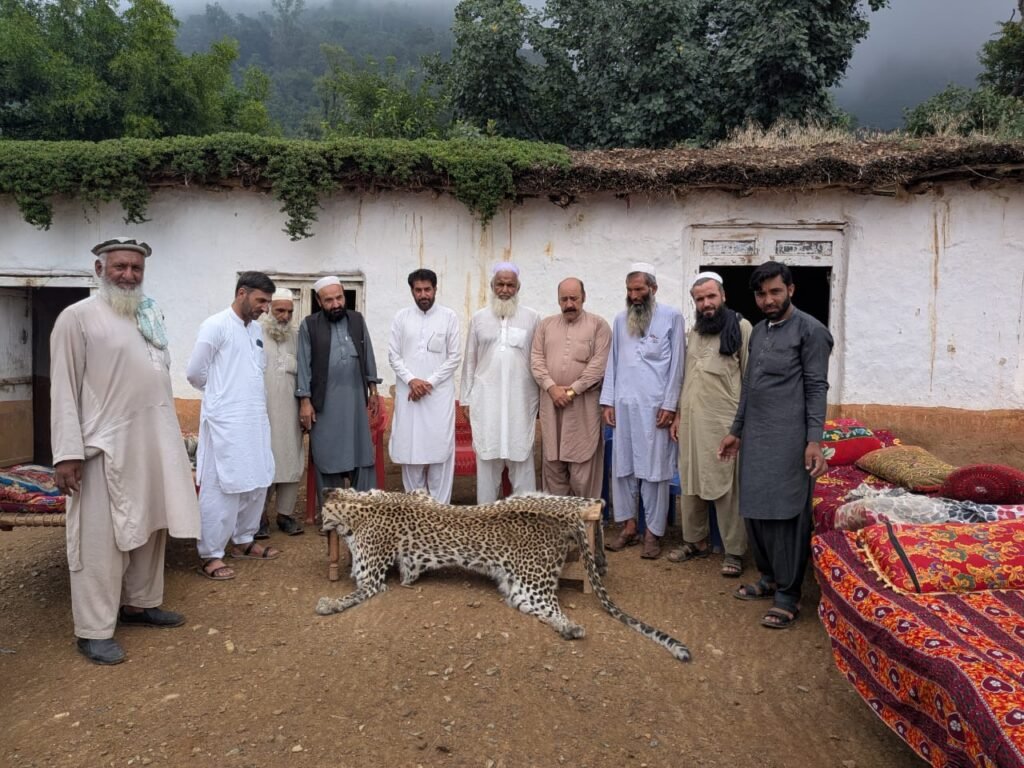 He said affected communities can submit details of losses through an official form, after which the department reviews the case and processes compensation for verified damages caused by wildlife.
Officials believe better awareness about this system could reduce retaliatory killings and encourage communities to report conflicts instead of taking matters into their own hands.
The Missing Link
Critics on social media questioned whether insufficient awareness among local communities contributed to the incident.
Wildlife officials, however, said awareness campaigns are regularly conducted across Bajaur to educate residents about wildlife protection, preventing livestock attacks and contacting authorities during emergencies.
The department has also established local committees in different areas to improve communication between communities and wildlife officials.
A Species Under Pressure
The common leopard is classified as “Vulnerable” on the International Union for Conservation of Nature (IUCN) Red List, meaning it faces a high risk of extinction in the wild.
In Pakistan, the species faces even greater challenges due to shrinking forests, illegal hunting, declining prey populations and increasing encounters with humans.
The expansion of settlements, roads and human activity has reduced natural habitats, forcing leopards closer to villages in search of food.
Wildlife experts say retaliatory killings remain one of the biggest threats to leopard populations, especially in areas where communities and wildlife share the same landscape.
A Divided Public Reaction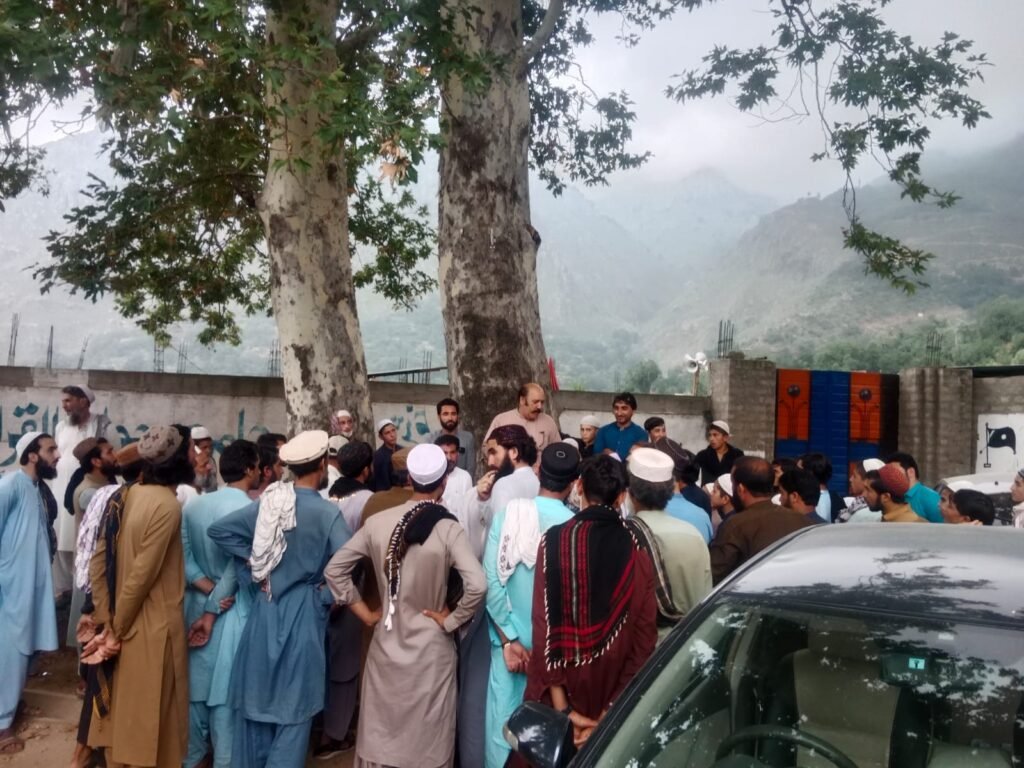 The killing of the Bajaur leopard sparked mixed reactions across social media.
Many people condemned the incident, demanding legal action and stronger wildlife protection measures. Others criticized authorities for failing to provide timely solutions to communities facing livestock losses.
Some residents defended the villagers, arguing that protecting human lives and livelihoods must remain a priority and that local communities should not be blamed without addressing the challenges they face.
Protecting Nature Without Ignoring People
The Bajaur incident highlights a difficult reality: wildlife conservation cannot succeed without the support of communities living alongside endangered species.
Khyber Pakhtunkhwa’s Climate Change, Forests, Environment and Wildlife Department says it follows a zero-tolerance policy against illegal hunting and damage to protected species.
Officials have urged citizens to report wildlife-related incidents instead of killing rare animals, stressing that protecting biodiversity is a shared responsibility.
For the people of Bajaur, the leopard was seen as a threat to survival. For conservationists, it was a rare species fighting for survival. The challenge now is finding a balance where both humans and wildlife can coexist in Pakistan’s fragile mountain ecosystems.

Comments are closed.