

How Safer Schools Are Bringing More Girls to Schools in Umerkot
Ali Nawaz Rahimoo
Umerkot: In rural Umerkot, having a school within walking distance does not always mean that education is truly within reach.
For a girl, the difference can be a private toilet, a secure boundary wall, clean drinking water or a classroom that remains usable during the district’s scorching summers. When these basic facilities are missing, the journey to school can become a daily challenge, and, for some families, a reason to keep daughters at home.
That reality is beginning to change in five government schools in rural Umerkot, where rehabilitation work has combined safer sanitation, clean water, solar power, improved classrooms and climate-resilient infrastructure.
The results are visible in the enrolment figures.
Female enrolment across the five schools has increased from 208 to 266 students, nearly 28 per cent. Overall enrolment has risen from 514 to 612, an increase of just over 19 per cent.
The increase does not by itself prove that rehabilitation caused the rise in enrolment. Decisions about education are shaped by household income, social attitudes, school quality and many other factors. But teachers and community representatives say the improved facilities have helped create a safer and more welcoming environment for children, particularly girls.
When a school is not enough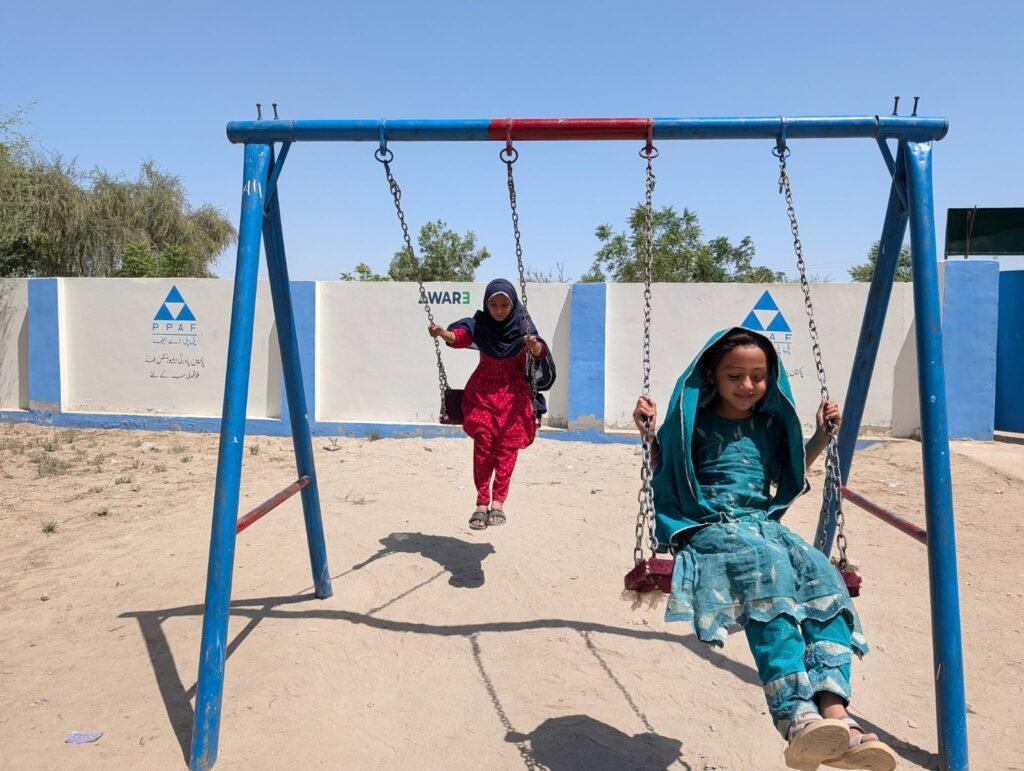 The five schools, GHS Babu Faqeer, GBPS Essa Mangrio, GBPS Gull Mohammad Palli, GBPS Khabar Bheel and GBPS Mohammad Saleh Palli, are located in Union Councils K.S. Atta Muhammad Palli and Sabho/Koonjheli.
They were rehabilitated under the Pakistan Poverty Alleviation Fund’s (PPAF) Restoring Social Services and Climate Resilience (RSS&CR) project, implemented by the Association for Water, Applied Education and Renewable Energy (AWARE).
The intervention came after the devastating 2022 monsoon floods, which damaged educational infrastructure across climate-vulnerable parts of Sindh.
But the project was not limited to repairing flood damage.
Instead, the rehabilitation sought to prepare schools for the challenges that could come next — from flooding and extreme heat to unreliable electricity and inadequate water and sanitation facilities.
Before the work, the schools faced a range of problems, including damaged roofs, deteriorating walls, inadequate sanitation, unsafe drinking water, insecure compounds and unreliable electricity.
For girls, the absence of private sanitation facilities and secure school boundaries can have particular consequences, especially as they grow older.
“Prior to this intervention, keeping female students in school post-primary levels was an uphill struggle due to the complete lack of private latrines and unsecure boundary walls,” head teachers Mumtaz Ali and Harish Kumar said.
They said elevated latrine facilities, clean water and continuous solar-powered services had helped restore dignity to the school environment.
Building for the next flood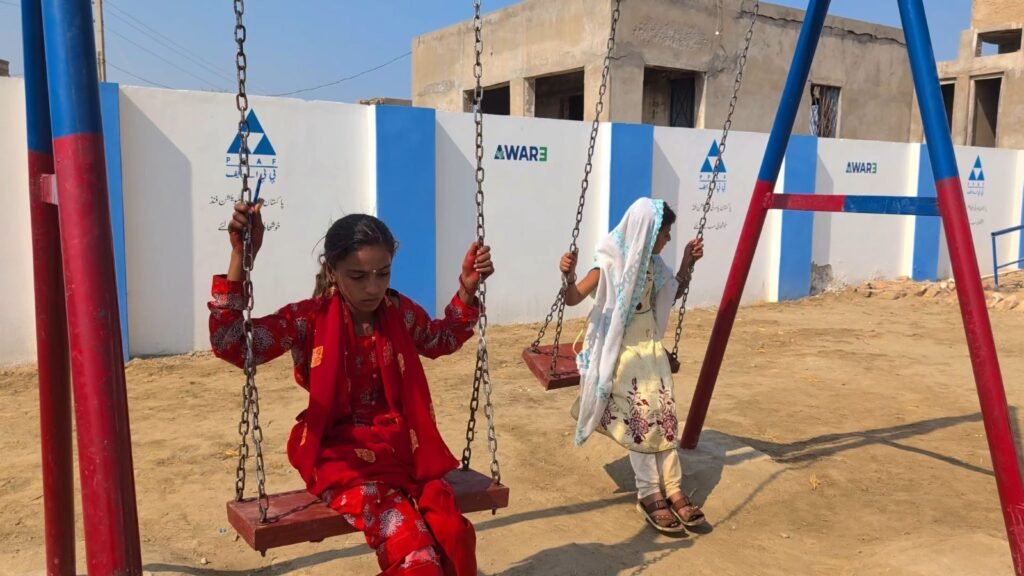 Under the project, 14 flood-raised latrine units were installed. The facilities were elevated above previous flood levels to reduce the risk of becoming unusable during future flooding.
Boundary walls were constructed or rehabilitated, while water facilities and damaged infrastructure were restored.
These may appear to be conventional construction works. But in a rural school, they can influence whether a child attends regularly and whether parents feel confident about sending their daughters to school.
A toilet provides privacy. A boundary wall provides security. Safe drinking water reduces a basic health concern. A functioning classroom makes it easier for children to learn.
Together, these facilities can determine whether a school is merely present in a village or genuinely accessible to its children.
Solar power brings relief from the heat
The rehabilitation has also addressed another challenge familiar to residents of Umerkot: extreme summer heat.
The five schools now have a combined 11.55 kilowatts of off-grid solar capacity, providing electricity for lighting, fans and water-pumping systems.
Classrooms and roofs were repaired, flooring and other civil works were undertaken, and water and sanitation facilities were improved.
At GBPS Khabar Bheel, the work included a new classroom and a six-stage reverse-osmosis drinking water plant.
Another 1,500 native trees, approximately 300 at each school, have been planted across the campuses.
The trees are expected to provide shade and improve protection from the severe summer heat as they grow.
The changes point to a broader understanding of what school infrastructure means in a climate-vulnerable region.
A classroom and a teacher remain at the heart of education. But children also need an environment where they can sit safely, drink clean water, use proper sanitation facilities and remain comfortable enough to concentrate on learning.
Girls make up most of the new enrolment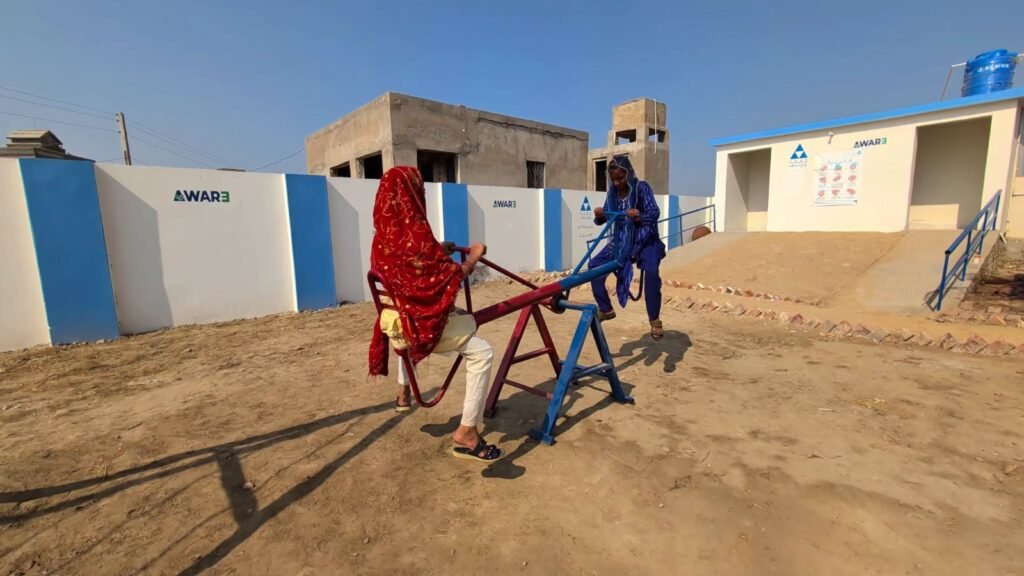 The strongest change appears in the enrolment figures.
At GBPS Essa Mangrio, enrolment rose from 92 to 145 students, while GBPS Gull Mohammad Palli increased from 92 to 142.
GBPS Khabar Bheel went from 45 to 70 students, while GBPS Mohammad Saleh Palli increased from 140 to 170.
Enrolment at GHS Babu Faqeer remained unchanged at 145 students.
Across the five schools, there are now 98 more students than before the intervention.
Of those additional students, 58 are girls.
That means girls account for almost three-fifths of the net increase in enrolment, while total female enrolment has risen by nearly 28 per cent.
The numbers should be viewed in context. Infrastructure is only one factor affecting whether children enrol and remain in school. Poverty, distance, household responsibilities, social norms and the availability of teachers can also influence educational participation.
Still, the combination of higher enrolment and accounts from teachers and community representatives suggests that the condition of the school environment matters.
Climate change is also an education challenge
The experience of these schools reflects a wider problem facing rural Sindh: climate vulnerability can quickly become an education crisis.
The 2022 floods showed how easily damaged infrastructure can interrupt children’s education.
Extreme temperatures create another challenge.
A school building may survive a flood, but if its toilets are inundated, its water system stops working or its classrooms become unbearably hot, the ability of that school to provide continuous education is weakened.
For girls who already face additional barriers to education, every disruption can make attendance and retention more difficult.
The Umerkot intervention therefore brings several issues together: school rehabilitation, water and sanitation, renewable energy, physical safety and climate resilience.
Rebuilding trust beyond the classroom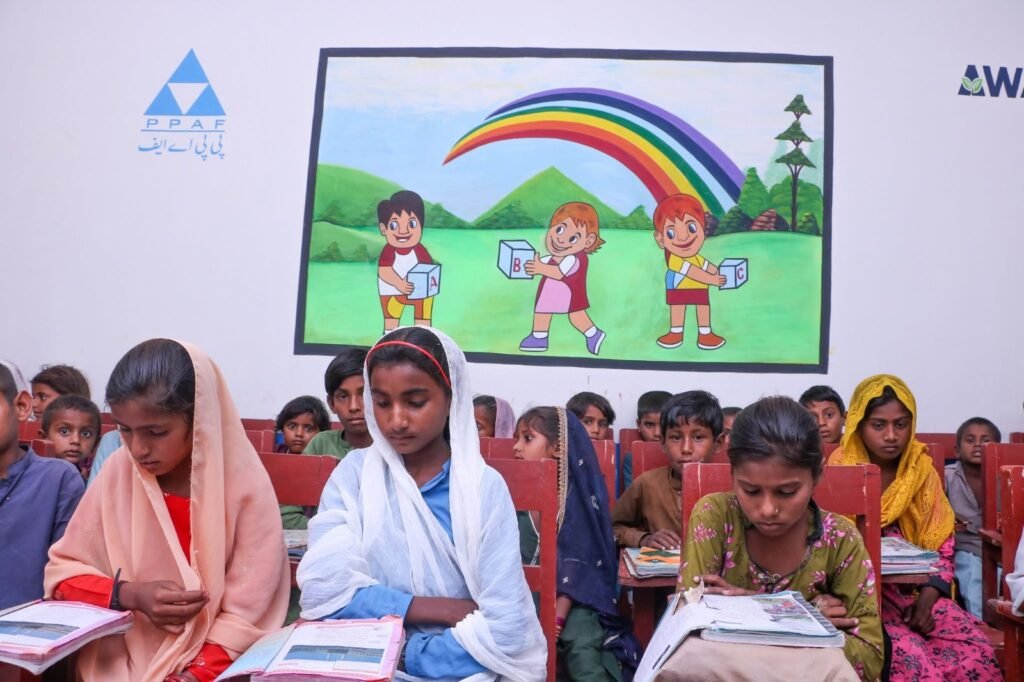 The impact of the five schools extends beyond their enrolled students.
Together, they serve communities comprising approximately 9,295 people from 1,314 rural households.
Village organisation representatives say the improvements have helped rebuild confidence in local schools.
“Seeing boundary walls, clean solar drinking water taps, and proper sanitation facilities built right in our village has rebuilt community trust,” community representatives said.
They also highlighted the planting of native trees as an investment in protecting children from extreme summer conditions.
For parents considering their daughters’ education, such improvements can carry particular significance.
The decision is not simply about whether education is valuable. It can also involve questions about whether a daughter will have privacy, whether the school is secure, whether drinking water is safe and whether the learning environment is functional.
Infrastructure alone cannot remove all the social and economic barriers affecting girls’ education in rural Sindh.
But poor infrastructure can itself become another barrier.
Beyond five schools
The experience of Umerkot offers a small but practical example of how education, gender-responsive facilities and climate resilience can intersect.
Five rehabilitated schools cannot address the much larger education challenges facing rural Sindh.
But the changes demonstrate why the discussion about girls’ education needs to extend beyond enrolment numbers.
A girl reaching the school gate is only the beginning.
For her to remain there, the school must offer more than a classroom.
A private toilet matters. Clean drinking water matters. A secure boundary matters. A classroom that can function through extreme heat matters. And in communities increasingly exposed to floods and other climate stresses, resilience matters too.
In the five Umerkot schools, the most visible signs of change are repaired roofs, solar panels, raised sanitation facilities, water systems and newly planted trees.
But perhaps the more significant change is inside the classrooms.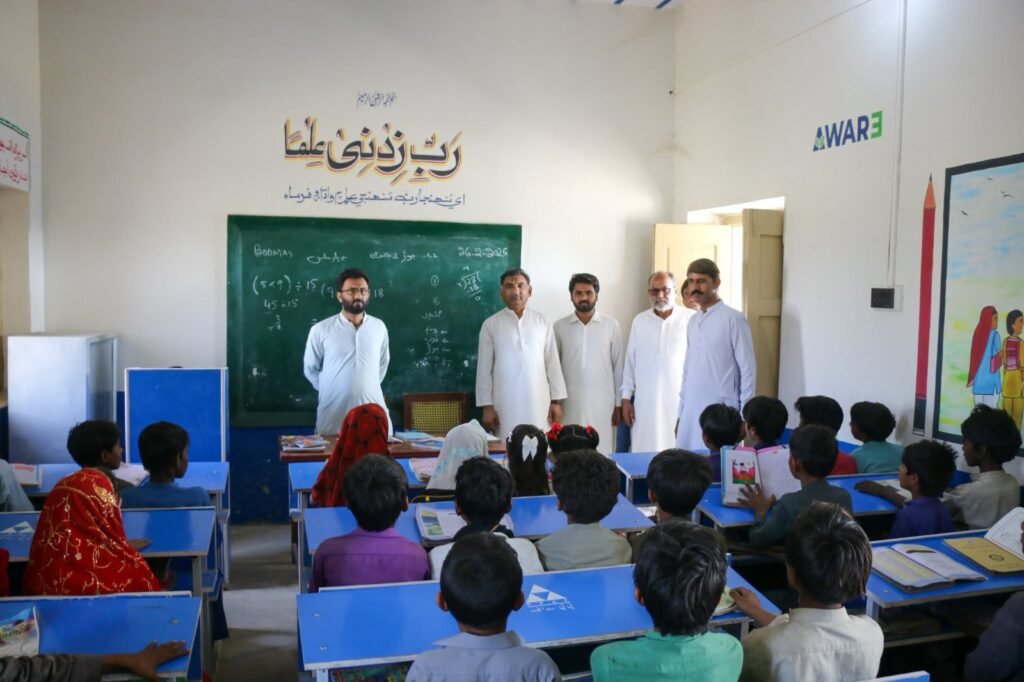 There are now 98 more students enrolled across the five schools than before the intervention. Fifty-eight of them are girls.
For rural Sindh, that offers a simple lesson: expanding girls’ education is not only about building schools or encouraging families to enrol their daughters.
It is also about making sure that, once they arrive, they find a place that is safe, dignified, functional and resilient enough to keep them learning.
