

Can BISP Break Pakistan’s Cycle of Poverty?
Ali Nawaz Rahimoo
Umarkot: Pakistan’s largest social protection initiative, the Benazir Income Support Programme (BISP), is approaching a critical phase in its evolution, shifting the focus from providing financial assistance to creating sustainable pathways out of poverty.
Launched in 2008 in response to rising food prices, economic insecurity and the effects of the global financial crisis, BISP has developed into the country’s largest social safety net, supporting millions of vulnerable households.
Nearly two decades after its establishment, however, a fundamental question confronts policymakers: Can BISP move beyond cash transfers and become a catalyst for long-term human development, social mobility and economic empowerment?
The federal government has allocated Rs716.378 billion for BISP in the fiscal year 2025-26, reflecting the programme’s growing importance in Pakistan’s social protection framework.
With approximately 10.2 million beneficiary families, including 2.6 million in Sindh, the initiative has an extensive outreach that could be strategically used to address some of the country’s most persistent social and economic challenges.
Through programmes such as Benazir Kafaalat, Benazir Taleemi Wazaif, Benazir Nashonuma and Benazir Hunarmand, BISP has already expanded its role beyond direct financial assistance. The next step should be to connect these initiatives more effectively with education, healthcare, nutrition, skills development, reproductive health and environmental sustainability.
Cash assistance provides essential relief to families struggling with food insecurity, rising living costs and economic shocks.
However, financial support alone cannot break the intergenerational cycle of poverty. Sustainable poverty reduction requires investment in people, improved public services and opportunities that enable vulnerable households to become economically independent.
Breaking the Cycle of Poverty
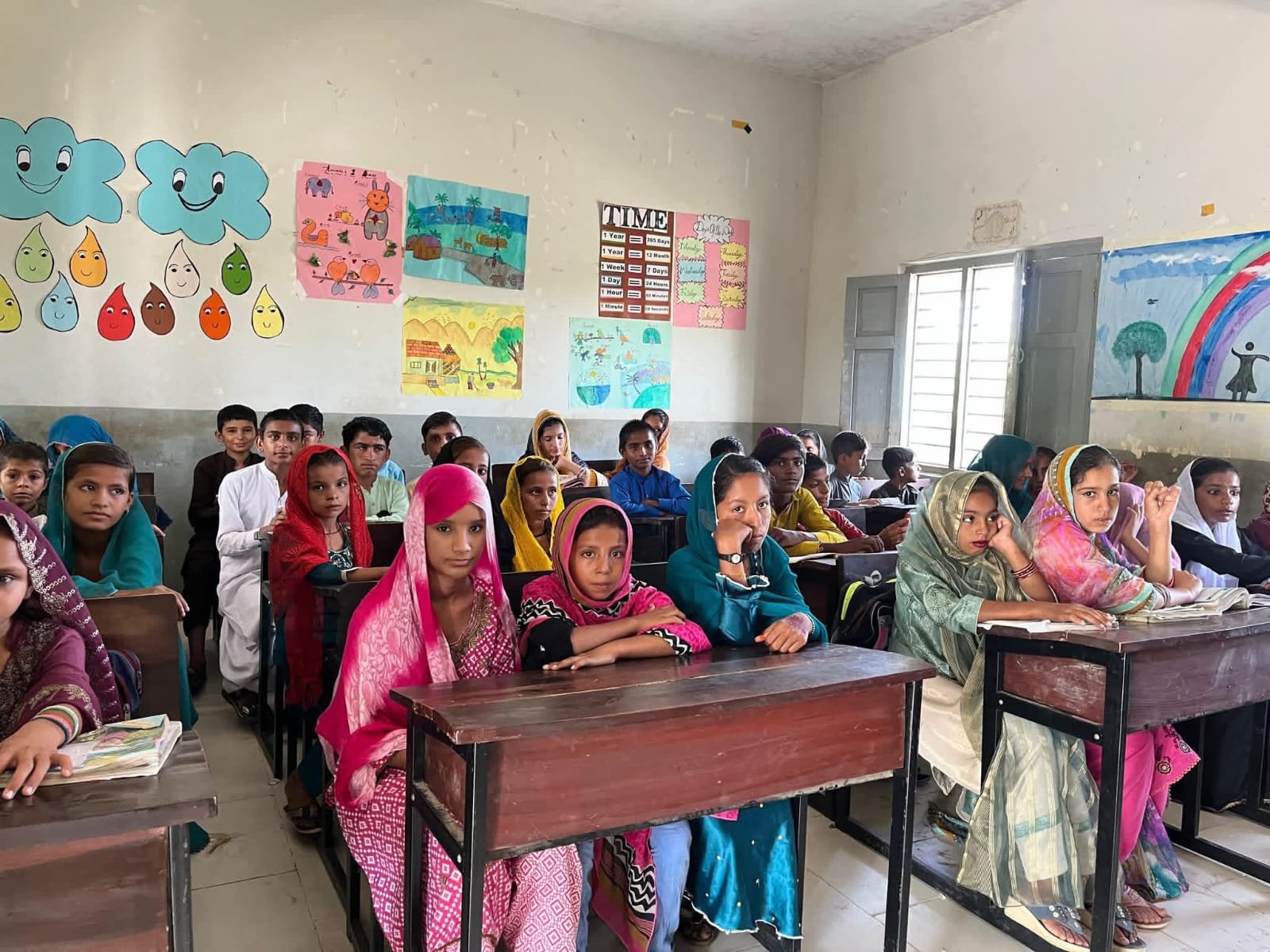
Education should remain at the centre of BISP’s human development strategy. While financial assistance helps families meet immediate household expenses, children who remain outside the education system face a greater risk of poverty and economic exclusion in adulthood.
The Benazir Taleemi Wazaif programme provides financial incentives to encourage school enrolment and attendance.
Its impact could be strengthened through more aggressive outreach to children from beneficiary households, particularly girls, children with disabilities and those living in remote and underserved rural communities.
Enrolment alone should not be considered a measure of success. Ensuring regular attendance, reducing dropout rates and supporting children until the completion of school-level education are equally important.
BISP could strengthen coordination with provincial education departments to identify out-of-school children, address barriers to attendance and monitor educational progress.
The objective should be to ensure that financial assistance translates into meaningful educational opportunities and better prospects for the next generation.
Connecting Families with Services
Children’s health represents another important area where BISP can contribute to national development goals. Pakistan continues to face challenges in achieving universal childhood immunisation and eradicating polio, despite sustained vaccination campaigns and public health interventions.
With its extensive network of beneficiary families, BISP can serve as an effective link between vulnerable households and routine healthcare services.
Through awareness campaigns, positive incentives and improved referral mechanisms, the programme can encourage parents to complete childhood vaccination schedules and participate in polio eradication campaigns.
Benazir Nashonuma provides an important example of how social protection can be connected with maternal and child healthcare. Its scope could be expanded to ensure wider access to nutrition support, preventive healthcare and maternal health services.
Such initiatives should remain supportive rather than punitive. Families should be encouraged and facilitated to access healthcare rather than risk losing essential financial assistance because of barriers beyond their control.
Healthier Generations
Pakistan’s rapidly growing population continues to place pressure on schools, hospitals, employment opportunities, housing and other public services. Addressing demographic challenges requires more than numerical targets or restrictive policies.
It demands informed choices, accessible reproductive healthcare and voluntary family planning services.
BISP’s extensive engagement with vulnerable households offers an opportunity to connect women with reproductive health education, counselling and quality family planning services.
Healthy birth spacing can reduce health risks for mothers and children while allowing families to invest more effectively in nutrition, healthcare and education.
However, any such initiative must protect women’s autonomy, confidentiality and informed consent.
Voluntary participation, access to reliable information and the availability of comprehensive reproductive healthcare should guide this approach.
Climate-Resilient Communities
Climate change has added another dimension to poverty in Pakistan. Floods, heatwaves, droughts, waterlogging and soil salinity disproportionately affect rural communities and low-income households, undermining livelihoods and increasing economic vulnerability.
BISP could explore opportunities to engage beneficiary families in local environmental protection and climate resilience initiatives.
Activities such as tree plantation, community conservation, water management and the maintenance of green spaces could be supported through additional incentives.
However, environmental programmes must be designed around measurable outcomes rather than numerical targets alone.
Tree plantation initiatives, for instance, should assess the survival and maintenance of saplings instead of simply counting the number planted. Species selection must also reflect local climatic conditions, particularly in arid and drought-prone areas.
Such initiatives could encourage environmental responsibility while creating opportunities for community participation and strengthening local resilience against climate-related risks.
Moving Towards Economic Independence
The Benazir Hunarmand programme offers another opportunity to transform social protection into a pathway towards sustainable livelihoods. Skills development can help beneficiary families move beyond financial dependence, provided that training is connected with actual employment opportunities and market demand.
Vocational training alone is insufficient without practical pathways to employment. BISP should strengthen partnerships with provincial governments, industries, employers and financial institutions to connect trained individuals with apprenticeships, jobs, access to finance and self-employment opportunities.
Women could particularly benefit from market-oriented skills in digital freelancing, remote working, handicrafts, livestock management and other income-generating activities that offer flexible employment opportunities.
Training programmes should be designed around local economic needs and emerging market opportunities to ensure that beneficiaries acquire skills that translate into sustainable incomes. Incentives Rather Than Coercion
As BISP expands its development-oriented role, an important distinction must be maintained between encouraging positive social behaviour and imposing punitive conditions.
BISP is fundamentally a social safety net, and its financial assistance should not become a coercive instrument. Beneficiary families should not be deprived of essential cash support because they fail to meet conditions when schools, healthcare facilities, vaccination services or other necessary public services are unavailable or inaccessible.
A more effective approach would be to retain basic cash assistance while providing supplementary incentives for positive social outcomes, including school attendance, childhood immunisation, maternal healthcare and participation in voluntary environmental initiatives.
This model would encourage participation without penalising the poorest households for shortcomings in public service delivery.
Using Data to Identify Multiple Deprivations
BISP’s Benazir National Socio-Economic Registry (NSER) is another important resource that could strengthen the programme’s human development potential.
Better integration of NSER information with relevant government social sector databases could help identify the multiple disadvantages faced by beneficiary households. These may include educational exclusion, inadequate healthcare, malnutrition, unemployment, limited access to essential services and climate-related vulnerabilities.
Such information could support a more coordinated response, enabling government institutions to identify household needs and connect families with appropriate public services.
The objective should be to move towards an integrated social protection framework in which financial assistance is complemented by accessible education, healthcare, skills development and livelihood opportunities.
Measuring Success Beyond Cash Transfers
The effectiveness of BISP should ultimately be assessed through improvements in people’s lives rather than the volume of money distributed.
Key indicators should include higher school enrolment and attendance, reduced dropout rates, improved maternal and child health, increased immunisation coverage, better nutritional outcomes, greater employment opportunities and stronger household resilience.
The programme’s success should also be reflected in the ability of beneficiary families to gradually reduce their dependence on financial assistance through improved skills, stable livelihoods and access to essential public services.
BISP has established itself as a vital protective mechanism for millions of vulnerable Pakistanis. Its next phase should build on this foundation and position the programme as a broader platform for human development and social mobility.
Pakistan needs social protection, but it equally needs opportunities that enable people to move beyond poverty. By using its extensive outreach, data infrastructure and existing programmes to promote education, healthcare, reproductive health, environmental sustainability and economic empowerment, BISP can become a catalyst for addressing some of the country’s most pressing development challenges.
The real challenge is no longer simply how much money the government spends on social protection, but how intelligently that investment is used to improve people’s lives.
With a stronger emphasis on voluntary participation, supplementary incentives, institutional coordination and measurable social outcomes, BISP can evolve from a programme that protects vulnerable households against economic shocks into one that helps them build healthier, educated and economically secure futures.
