
Why Are Bajaur’s Fields Disappearing?
Shah Khalid Shah Jee
Bajaur: Jamal Khan (not his real name) is putting the finishing touches on his three-kanal, fort-like house in Khar tehsil, a sprawling structure rising on fertile agricultural land.
To him, it is the realization of a long-held dream: a home big enough to meet the needs of his growing family. Yet, unaware of the broader consequences, Jamal is contributing to an ongoing crisis—one that threatens food security and the environment in Bajaur.
“I bought this land three years ago from a landlord at Rs 3 million per kanal,” Jamal says. “Building a house was necessary because our family is growing, and it had become difficult to live in a small home. This was my dream, and now it’s almost complete.”
For Jamal, and many like him, large houses on agricultural land seem practical. But environmental experts warn that unplanned construction is taking a heavy toll. As the human population in Bajaur rises, so does construction—not just in urban centers but across fertile farmland. Experts say this trend is contributing to food shortages, environmental degradation, and the loss of precious agricultural space.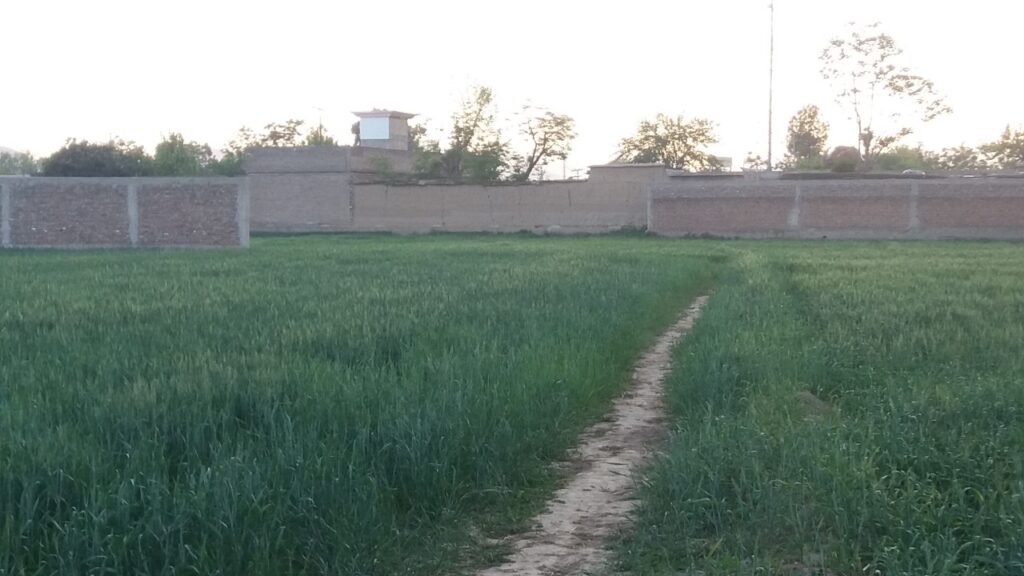 A resident of Siddiqabad Phatak village, who asked not to be named, recounts his regrets: he built a house two years ago on his two-kanal land for Rs 10 million, spending another Rs 10 million on construction.
“The house was much bigger than I needed,” he says. “Now I’m in debt, and fertile land has been lost for no reason. Most neighbors built large houses, and we have all deprived ourselves of productive land.”
Bajaur, one of the smallest districts in Khyber Pakhtunkhwa, is home to 1.288 million people, though local estimates place the population closer to 1.8 million. Alongside this population boom, houses are sprouting up on agricultural lands at an unprecedented rate.
Seventy-year-old Malik Noor remembers a time when most people in Bajaur lived together in villages. “Thirty years ago, brothers lived under one roof. Now, everyone wants their own house,” he says.
“People leave the villages and build wherever they want, without thinking of agriculture or the environment. If someone can live in a five-marla house, they build on two kanals. This is most common in Khar tehsil.”
The Land Protection Act 2021 aims to address this issue. It establishes committees at provincial and district levels to issue permits or NOCs for construction. 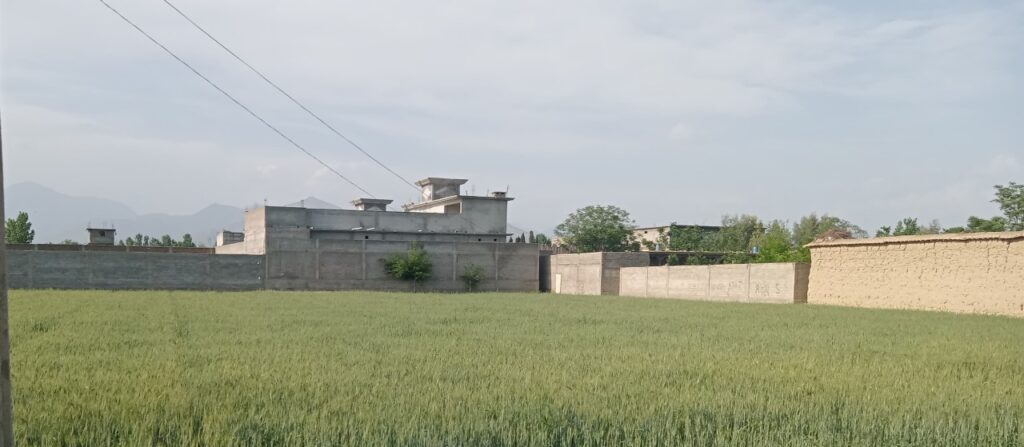 Each piece of land is inspected by multiple government departments, with the Department of Agriculture holding the final authority to approve or reject projects based on the land’s agricultural value. Violators face fines of up to one million rupees and imprisonment of three to ten years.
Documents from the Agriculture Department Extension Bajaur reveal that of the district’s 129,036 hectares of land, only 77,062 hectares are cultivable, and just 15,970 hectares have water access.
Experts warn that haphazard construction is steadily reducing this farmland.
Dr. Subhanuddin, Agriculture Officer of the Department of Agriculture Extension Bajaur, acknowledges the challenge: “Construction on agricultural land is happening at a very fast pace. If this continues, Bajaur will lose valuable farmland in a few years. Provincial authorities have clear orders: no one is allowed to construct on agricultural land. Yet enforcement remains a challenge.”
Construction practices also threaten forests. Trees are being cut indiscriminately to make way for buildings and roads. Over the last 30 years, the Bajaur Forest Department planted 45,000 acres of trees, yet widespread deforestation continues.
“Those trees, which once provided shade, oxygen, and a link to our ancestors, are being permanently removed for worldly desires,” experts lament.
Murad Ali Khan, Director of Flood Operations at the Agriculture Department Khyber Pakhtunkhwa, explains that under the Land Protection Act, all land for
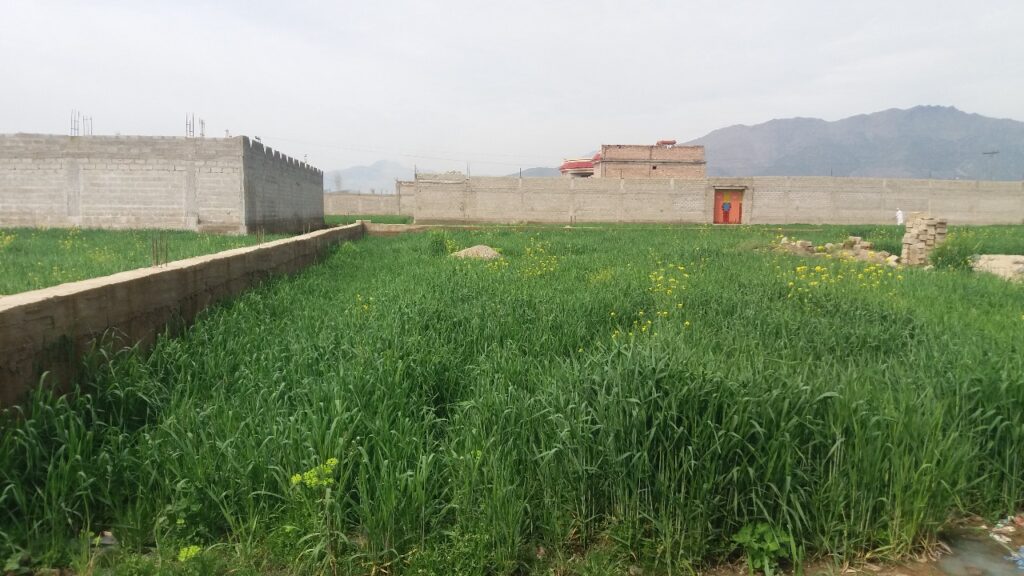 construction must be inspected and approved. “Even lands with minimal yield potential are protected because modern technology may allow crops in the future. Yet public awareness and enforcement are still slow,” he says.
Dr. Subhanuddin emphasizes that permits from the Agriculture Department are mandatory for any construction on farmland. Awareness campaigns—including banners, wall chalking, and community sessions—remind citizens of the value of fertile land and encourage environmentally friendly construction practices.
Jamal Khan defends his house: “I wanted to secure my children’s future. Most people here have built large homes, and everyone buys as much land as they can. No one wants their family to face housing problems.”
Yet experts warn that without greater public awareness and faster enforcement of laws, Bajaur’s fertile lands—and the environment—face irreversible damage. For a district that depends heavily on agriculture, the stakes are high. Protecting these lands today may be the only way to ensure food security, environmental sustainability, and a livable future for generations to come.

Comments are closed.