
Pakistan’s Floods: Unbroken Cycle of Death and Despair
Asem Mustafa Awan
Islamabad: The Indus Basin, once the cradle of civilizations, has turned into a recurring graveyard of hopes for millions in present-day Pakistan. Each monsoon brings the same story, almost scripted: swollen rivers breach their banks in Punjab, swallowing fields, homes, and livestock, before the torrents roll south into Sindh, compounding destruction on an unimaginable scale. The cycle repeats year after year, leaving behind ruins and silence.
This season, the Chenab rose first, spilling into districts near Faisalabad. Villages that stood for decades were undone in hours. Walls of brick dissolved, thatched roofs drifted away, and livestock floated lifeless in waters that smelled of mud and decay. Families who lived simply—tilling fields, sharing bread, helping neighbours—were stripped bare. They had asked for little from the state, only to be left with nothing when disaster struck.
Within days, the floodwaters surged into Sindh. In Sehrish Nagar near Hyderabad, streets turned into canals, and homes were submerged chest-deep. Children were carried on shoulders, elders ferried in makeshift boats, as the Indus carried Punjab’s excess southward with unforgiving force. The devastation was relentless, leaving families displaced, not just from land but from dignity.
Punjab and Sindh together account for almost three-quarters of Pakistan’s population—Punjab with 127 million people and Sindh with 56 million. Yet numbers provide little protection.
The scale of these provinces, their political weight, and their agricultural wealth stand in sharp contrast to the fragility of their rural infrastructure. Clinics are far and few; schools collapse after rains; electricity flickers out for days. Development, so loudly promised, dissolves like clay in the floodwaters.
Read More: https://thepenpk.com/resilience-not-relief-for-gilgit-baltistan/
This tragedy is not new. Pakistan’s worst floods came in 2022, when a third of the country lay submerged. More than 33 million people were affected, 8 million displaced, and nearly 1,800 lives lost.
The economic damage exceeded $30 billion, shattering livelihoods and pushing millions further into poverty. Even months later, four million children needed humanitarian aid, their families surviving in tents pitched on barren lands where fertile fields once stood. International donors pledged billions, but on the ground, corruption and inefficiency turned relief into another market.
Reports surfaced of tents sent by the United Nations being sold openly. Blankets from Turkey were found stacked in bazaars. Medicines meant for survivors ended up in private warehouses. What should have been a shield for the vulnerable became another source of enrichment for the powerful. Each revelation deepened mistrust between the governed and those who govern.
For the poor, there is no buffer. They live in fragile dwellings, dependent on crops, herds, and seasonal labour. A single flood is enough to unravel their entire existence.
Fields once green with wheat or cotton become lakes of stagnant water, breeding mosquitoes and disease. With livestock drowned, seeds lost, and homes gone, families are forced into cycles of debt and displacement. Women and children are often the hardest hit, exposed to hunger, disease, and unsafe shelters.
These communities are not unfamiliar with hardship. For generations, they have lived outside the glare of elite politics, surviving by their own codes of honour—helping when they could, enduring when they must. Yet climate change has pushed their endurance to breaking point.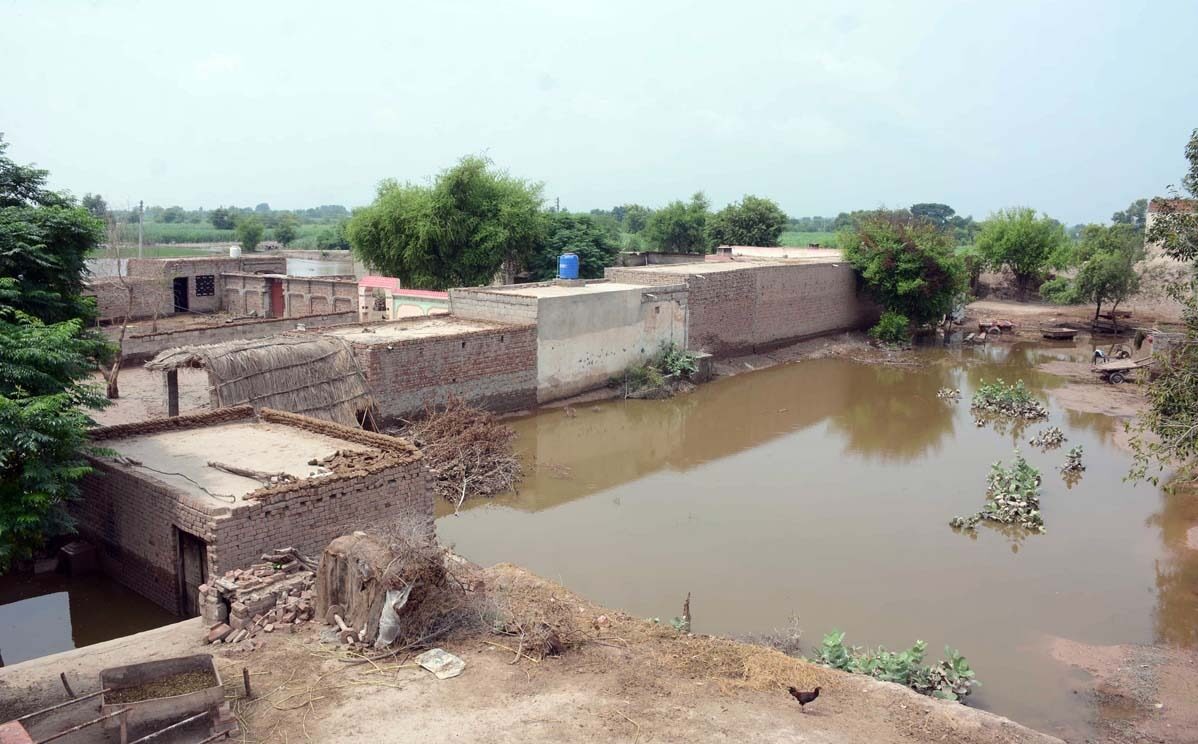 Pakistan is among the top ten countries most vulnerable to climate disasters. Rising temperatures, melting glaciers, and erratic monsoons have increased both the frequency and ferocity of floods. What was once a seasonal challenge has turned into an existential threat.
And still, preparedness remains a slogan. A few hours of downpour in cities like Karachi or Lahore is enough to paralyze daily life. Sewerage systems overflow, water gushes into homes, and roads crumble.
In rural Pakistan, the fragility is even more profound. Embankments are weak, drainage channels clogged, and disaster management plans more fiction than fact. The state’s response arrives late, often selective, and too easily hijacked by political theatre.
The contrast between the suffering masses and the privileged elite is stark. While flood victims huddle under tarpaulins, the powerful retreat into air-conditioned palaces, holding press conferences about resilience.
While children wade through leech-infested ponds to cool their burning feet, tariff hikes and power cuts torment ordinary households, even as the wealthy maintain uninterrupted supply through private generators. This inequality, written into daily life, becomes unbearable in times of disaster.
The story of Punjab and Sindh’s flood victims is also a story of erasure. Each year the waters come, take what they will, and recede, leaving survivors to rebuild with their bare hands. Their dignity, once tied to self-reliance, is washed away along with their belongings. And when the news cycle shifts, they vanish from public memory until the next monsoon.
Read More: https://thepenpk.com/when-the-sky-turns-against-us-pakistans-pain-and-resilience/
Yet for those who endure it, there is no forgetting. In village after village, the faces are the same: children with hollow eyes staring across waterlogged fields, women clutching soaked bedding, men standing in silence over submerged lands that once fed their families. These are not just statistics in a government report. They are human lives caught between climate disaster and political neglect.
The world, too, watches. International donors, humanitarian agencies, and climate activists warn of Pakistan’s vulnerability. They remind us that without structural reforms, without investment in resilient infrastructure, the cycle of devastation will not break. But warnings fade, drowned out by newer crises elsewhere, while Pakistan’s poor prepare for yet another season of uncertainty.
The truth is harsh: the floods will return, as they always have. The rivers will rise, and the land will give way. What remains in question is not the inevitability of water, but the inevitability of neglect. How many more seasons will pass before those who rule acknowledge that survival is not charity—it is a right?
As the waters subside, they leave behind not just debris but a silence that indicts. It is the silence of millions who have lost everything yet again. And it is a silence that declares to those in power that the cries of the abandoned will never be erased.
The article is the writer’s opinion, it may or may not adhere to the organization’s editorial policy.
Asem Mustafa Awan has extensive reporting experience with leading national and international media organizations. He has also contributed to reference books such as the Alpine Journal and the American Alpine Journal, among other international publications.

Comments are closed.