
Nature’s Art: Reflection On ‘Rainbow’
Ishtiaq Ahmed
Bradford: Nature never ceases to amaze. Yesterday, I travelled to the town of Reading, which lies just beyond the official bounds of Greater London but remains deeply intertwined with its pulse.
The weather, as expected for this time of year, was a restless dance between sunlight and showers—bursts of warm, golden light chased by sudden, heavy downpours. At times, the two seemed to coexist, the rain falling despite the sun’s glow, creating a surreal harmony of opposites.
Seated in the passenger seat, I watched this performance through the side window. The sun poured in from one side, warming my skin, while rain lashed the windscreen with an almost rhythmic fury. There’s something liberating about being a passenger.
You’re free to let your mind drift without fear of consequence. And drift it did, toward the familiar unpredictability of British weather, which, to me, mirrors the experience of living in this country.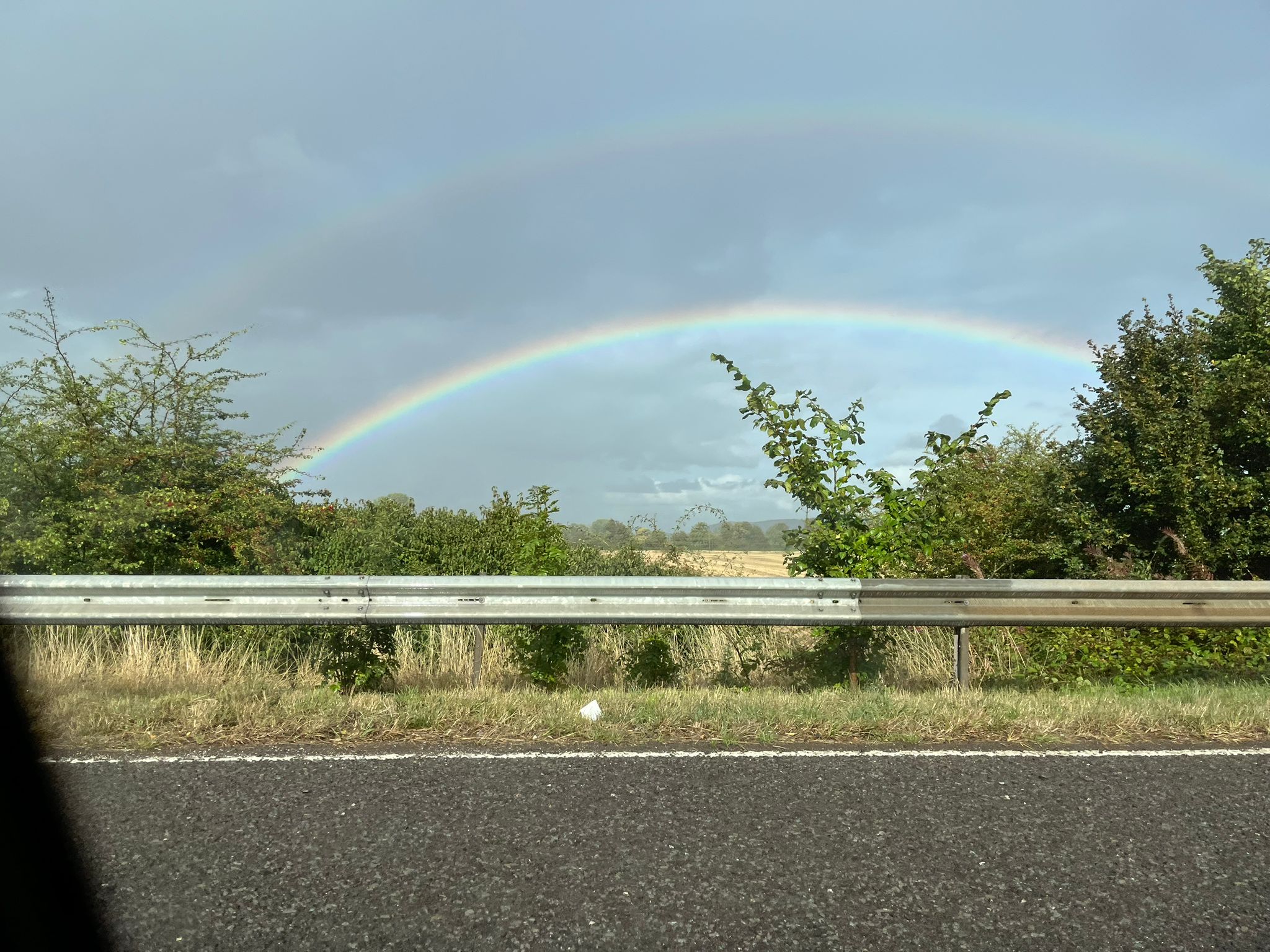 That constant shifting between brightness and storm reflects a deeper emotional truth. My life in the UK has been a blend of hope and alienation, of safety and subtle exclusion. It is a place where I’ve invested my years, a country grandfather and my father served, and my children and grandchildren call home.
Yet still, voices like Nigel Farage and his UK Reform movement echo with an unsettling regularity, suggesting that our presence here is somehow unnatural and unwelcome.
Read More: https://thepenpk.com/pakistan-gifts-fasting-buddha-replica-to-vietnam/
Their rhetoric is steeped in nostalgia for a Britain that never truly was, and in doing so, they distort the truth of the diverse, interconnected society we actually inhabit. And yet, despite this noise, there are signs of something more enduring and beautiful.
As I turned to look out of the left window, I saw a rainbow stretch across the horizon, a perfect arc of colour against the fading grey. Instinctively, I reached for my phone to capture it, as if photographing a fleeting promise. At that moment, I was transported back to my childhood in Pakistan. My grandmother used to speak of rainbows with reverence.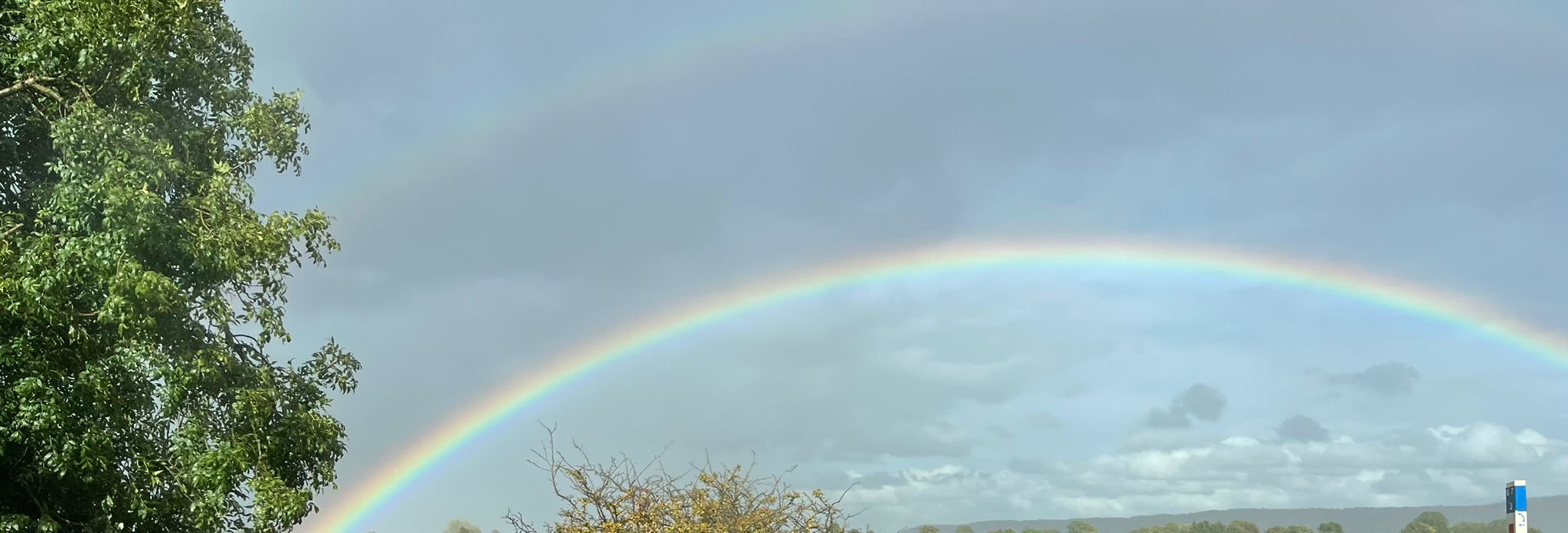 After relentless rain that could bring village life to a standstill, flooded fields, stalled chores, we children trapped indoors, a rainbow was a joyful sign that the storm had passed, and normal life could resume. For us children, it was a symbol of liberation, of returning to play in open spaces.
Even yesterday, just like back then, the rainbow signalled a shift. The rain cleared. The air felt fresher, lighter. And for a moment, life seemed renewed. Back home , inspired and reflective , I turned to Mr Google for a bit more insight to this phenomenon. My thought inclinations were quickly confirmed.
Read More: https://thepenpk.com/culture-technology-identity-collide-in-new-pnca-art-exhibition/
Rainbows hold symbolic power across the world and across time. In Judeo-Christian tradition, the rainbow is perceived as a divine covenant, God’s promise of peace after the Great Flood. In Greek mythology, Iris, the rainbow goddess, connects gods and humans.
In Chinese mythology, rainbows are believed to be cracks in the sky, repaired by the goddess Nüwa with coloured stones.
Hinduism sees it as the bow of Indra, god of storms; Thai Buddhism imagines it as a stairway to heaven. For Aboriginal Australia, the Rainbow Serpent is a creator deity, while for the Karen people of Burma, the rainbow is feared as a demon, so on and so forth.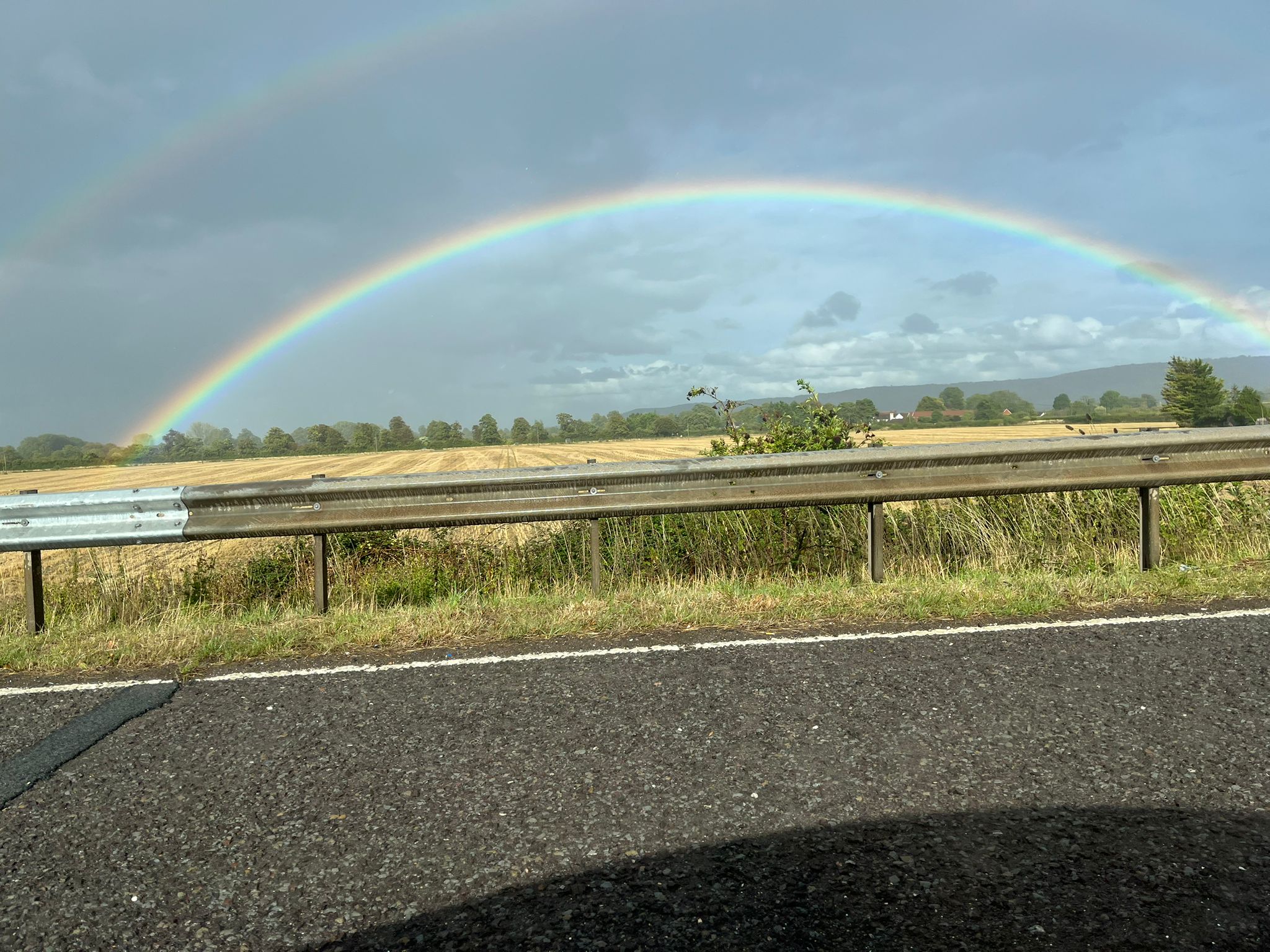 In modern culture, the rainbow remains an evolving symbol. For the LGBTQ, the rainbow flag represents pride, diversity, and the beauty of inclusion. The term “rainbow baby” celebrates the birth of a child after loss, hope after sorrow, joy after grief.
Science, of course, gives us a more literal explanation. A rainbow is a multi-coloured arc formed when sunlight is refracted, reflected, and dispersed by water droplets in the atmosphere. Its colours red, orange, yellow, green, blue, indigo, violet—always appear in the same sequence, a natural spectrum that evokes wonder even when we don’t understand the physics behind it. But even knowing the science doesn’t dull the magic.
Perhaps that is the enduring power of the rainbow: it reminds us that storms don’t last forever. That colour and light can emerge even from the heaviest downpour. That contradictions of sunlight and rain, joy and struggle, belonging and rejection, we can coexist. And in that coexistence lies a strange, undeniable beauty.
The article is the writer’s opinion, it may or may not adhere to the organization’s editorial policy.
The author is a British citizen of Pakistani origin with a keen interest in Pakistani and international affairs.

Bhai, what a beautiful and moving piece. You have not only captured a moment in the British political climate but have woven it into a tapestry of personal memory, cultural depth, and universal hope with a masterful touch.
The comparison of Britain’s “restless dance between sunlight and showers” to the experience of living there—a blend of hope and alienation, of deep-rooted family history and the sting of exclusion—is both poignant and perfectly apt. It articulates a feeling many know but few can express so elegantly. Your reflection on the difference between a nostalgic, fictionalised Britain and the vibrant, interconnected reality we live in is a powerful.
I particularly enjoyed the journey to your childhood in Pakistan, where the rainbow held a specific, personal promise of liberation and return to normalcy. This personal memory, set against the global exploration of the rainbow’s meaning—from divine covenants and mythical bridges to modern symbols of pride and hope after loss—elevates the article from a simple observation to a deeply human meditation. It beautifully illustrates how the same natural phenomenon can be interpreted through countless cultural lenses, yet still arrive at a universal truth: that light follows darkness, and hope can emerge from struggle.
The conclusion, that true beauty lies in the coexistence of contradictions—sunlight and rain, joy and struggle, belonging and rejection—is a message of profound wisdom and quiet optimism.
This was more than an article; it was a gift of perspective. I thoroughly enjoyed reading it.
Ishtiaq Bahi’s meditation on rain, sunlight, and rainbow is less a diary of weather than a cosmic allegory of belonging. He shows how the British sky—forever wavering between drizzle and brilliance—mirrors the immigrant soul: warmed by moments of acceptance, lashed by the cold rhetoric of exclusion.
The rainbow he beholds is not mere refraction; it is nature’s covenant, a bridge between estrangement and homecoming, a spectrum that defies binaries of “us” and “them.” Just as water and fire find coexistence in a single arc, so too can cultures, histories, and identities merge into a luminous wholeness.
The physicist may see dispersion, but the poet sees deliverance: a reminder that storms—political, personal, or spiritual—cannot hold dominion forever. The rainbow remains both an ancient myth and a modern manifesto, whispering that difference is not fracture, but colour; not rupture, but renewal.
A skill-fully articulated and beautifully written tapestry of various tentacles of imagination blended with past and present memories and experiences of personal life with tinted reference to changing political lanscape, is amazingly unique way of expressing feelings of deep fascination with nature.
A fascinating and imaginative peiece of literary writing based on lifelong experiences and knowledge with overwhelming meticulous selection of words and phrases of Englishy language.