

Khawaja Sira Community Sets Five-Point Rights Agenda for Sindh
News Desk
KARACHI: The Khawaja Sira community in Sindh has presented a five-point rights agenda, calling for concrete government action on safe housing, education, employment, healthcare and social protection.
The demands were presented at the Sindh Transgender Summit, organised by the Legal Aid Society (LAS) in partnership with the Gender Interactive Alliance (GIA) under the Aawaz II Programme, led by CARE Pakistan and funded by UK International Development from the UK government.
The summit brought together senior officials from the Sindh government, NADRA, the Sindh Human Rights Commission, the Sindh Commission on the Status of Women, Khawaja Sira community leaders, civil society organisations and development partners to discuss the challenges facing the community and ways to improve implementation of existing rights and policies.
Aradhiya Khan presented the five-point Charter of Demands on behalf of the Khawaja Sira community, calling for immediate government action.
The first demand was the establishment of emergency safe homes managed by transgender-led organisations for community members facing threats, violence or homelessness.
The community also called for the full implementation of Sindh’s Transgender Education Policy, including scholarships and protection against discrimination.
On employment, the community demanded enforcement of the 0.5 per cent government job quota and the removal of discriminatory medical certification requirements.
The fourth demand focused on healthcare, calling for dedicated wards in public hospitals and access to gender-sensitive and respectful medical services.
The fifth demand called for the inclusion of registered Khawaja Sira individuals in BISP and other social protection programmes, along with immediate financial assistance.
Sindh Social Welfare Secretary Munawar Ali Mithani acknowledged the gap between existing legal commitments and the realities faced by the community, and said the government was committed to working on the five areas highlighted at the summit.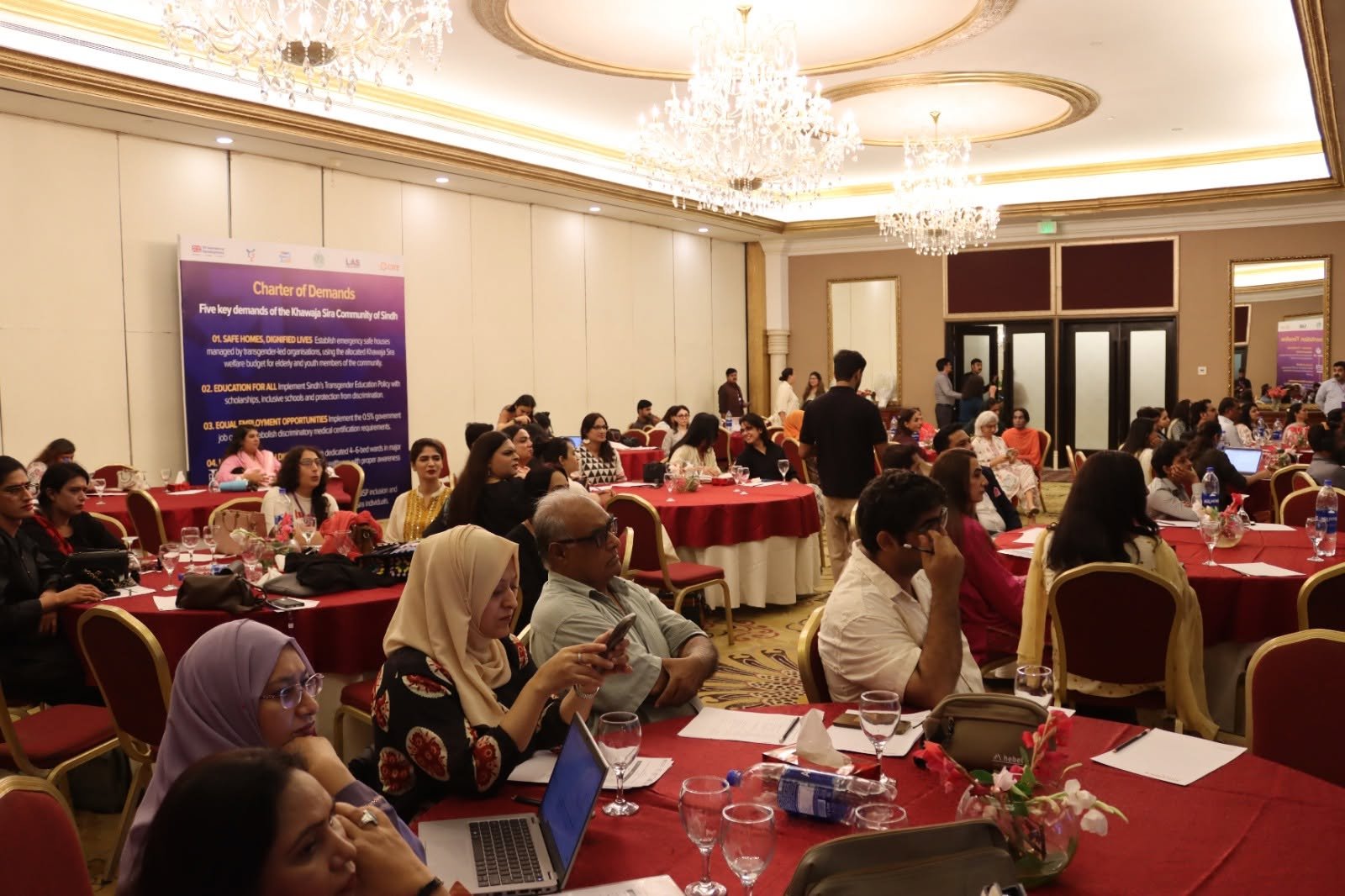 “Things can be done when we put our heads together. The Government, NGOs, civil society and the transgender community must work collectively to turn rights into real opportunities—through safe spaces, skills development, education and employment,” Mithani said.
A panel discussion moderated by Advocate Maliha Zia of the Legal Aid Society further examined the community’s experiences and institutional challenges.
Panellists Shahzadi Rai, Kami Chaudhry, Sanam Fakeer, Dr Sara Gill, Rayhan Muqadam and Aradhiya Khan identified eight areas requiring broader reforms, including emergency shelters, education, employment, healthcare and BISP activation.
They also called for police sensitisation, the appointment of transgender focal persons in every district, legal recognition of the Guru system, and direct government funding for structured vocational training programmes.
NADRA Director General Amir Ali Khan said the authority would work with the Sindh Social Welfare Department and other stakeholders to identify gaps affecting the community.
He said NADRA would review policies, improve registration and access to services, and work towards making its services more accessible, efficient and responsive.
CARE Pakistan Country Director Adil Sheraz said the summit could help bridge the gap between rights recognised in law and their implementation.
“Lasting change requires listening to the Khawaja Sira community, strengthening institutional accountability, and ensuring that commitments translate into tangible action,” he said.
The summit was opened by Bindiya Rana, Executive Director of GIA, while Sana Ahmed of GIA delivered an address titled “Voices of Resilience.” A theatre performance, “Stories from the Margins,” by Khwab-e-Raqs and Transcend Theatre also highlighted the lived experiences of the community.
Concluding the summit, Haya Emaan Zahid, CEO of the Legal Aid Society, called for the Commitment Tracker to be used as a roadmap for government departments to follow through on the commitments made.
She reaffirmed LAS’s commitment to continued monitoring, legal aid and advocacy alongside the Khawaja Sira community.
“Today’s evidence is both compelling and sobering. LAS will stand alongside the community until every commitment made here translates into real, measurable change,” Zahid said.
The summit concluded with calls for sustained institutional action to close the gap between legal protections and their implementation for the Khawaja Sira community across Sindh.
