
How Gwadar’s Camel Library is Tackling Rural Illiteracy
Zareef Baloch
Gawdar: When the COVID-19 pandemic swept across the world, classrooms fell silent. Schools were shut, online learning became the new normal, and children everywhere were forced to adapt.
But in a small village in Gawadar, Balochistan, there was no internet, no coaching centers, and no private schools to keep learning alive.
Faced with this silence, a young man, Ismail Yaqoob, decided to take education into his own hands—quite literally—by launching the Camel Library, a mobile library that carried books on camelback to children in remote villages.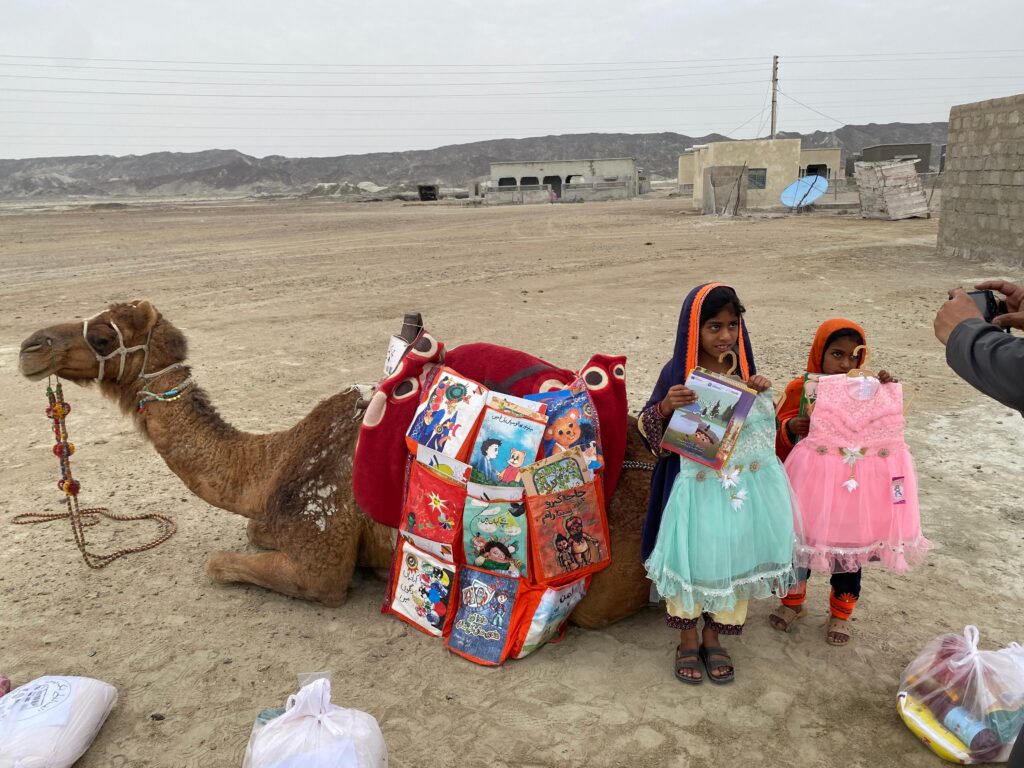
“We rented a camel and began our campaign in six villages of Union Council Paleri,” Yaqoob recalls. “People welcomed the idea warmly, and both children and adults took part.
The Lahore-based “Alif Laila ” organization provided us with books, which we loaded on the camel and delivered to village children. We also reached out to women who had never been to school. Today, many of them are able to read and write.”
What began as an emergency response to the pandemic soon grew bigger. After one year, the Camel Library expanded to six more villages in Pishkan, continuing its work entirely on a voluntary basis.
But running a library on nothing more than goodwill had its limits. “Since we had no financial support and relied solely on voluntary work, after four years our resources were exhausted,” Yaqoob said with a hint of disappointment. “Now we have formed a Camel Library Committee and are providing books through local schools. Our mission remains the same: to educate our children and keep them away from social ills.”
So far, more than six hundred children have benefited from the Camel Library, with girls showing a particularly strong interest. Even after schools reopened post-COVID, the initiative continued through schools rather than being abandoned.
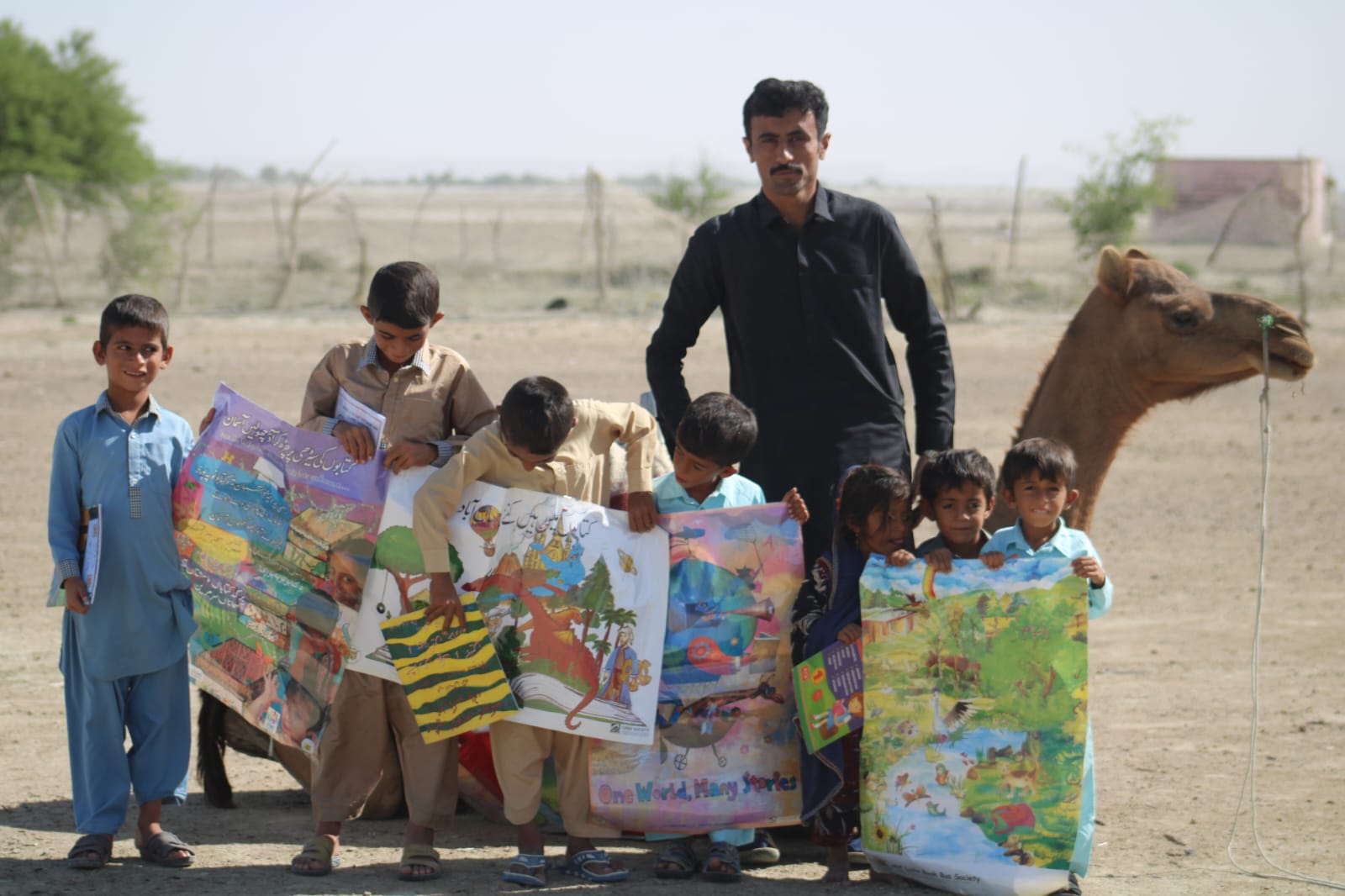
The idea itself was inspired by a similar project in Mand, near the Iran border, where former federal minister Zubaida Jalal’s sister Raheema Jalal had already been running a camel library. “We were motivated by her success and adopted the same model,” Yaqoob explained.
From the back of a humble camel, books have traveled across barren landscapes, bridging the gap between isolation and education. The project has not only helped children but has also opened the doors of literacy for women who had been denied schooling all their lives.
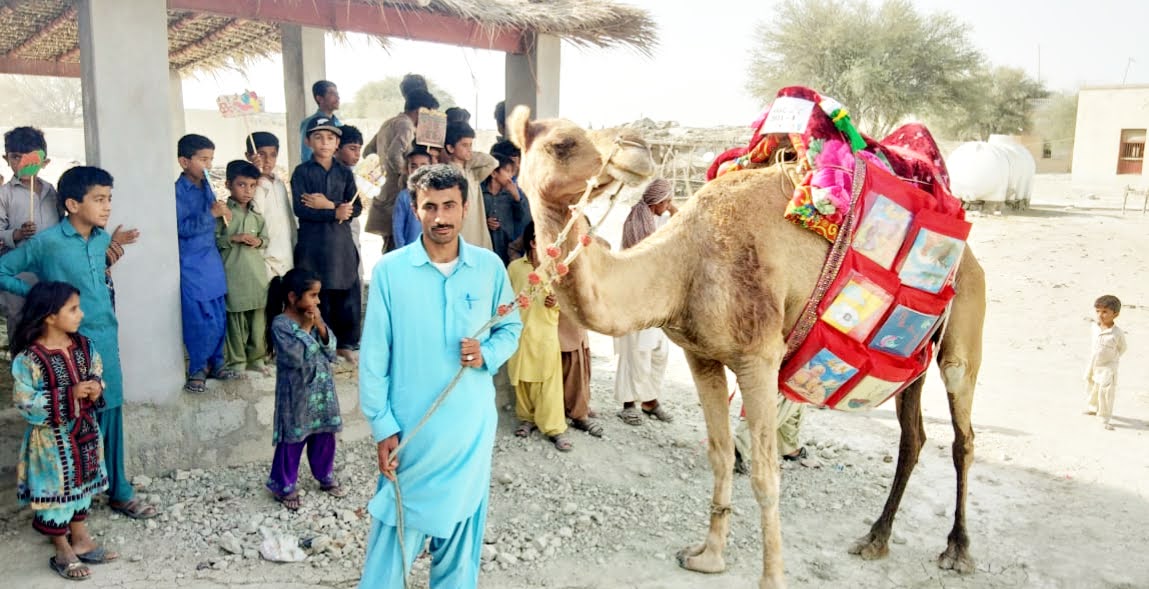
“Our area has no internet, no libraries, no tuition centers,” Yaqoob said. “We are still living a century behind the rest of the world. But through this effort, at least some of our children and women now have access to the light of education.”
The Camel Library may have begun as a desperate measure during a global pandemic, but in the villages of Gawadar, it continues to serve as a quiet revolution—one book at a time.

Comments are closed.