
Centuries-old Tribal Tradition Revived to Fight Climate in Bajaur
Shah Khalid Shah
Bajaur: In the rugged mountains of Bajaur, an ancient tribal tradition known as “Nagha” has re-emerged as a powerful tool in combating deforestation and mitigating the effects of climate change.
Passed down through generations, ‘Nagha’—a local system of forest protection enforced through community consensus and social sanctions—is once again being practiced in several villages to preserve the region’s natural beauty and ecological balance.
Malik Muhammad Ayaz Alizai, a 60-year-old tribal elder from the remote village of Beti Alizo in Khar tehsil, recalls a time when the area was covered with dense forests. “Years ago, our mountains were green and full of life.
But indiscriminate cutting destroyed that beauty,” he said. “We began facing hotter summers, water shortages, and the loss of grazing lands. To address this, our community decided to revive Nagha to save our forests.”
Revival of the “Nagha” System
Three decades ago, a grand jirga of village elders and residents unanimously decided to impose a total ban on cutting trees without permission.
This collective decision, known locally as Nagha, remains binding to this day. Under this tradition, no one is allowed to cut even a single branch without the consent of a local committee, and violators are punished according to tribal customs.
“The committee usually consists of four to six members, including elders and youth,” said Malik Ayaz. “They are responsible for reviewing requests for wood and monitoring forest protection. Every three years, the elders reconstitute the committee.”
While exceptions are made for community needs such as building mosques or madrasas, cutting for personal use remains strictly prohibited.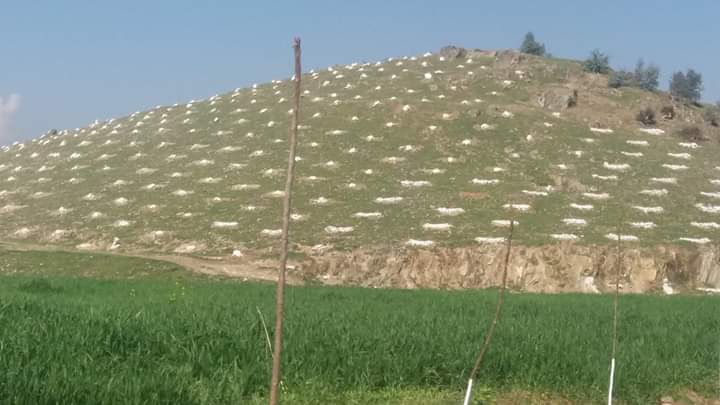 Strict Penalties for Violators
Violating the Nagha carries heavy fines. “Anyone caught cutting trees without permission is fined between fifteen thousand and thirty thousand rupees,” Malik Ayaz explained. “The collected money is used for collective village welfare projects. Because of these strict rules, people now think twice before violating the Nagha.”
Haji Syed Bacha, another resident of Beti Alizo, shared that while villagers now buy firewood from the market instead of collecting it from local forests, they take pride in the outcome. “It’s a sacrifice, but it has made our mountains green again. Nagha has not only protected our forests but also restored the beauty of our village,” he said.
Environmental Impact
Although Malik Ayaz does not use the term “climate change,” he is acutely aware of the environmental shifts in recent years. “Rainfall has become irregular, sometimes leading to droughts and sometimes to floods,” he observed. “But unlike other areas, our natural springs are still flowing, and land erosion is minimal because our forests are intact.”
Azad Bakht, a 65-year-old educationist and researcher from Gandao tehsil, Atmankhel, explained that Nagha once covered not only tree-cutting but also grass-cutting and livestock grazing. “In the past, if someone grazed goats or sheep in a protected area, they were fined a chicken; for grazing cows, the fine was a goat,” he said with a smile. “These small penalties kept people disciplined. The grass grew abundantly, livestock thrived, and even wildlife flourished.”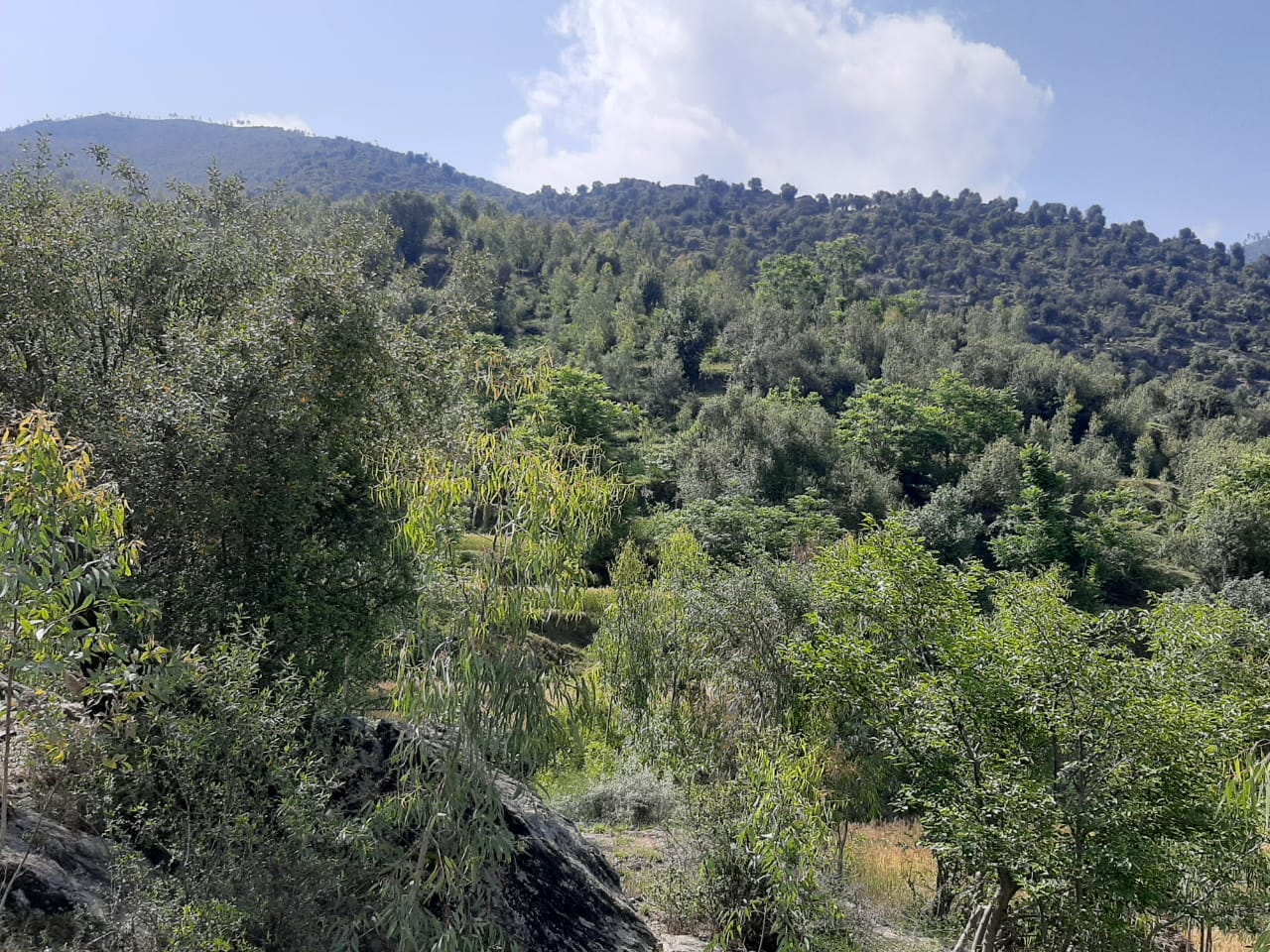 Consequences of Weakening the Tradition
In contrast, villages where Nagha has weakened are now paying the price. Abdul Halim, a resident of Kitkot village in Mamond tehsil, lamented the loss of forests in his area. “Our mountain was once covered in thick trees, but people cut them mercilessly. Now it looks barren, and the springs that once flowed have dried up,” he said. “If we had continued following Nagha, we could have preserved what our ancestors left us.”
According to Azad Bakht, the decline of Nagha has had severe consequences. “As the forests disappeared, the number of livestock fell, fodder became scarce, and temperatures increased,” he said. “It’s a clear sign of what happens when we abandon our traditional conservation practices.”
Forest Cover & Government Efforts
Bajaur district spans 1,290 square kilometers. The local Forest Department reports that forests now cover about 470,000 acres, with an additional 40,000 acres of natural forest in mountainous areas such as Kaimur, Barang, Arang, Alizo Bhati, Salarzo Batwar, Mamond, and Charmang.
To further expand forest cover and mitigate climate change, the Forest Department holds tree plantation campaigns every spring and monsoon season, involving both officials and the general public.
However, Malik Ayaz believes that government efforts alone are not enough. “The government cannot protect forests without the people’s cooperation,” he said. “If communities across Pakistan adopt Nagha, we can revive our green heritage. Our village is proof—community action can make mountains green again.”
Through the revival of Nagha, the people of Bajaur are not only preserving their forests but also reaffirming the enduring wisdom of their ancestors—showing that sometimes, the most effective climate solutions are rooted in tradition.
Shah Khalid Shah Jee is a freelance journalist based in Bajaur and a regular contributor to The PenPK.com.

Comments are closed.