

Ahsan Iqbal Reveals Who Will Shape Pakistan’s 2047
News Desk
RAWALPINDI: Fatima Jinnah Women University (FJWU) has strengthened its position in international higher education rankings, secured research funding worth approximately Rs. 1.589 billion and expanded its academic portfolio with emerging technology programmes, as 1,439 students graduated at its 23rd Commencement ceremony.
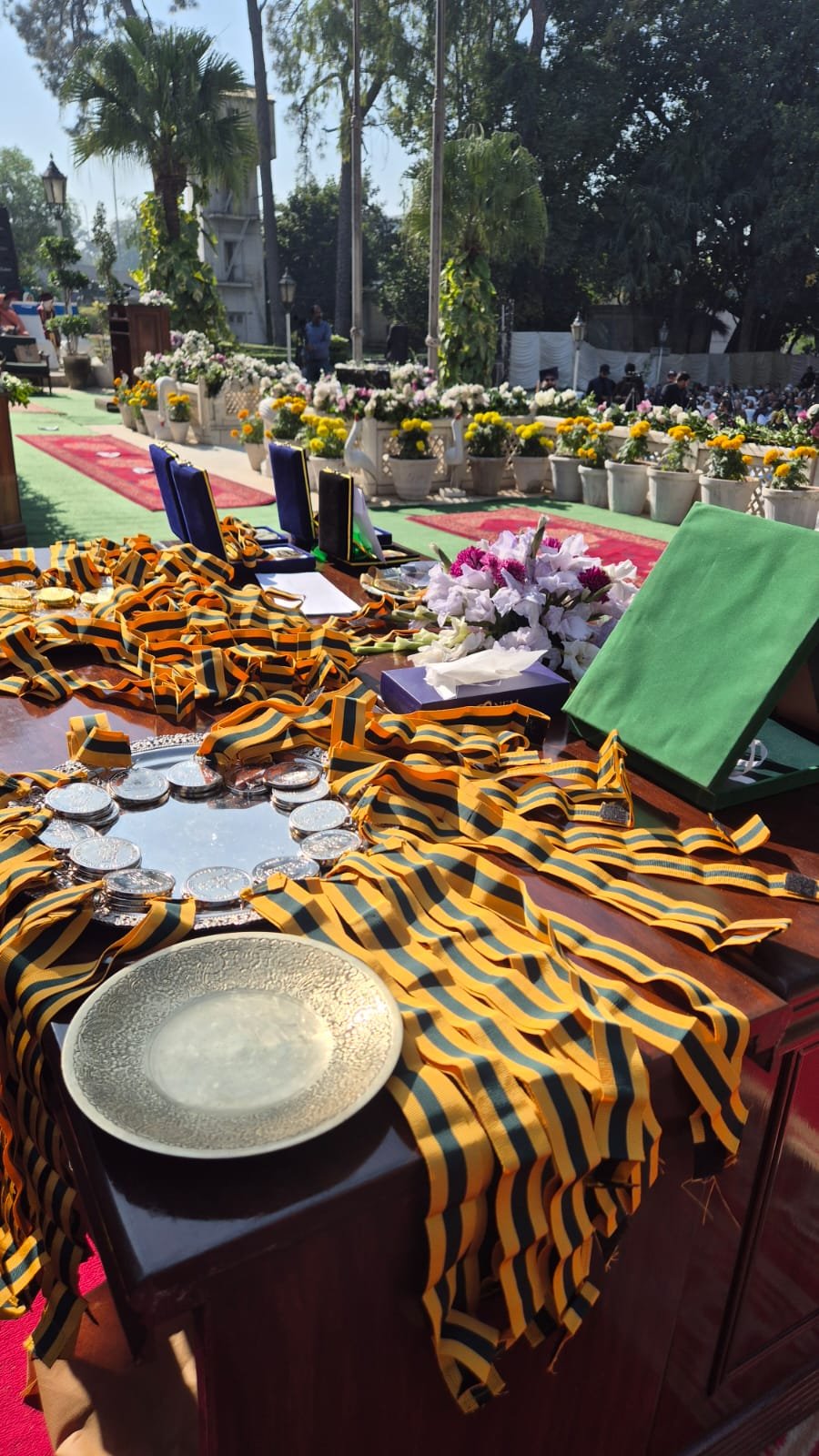
Federal Minister for Planning, Development and Special Initiatives Ahsan Iqbal Chaudhry attended the ceremony as chief guest, where 30 PhD, 179 MS/MPhil and 1,230 undergraduate students received degrees. A total of 41 graduates were awarded gold medals, while 27 received silver medals in recognition of their academic achievements.
The university’s Vice Chancellor, Professor Dr. Bushra Mirza, highlighted FJWU’s academic progress, international recognition, research initiatives and infrastructure development, while acknowledging the government’s support for higher education.
Established in 1998 as Pakistan’s first public-sector university dedicated to women’s higher education, FJWU now offers 104 degree programmes across 32 departments and has an alumnae network exceeding 21,449 graduates.
In a significant expansion towards technology-driven education, the university has introduced programmes in FinTech, Data Science, Robotics and Artificial Intelligence, alongside Human Nutrition and Dietetics. It is also phasing out programmes that are no longer in demand to align its academic offerings with changing market requirements.
The university has also accelerated its digital transformation, shifting admissions and recruitment processes entirely online through its University Management System. A smart classroom has been established at Campus II, while Open and Distance Learning has been launched in collaboration with Virtual University, contributing to a significant rise in student enrolment. FJWU’s international standing has also improved. According to the QS Asia University Rankings 2027, it secured 641st position among 1,722 institutions and ranked 178th in Southern Asia. It also featured in the 401-600 band of the Times Higher Education Impact Rankings 2025 and the 401-500 band of the THE Interdisciplinary Science Rankings 2027.
In the QS Sustainability Rankings 2027, FJWU emerged as Pakistan’s top-ranked women’s university, improving its score from 28.1 to 39.7. The university also secured first position among women’s universities worldwide in the WURI 2026 rankings and ranked first globally in the Industrial Application category.
Research and innovation have remained another major focus, with the university securing 21 research projects supported by the Higher Education Commission, Punjab Higher Education Commission, DAAD and the Alexander von Humboldt Foundation, with reported funding of approximately Rs. 1.589 billion.
FJWU is also participating in an Erasmus Mundus master’s programme focused on biodiversity and a China-Pakistan Belt and Road joint laboratory initiative. Three faculty members were included in the Stanford-Elsevier list of the world’s top two per cent scientists for 2026.
Through its Office of Research, Innovation and Commercialization and Business Incubation Centre, the university has organised initiatives including WECON 2025, the Research and Innovation Pitch Fest and the Punjab Youth Innovation and Incubation Competition 2026.
Among its planned initiatives are an Autism and Well-Being Centre, an Advanced AI Laboratory, a Nursing and Midwifery College and a Diagnostic Laboratory.
The university also highlighted its students’ achievements at national and international platforms. Its team secured fourth position among 33 teams at the Jessup International Moot Court Competition 2026, while Nimra Rafique, captain of the Pakistan Women’s Blind Cricket Team, received the Prime Minister Award 2026.
Volleyball captain Aima Malik won a silver medal at the Pak-China Games, while three Electronic Engineering students secured second position at EMCOT 2026 for developing a smart wristband.
The student startup Cardana Utensils won first position in the Climate Change category at SEE Pakistan 2026, while two Media Studies students received individual grants of Rs. 1 million each under the Chief Minister’s Film Fund.
 On the infrastructure front, FJWU installed a 756.38-kilowatt-peak grid-connected solar power system across its two campuses at a cost of Rs. 100 million, with an estimated payback period of 2.5 to 2.8 years. A new hostel accommodating 300 students has also been inaugurated.
The university is pursuing heritage conservation of Bachan Niwas in collaboration with the Directorate General of Archaeology and the Aga Khan Foundation, alongside plans for a museum. It is also working with TIKA on a laboratory and KOICA on establishing a National Centre of Excellence for emerging technologies.
However, several development projects, including an auditorium, Campus II boundary wall and transport facility, remain without funding. The Vice Chancellor sought the federal minister’s support for their implementation.
Addressing the graduates, Professor Dr. Bushra Mirza urged them to use their education with integrity, courage and compassion, remain curious and embrace technological advancements responsibly. She encouraged them to challenge barriers, support others and maintain their connection with the university by mentoring future generations.
Speaking at the ceremony, Ahsan Iqbal described the graduates as “Generation 2047”, expressing confidence that they would play a transformative role in shaping Pakistan’s future as the country approaches its centenary of independence.
Recalling FJWU’s establishment in 1998, the minister said the former Presidency building was converted into Pakistan’s first public-sector women’s university on the directions of then prime minister Mian Muhammad Nawaz Sharif.
He said education remained the most powerful instrument for overcoming poverty and enabling nations to stand alongside developed countries. Sharing his personal experience, he attributed his own development to education, the grace of Almighty Allah and his mother’s prayers, adding that qualified individuals could realise their dreams through determination and hard work.
The minister urged graduates to follow the example of Mohtarma Fatima Jinnah, whom he described as a role model for Pakistani women and students. He recalled her pursuit of higher education in dentistry and her steadfast support for her brother during the struggle for Pakistan.
He also acknowledged the contributions of parents and teachers, saying graduates owed equal credit to their families for prioritising education and to teachers for building their confidence and personalities.
Referring to the country’s future, Ahsan Iqbal said the generation of 1947 had sacrificed personal comforts to secure freedom for future generations, adding that today’s graduates were the generation expected to lead Pakistan towards new heights by 2047.
Quoting the vision of Allama Muhammad Iqbal, he encouraged students to aspire to the heights of the Shaheen, or eagle, rise above hatred, maintain faith in their leadership and become productive members of their families and society.
Highlighting the rapid transformation of technology, the minister said artificial intelligence was reshaping education systems worldwide and Pakistan must keep pace with these developments. He noted that managing AI in education was a global challenge, citing discussions with university experts and government officials during his recent visit to the United States.
He further observed that the 21st century was increasingly being shaped by economic rather than political ideology, with international alliances emerging around economic strength. He stressed the need for Pakistan to understand these changing global dynamics and plan its future accordingly.
The ceremony concluded with the presentation of souvenirs to guests and a group photograph.
