
A Hunter’s Lament as Bajaur’s Wetlands Disappear
Shah Khalid Shah
Bajaur: For more than three decades, Tariq Rahim’s winters and springs began before sunrise. Wading silently through ponds and wetlands along the Khwar stream near his village of Khar, he followed a ritual inherited from his father and grandfather — duck hunting, a tradition woven into his family’s identity.
Today, that ritual is fading.
At 42, Tariq has spent 32 years hunting migratory ducks alongside elders of his family and close friends. Once, the ponds and low-lying wetlands of Bajaur drew hunters from across the district and neighboring areas. Now, climate change has dried up these wetlands, leaving empty skies where flocks once gathered.
“Our village lies at the confluence of the Mandal and Mamund streams,” Tariq recalled. “Because of this, the Khwar stream always carried a strong flow of water. There were many wetlands locally called Jabay, where we built ponds for ducks.”
From February to late April, migratory ducks would descend on these ponds in large numbers. “There were days when each pond owner hunted three to five ducks in a single morning,” he said. Tariq first accompanied his elders on hunts at the age of ten.
“Our family is known in the area because of this tradition.”
Read More:https://thepenpk.com/why-are-bajaurs-fields-disappearing/
The hunts followed strict, self-imposed rules. Hunters used specially constructed ponds, wooden duck decoys, and traditional mouth calls to lure birds.
“We agreed that hunting would only be allowed from 5am to 8am,” Tariq said. “After that, there was a complete ban.”
Those unwritten rules — based on restraint rather than enforcement — have largely vanished.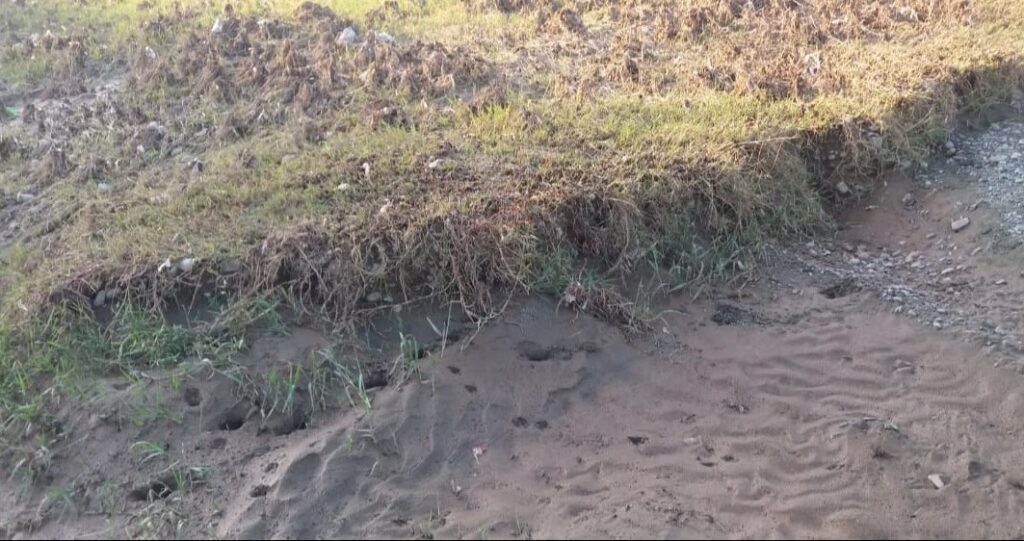 Dry Ponds, Empty Skies
Iftikhar Khan, 45, from Maminzo village in Tehsil Khar, has been hunting ducks for 26 years. Like Tariq, he says the practice has become increasingly futile.
“Until around 2005, flocks of ducks would arrive one after another,” he said. “The water flow was strong, and hunting was easy. Now the ponds have dried up, and the ducks have stopped coming.”
Prolonged dry spells linked to climate change have sharply reduced water levels across Bajaur. Hunters say the environmental decline has been compounded by illegal and unregulated hunting.
“True hunters never use automatic weapons,” Tariq said. “We hunted to satisfy our passion, not to wipe out entire species. Now people use automatic guns, making it impossible for birds to even take flight.”
Hunters are calling for stricter enforcement against unregistered and illegal hunting.
Wildlife Department Steps In
Ubaidullah, an official with the Wildlife Department in Bajaur, said the department formally began operations in the district five years ago. Since then, a licensing system has been introduced and penalties imposed.
“Fines range from Rs10,000 to Rs80,000,” he said, adding that several cases are currently under trial.
By 2024, around 250 licenses for waterfowl hunting had been issued at a fee of Rs5,000 each. Licenses are also issued for other species, including chukar, snow partridge, black partridge and quail, under seasonal categories. All licenses are valid for one year.
In 2025 alone, the department issued 126 licenses and fined 72 individuals for illegal hunting, including one case carrying a Rs45,000 penalty. Hunting has been completely banned in areas such as Charman Valley, Arang, Seri Sar and parts of Tehsil Mamund.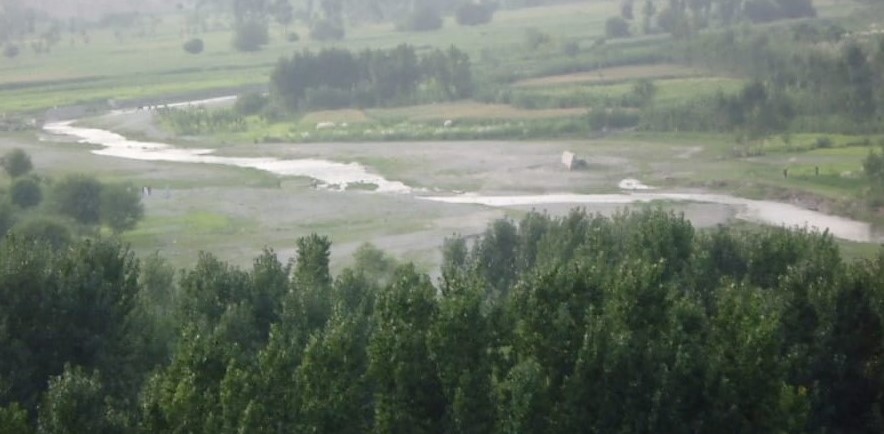 Wetlands Vanishing
Local data on migratory birds — particularly ducks — shows a dramatic decline. Bajaur once had more than 500 ponds; today, locals estimate that only about 103 remain.
Tariq believes duck populations have fallen by nearly 90 percent. Species once common in the area — Tarlak (Pintail), Chorlak (Teal) and Sandani (Gadwall) — are now rarely seen.
“The rivers have shrunk, the wetlands have dried up, and human settlements along riverbanks have expanded,” he said. “All of this has destroyed their natural habitat.”
Once an avid traveler for hunting, Tariq used to visit Dera Ismail Khan, Larkana, Quetta and Gilgit-Baltistan. For the past several years, he has stopped altogether.
“There’s no water, and there are no ducks,” he said simply.
Hunters Turn to Conservation
In response to the crisis, hunters in Bajaur have formed an organization aimed at discouraging illegal hunting and working alongside the Wildlife Department.
“We want to protect what little remains,” said Iftikhar, a member of the organization’s cabinet. He said the initiative has been welcomed by the local community.
Still, the reality remains bleak. “We go out in the mornings, but we return empty-handed. Now it’s just habit,” he said, urging the government to take serious steps toward water conservation.
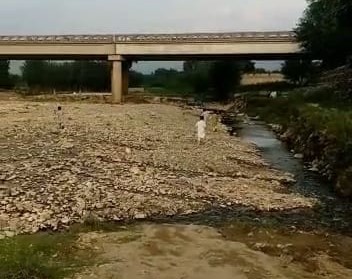
According to officials from the District Water Management Department Bajaur, climate change has severely affected both surface and groundwater resources. River flows have declined sharply, many streams have dried up entirely, and groundwater levels have dropped by up to 40 percent.
The department says it is working on conservation through water storage tanks, improved irrigation channels and public awareness campaigns. Officials warn that erratic rainfall and reduced snowfall are further worsening the crisis, prompting coordination with environmental organizations to develop mitigation strategies.
Story Mirrors Global Warning
Bajaur’s story mirrors a global trend. Climate change has caused wetlands worldwide to shrink, leading to sharp declines in wildlife populations and threatening centuries-old cultural traditions.
World Wetlands Day, observed annually on February 2, highlights this connection. This year’s theme — “Wetlands and Traditional Knowledge: Celebrating Cultural Heritage” — underscored the vital role wetlands play in sustaining ecosystems, livelihoods and traditions.
For hunters like Tariq Rahim, the warning is deeply personal.
“Without water,” he said, “our wetlands, our birds, and our traditions will disappear.”
