
A Dying Art on the Banks of a Dying River
News Desk
Islamabad: In the fading heartbeat of Lahore’s River Ravi, where vibrant traditions once flowed as freely as the water itself, only whispers of history remain. Ravi, once thriving with fishermen, families, and river-bound livelihoods, is no longer a living force.
Among the vanishing tradition and crafts that once gave the river soul stands the art of boat-making. The art is surviving on the weathered hands of one man, 80-year-old Abdul Majeed, locally known as “Majeed Mistri”.
With tools scattered under a bridge and a few paint cans by his side, Majeed continues the legacy of his forefathers—his father, grandfather, and great-grandfather—who all shaped wood into vessels that danced across the Ravi’s waves.
“I started learning this when I was just ten,” he recalls, sitting beside a half-finished boat. “This is our family’s work. But after me, there’s no one left to carry it forward. No one wants to learn.” His sons have taken other paths, lured by the conveniences and aspirations of city life. Majeed understands.
“The world’s changed. No one cares about this kind of work anymore.”
Built to Last
Majeed’s workshop is humble no signboards, no formal space. He works wherever he can find room beneath the bridge, surrounded by his tools and planks of Deodar wood sourced from Jaranwala. The boat he is currently repairing belongs to a government college; another new one stands nearby, filled with water to prove it doesn’t leak.
“I make boats that won’t betray you,” he says, not without pride. “People overload them and then blame the boatmaker. But I know my work.”
Read More: https://thepenpk.com/m-yousif-faqir-the-blind-voice-of-tharparkar/
Years ago, he could craft a full boat for just 250 rupees. Today, the same job costs around 8 lakh rupees and takes at least 15 days. But orders have dried up. College rowing clubs that once gave life to his business have disappeared.
“There used to be excitement races, cheers, boats lining up. Now there’s nothing,” he says with a distant look in his eyes.
Holding the Oar Alone
No apprentices, no assistants Majeed works in solitude. Despite limited means, his boats have sailed across waters beyond Ravi from Shangrila Lake to Azad Kashmir. But the challenges have grown heavier. Wood is more expensive, and with the river increasingly acidic and polluted from industrial waste, even his well-built boats suffer.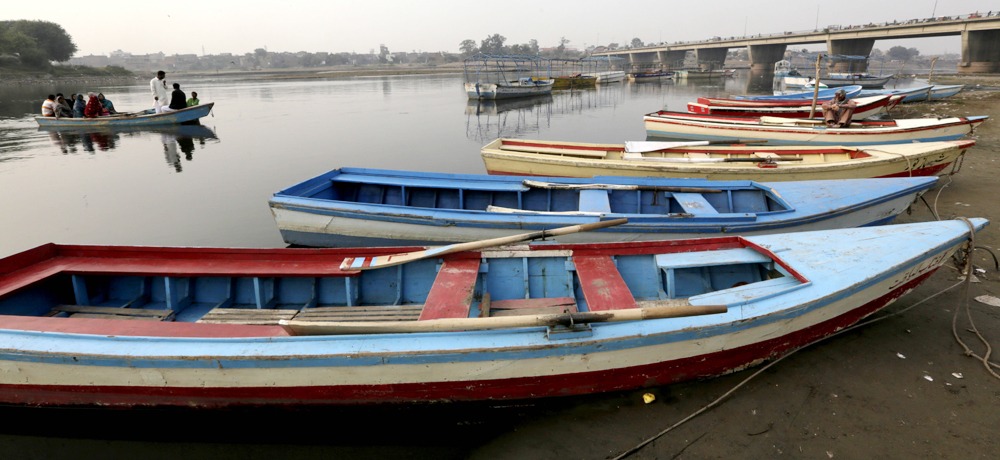 “The river isn’t what it used to be,” he laments. “It’s poison now.”
Shahid Mehmood, a local boatman who still offers short rides to tourists for 100 rupees, remembers the Ravi of old. “There’s no one like Majeed left,” he says. “We saw his uncle work this same craft. Now Majeed is the last.”
The Soul of the River
As Ravi itself decays—its waters no longer supporting real work or wildlife—the craft tied to it nears extinction. Majeed’s boats still support those like Shahid, but their days are numbered. “The saddest part,” Shahid adds, “is that no one will carry this on. When he’s gone, the whole art will vanish. A part of Ravi’s soul will vanish with him.”
In Abdul Majeed’s tired yet unwavering hands lies not just the memory of a family trade, but the quiet, flickering legacy of a river and a city that once lived through it. When he’s gone, it won’t just be the last boatmaker we lose—it will be the end of an era.

Comments are closed.