
She Is Seventeen, Married Three Times, and Still a Child
Faisal Saleem
Khanewal: In the red dust of the brick kiln, childhood is burned away along with clay. Among the morning lines of laborers stand young girls called workers, though they are children trapped by poverty, gender, and silence.
Seventeen-year-old Nadra is one of them. Married three times before adulthood—first at 12—her life reflects an exploitative cycle where survival replaces choice and childhood becomes a casualty.
Muhammad Hussain Khokhar, Chairman of the All-Pakistan Brick Kiln Workers Association, explains that even among brick kiln laborers, there are those who take unjust advantage of the vulnerability of people like them. Nadra has been a victim of such exploitation.
According to him, Nadra was exploited under the guise of marriage, a situation enabled by her parents’ financial problems and limited understanding.
He adds that Nadra’s father was not always a brick kiln worker; he was a small-scale farmer who, after falling into repeated debts, was forced to change his profession, migrate from his village and reside at a brick kiln.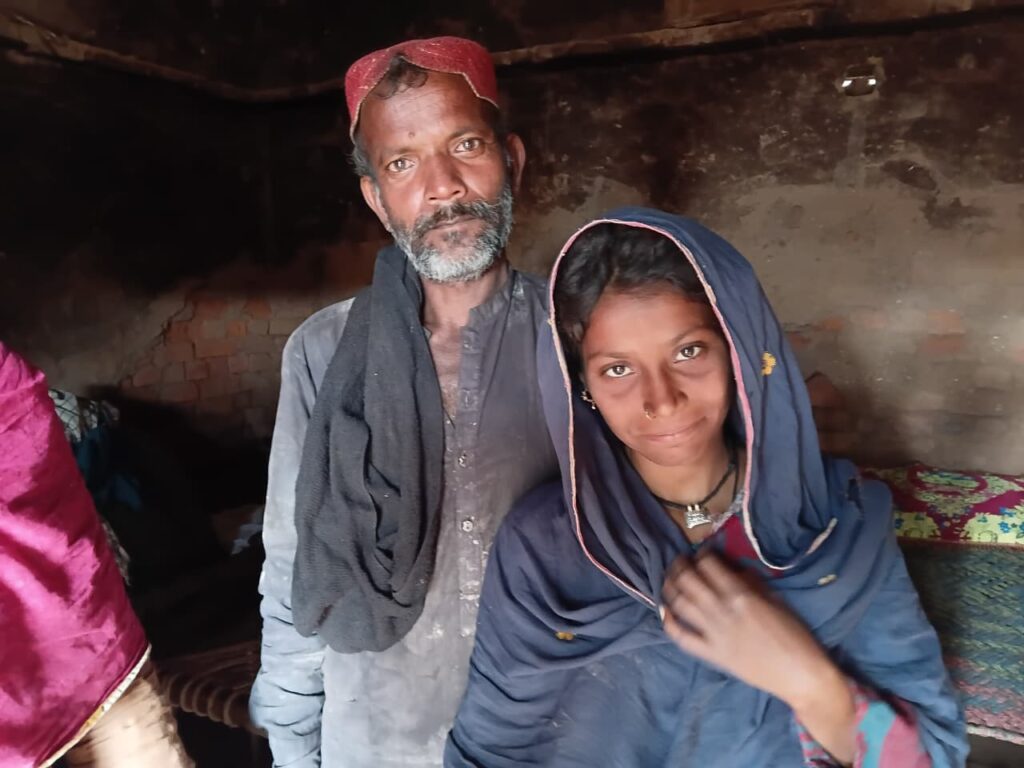
Nadra is not the only one facing such issues. Gudu has also suffered similar injustices. After her father passed away, her uncle accused her mother and her maternal uncle Mazhar (Nadra’s husband) of his brother’s murder. At the time of settlement, her uncle demanded custody of Gudu and her younger brother, threatening to suppress the matter otherwise. As a result, at the age of five, Gudu lost not only her father but also the existence of her mother.
Gudu spent seven years with her uncle, who, according to her, drank alcohol and abused drugs. During this time, a relative, Munir, filed a 491 writ in the Sessions Court Multan to restore custody to Gudu’s mother. Upon regaining custody, Munir demanded payment of Rs80,000 for the legal expenses from Gudu’s mother, or that Gudu marry his grandson Tanveer.
Due to financial constraints, Gudu’s mother agreed, and without Gudu’s consent, her Sharia marriage was conducted. Though Gudu’s mother initially opposed the wedding due to her daughter’s age, she eventually consented under Munir’s pressure. After the marriage, Gudu revealed that her uncle had been sexually abusing her. Her mother threatened legal action, and the uncle silenced them with Rs35,000.
Read More: https://thepenpk.com/zigzag-kilns-a-vision-unfulfilled/
Muhammad Hussain Khokhar says that as a brick kiln worker, he is familiar with this system and frequently hears of such distressing incidents. In labor households, sisters or daughters are often sacrificed to make improper decisions for financial transactions without their consent.
According to the Child Marriage Restraint Act (Punjab Amendment), the legal age for marriage for girls is 16 years, while other provinces and the federal government have set it at 18. Khyber Pakhtunkhwa is in the process of adopting this amendment.
Under the Pakistan Penal Code, sexual relations with a minor girl are classified as rape, regardless of whether a marriage has occurred. Human trafficking, forced labor, and exchanging girls for money are also punishable offenses.
District Women Protection Officer Muneeza Butt says that the Violence Against Women Center, Multan, is an integrated institution of the Punjab government that provides a one-window facility for cases of violence against women and girls.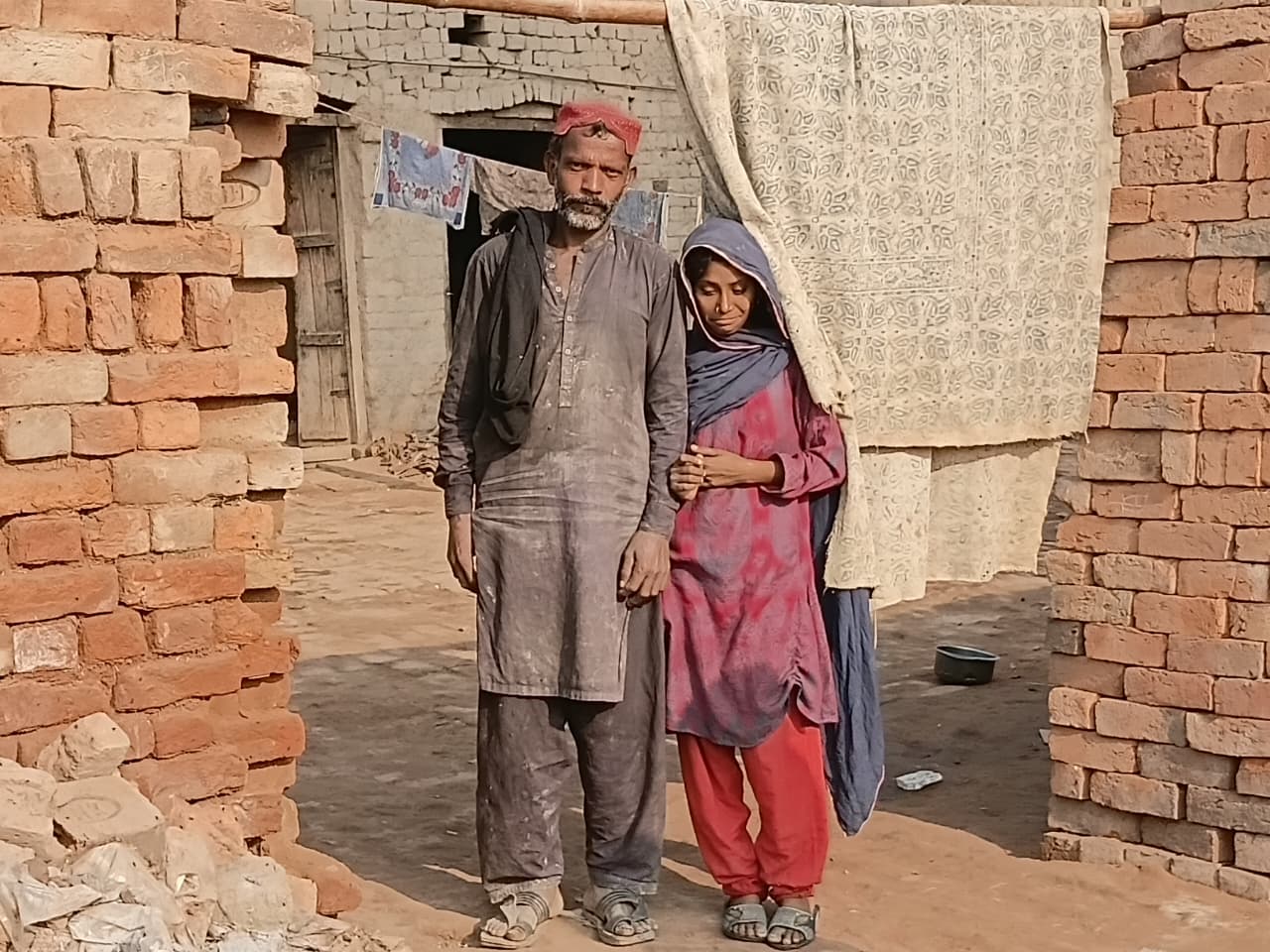 Women Protection Officer Silwat Shafi stated that during the current year, 17 cases of forced marriages involving girls under the age of 16 and 71 cases of forced marriages involving girls under the age of 18 were reported. She added that the department made every possible effort to prevent and address these cases.
Asiya Arif, Executive Director of the Society for the Protection of the Rights of the Child (SPARC), says that SPARC implemented a project from 2016 to 2020 in certain districts of Punjab, including Multan, to raise awareness about underage marriages at the Union Council level. This project included awareness, prevention of child marriages, and legal action against offenders. Currently, 25 non-formal education centers have been established at specific brick kilns in Multan and Khanewal, providing children with education and awareness about such issues.
The stories of Nadra and Gudu are not just reflections of individual tragedies; they are living proof of a system where poverty, gender bias, and exploitative power structures destroy the lives of young girls.
According to UNICEF, one in every six girls in Pakistan is married before the age of 18, and 4.8 million girls are married before turning 15. This shows that the issue is not limited to individual families but has become a national crisis with severe impacts on education, health, and the psychological future of girls.
If immediate and coordinated social, legal, and policy-level actions are not taken against exploitation, forced marriages, and sexual abuse, thousands more girls like Nadra and Gudu will not only lose their childhoods but also sacrifice their autonomy and rights forever.
Faisal Saleem is a PhD scholar in media studies and a freelance journalist. He likes to write about social, political, and climate challenges.

Comments are closed.