
Resurgence of Ajrak: Sindh’s Living Heritage
Ali Nawaz Rahimoo
UmarKot: Along the banks of the Indus, where looms once sang in every settlement, the ancient craft of Ajrak still breathes though faintly, like an old melody fading in the wind.
To Sindhis, Ajrak is not just cloth; it is the fabric of identity itself. It is draped on honoured guests, worn proudly as turbans and shawls, gifted in reconciliation, and laid upon the departed in reverence. Its geometry of indigo, crimson, black, and white reflects dignity, hospitality, and belonging.
Ajrak’s story is older than memory. Archaeologists trace its origins over 4,000 years back to the Indus Valley Civilization.
 The “Priest-King” of Mohenjodaro, immortalised in stone, wears a patterned garment believed to be the ancestor of Ajrak. From antiquity to today, the craft has endured a fragile but unbroken thread in Sindh’s history.
The Art of Ajrak
Creating an Ajrak is a delicate balance of science and poetry. The process spans nearly a month and involves over twenty meticulous stages.
Read More: https://thepenpk.com/ancient-artifacts-surface-after-monsoon-floods-in-dg-khan/
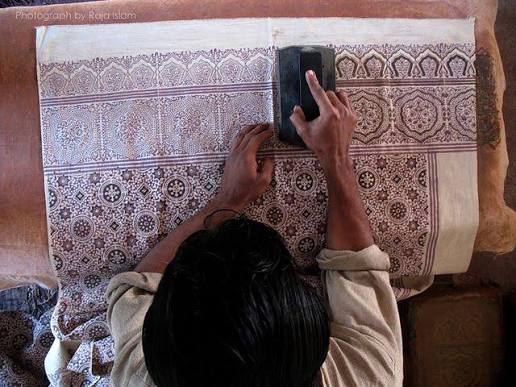
Fabric is first softened with oils, then stamped with hand-carved wooden blocks using pastes made of lime, gum, and rice. Mud resists protect the patterns as the cloth is dipped in indigo, washed in river water, and rhythmically beaten to release its hues.
Camel dung whitens the motifs, while alizarin deepens them with crimson fire. Under Sindh’s fierce sun, the fabric dries naturally, self-pressed into its final form. Some designs require dozens of blocks and the hands of multiple artisans.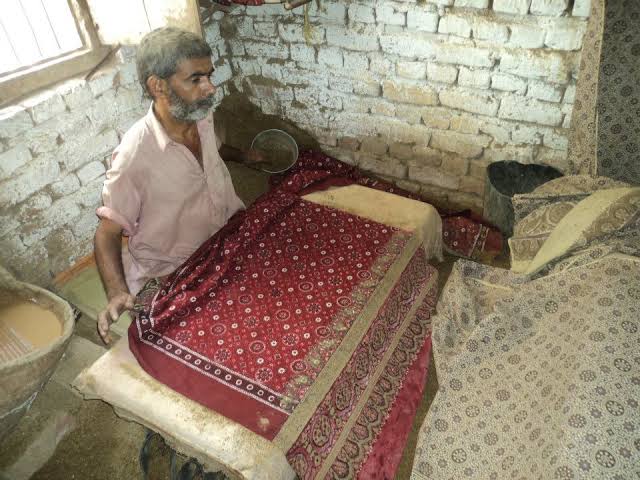 Once printing is complete, the cloth is immersed in blue dye, rinsed in flowing river water, and left to absorb the sun. What emerges is more than fabric—it is a living artifact, carrying centuries of patience, precision, and artistry.
Ajrak in Life and Ritual
For centuries, Ajrak has served as a turban for men, a chaddar for women, and a sacred cloth of peace. In disputes, reconciliatory delegations of young girls once carried the Quran under Ajrak-covered heads to end feuds. Ajrak was also spread over the bodies of the deceased, a tradition that continues today.
Read More: https://thepenpk.com/natures-art-reflection-on-rainbow/
In contemporary times, Ajrak has adapted. Festivals and cultural events have revived demand. It adorns weddings, serves as gifts, and inspires waistcoats, caps, kurtis, and even global fashion collections. For the Sindhi diaspora, Ajrak remains a badge of pride, worn by both elders and youth.
The Struggle for Survival
Yet, behind Ajrak’s beauty lies hardship. Once, Sukkur alone hosted 200 workshops; today, only one survives. In Matiari, artisans earn merely Rs500–1,000 per day. In Sukkur, senior craftsmen make around Rs900, while others earn just Rs650.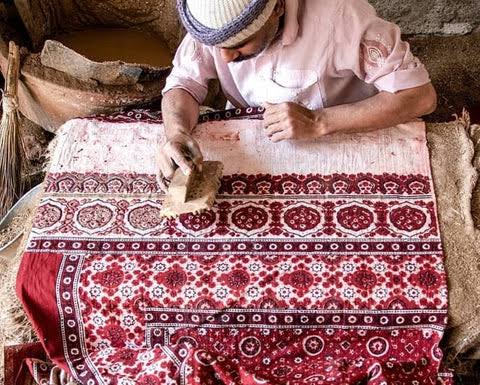 Block printers receive Rs100 per piece, while indigo dye costs nearly Rs4,500 per kilogram, and cloth prices have doubled. Weeks of labor bring meagre pay, driving younger generations away from the craft.
Ajrak now faces two major threats: economic despair for artisans and a flood of cheap, machine-made imitations that undermine authentic handwork. Even as Ajrak patterns grace runways and boutiques abroad, its makers remain invisible, battling poverty in silence.
A Heritage at Risk
Without urgent support through government subsidies, promotion of natural dyes, fair wages, and international recognition, Ajrak risks becoming a relic displayed in museums rather than a tradition alive in homes.
For now, every Ajrak emerging from Hala, Bhit Shah, or Sukkur carries resilience woven into its threads, telling the story of Sindh in indigo and red. Each fold speaks of rivers and looms, of hands that refuse to forget, and of heritage preserved in cloth. But unless this art is protected, the next generation may inherit not the living Ajrak, but only its memory—an echo of Sindh’s soul, fading into history.

Comments are closed.