
Pakistan’s Broken Promises
Asem Mustafa Awan
Islamabad: By all accounts, Pakistan remains a land of staggering contradictions. These three photos, taken barely days apart, tell a story that no donor report, government press release, or social media campaign can bleach clean.
In one, a frail elderly man — perhaps a daily wage worker — lies passed out from heat exhaustion on a wooden donkey cart, his only possession and bed. He is parked beside a multi-million-rupee SUV that stands gleaming, untouched by the grit of the street. The man and the beast that pulls his cart look equally defeated. The vehicle, in sharp contrast, roars privilege and impunity.
In the others, hundreds of women — many with children — sit in the searing heat, spread out like forgotten pebbles around a football ground in Sargodha. One woman has fainted, heat-struck and helpless.
Read More: https://thepenpk.com/when-the-law-becomes-optional/
They wait for their turn to collect the Benazir Income Support Programme (BISP) payout — a programme riddled with leaks, fraud, and middlemen. Investigations over the years (see The News, Dawn, BBC Urdu) have revealed ghost beneficiaries, fake CNICs, political patronage, and local touts demanding “cut money” from each transaction.
What was launched with noble intentions now creaks under the weight of elite capture and chronic mismanagement.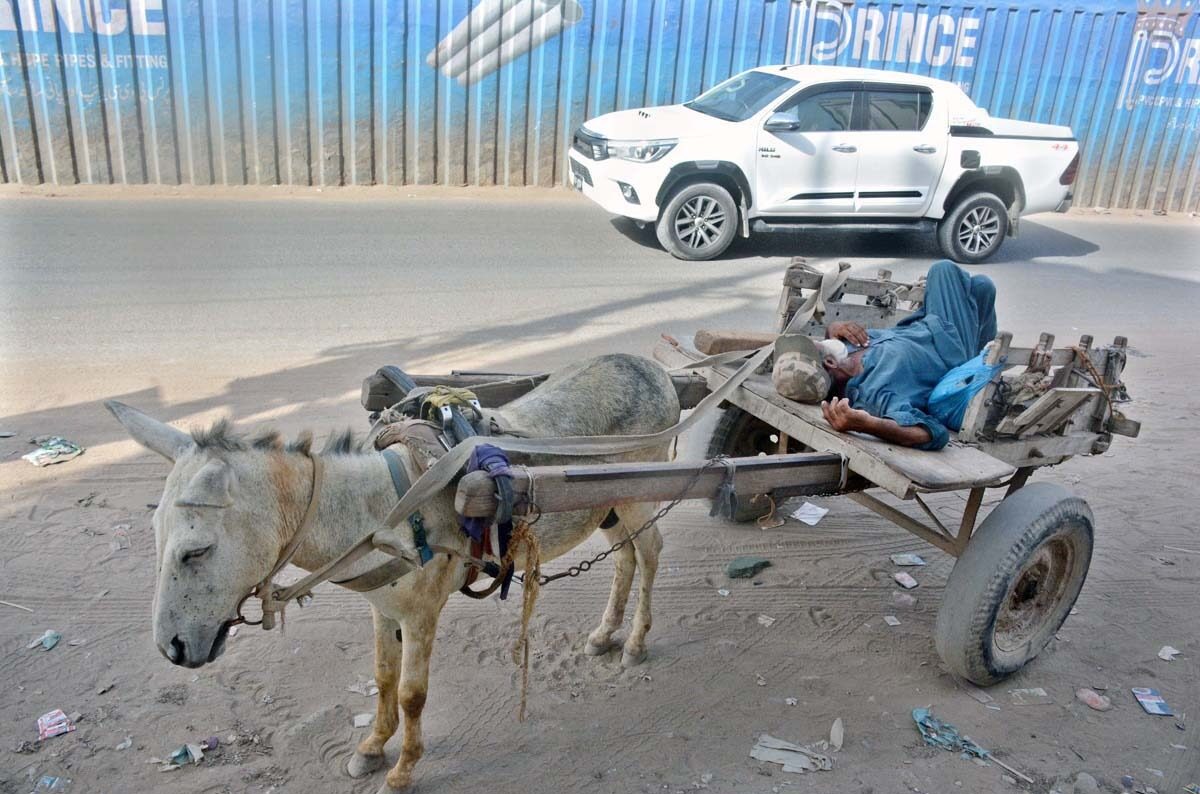 And while the poor queue under the open sun, no tent, no chair, no drinking water — the elite hold air-conditioned summits, tweet condolences for “systemic failures,” and quietly divert billions in foreign aid.
The image of the fainted woman might fetch some dollars from international donors. It will make it to glossy donor reports and NGO flyers — but it won’t reach Parliament’s conscience.
The BISP, the Pakistan Baitul Maal, and other “safety nets” now appear more like charity showcases than instruments of reform.
Read More: https://thepenpk.com/the-price-of-being-female/
The meager Rs 8,500 — meant to tide over a household for months — is now worth less than a week’s groceries. Inflation has crushed the soul out of poverty; it is no longer about hunger, it is now about survival in public humiliation.
And what about the SUVs? The plots? The duty-free imports? The tax amnesties? The foreign properties registered in offshore trusts? All legal, all endorsed — by those who never stood in a flour line.
There’s a reason the donkey isn’t angry. He’s used to it. But Pakistan’s working class and rural poor are increasingly finding their voices — whether in protests, in the voting booth, or in the shame they no longer suppress. That silent anger is louder than any televised talk show.
There is no dignity in this poverty. There is cruelty. And it’s not inevitable — it’s designed.
Photo Credit: APP
The article is the writer’s opinion, it may or may not adhere to the organization’s editorial policy.
Asem Mustafa Awan has extensive reporting experience with leading national and international media organizations. He has also contributed to reference books such as the Alpine Journal and the American Alpine Journal, among other international publications.

Comments are closed.