
Mother Who Sparked Sindh’s Peasant Struggle
Ali Nawaz Rahimoo
Umerkot: It was a matter of joy when the people of Thar, who once traveled in crab-shaped carts, were promised long flights in airplanes.
Yet, amid this joy, another thought arose: while Islamabad’s new airport was not named after Benazir Bhutto, could the Sindh government not have named Thar’s new airport after Mai Bakhtawar instead of Benazir?
And then came another realization—wasn’t this also the name of Benazir’s own daughter? Just as Benazir had chosen to name her daughter Bakhtawar, perhaps if she were alive today, she too would have chosen to dedicate the Thar Airport to Mai Bakhtawar. After all, what was it about this woman that inspired even Benazir Bhutto?
Who Was Mai Bakhtawar?
By birth, she was just an ordinary girl from a poor peasant family. Yet, as she grew older, her spirit rose with the call of justice, and the slogan of Sufi Shah Inayat—“He who sows, shall reap”—became her faith.
Mai Bakhtawar was born into the family of Murad Khan Lashari in village Dodo Khan near Tando Bago. She worked in the fields, and as she entered youth, she was married to Wali Muhammad Lashari, a tenant farmer on the estate of Chaudhry Saadullah in Umerkot. The estate itself was a relic of colonial patronage—gifted to the Chaudhry’s ancestors by the British for their loyalty.
This was a time when the Sindh Hari (Peasants’) Committee, under the leadership of Comrade Haider Bux Jatoi, was actively mobilizing peasants. The demand was simple yet revolutionary: “Half the crop for the peasant who tills the soil, and half for the landlord.”
The Day of Resistance
By June 1947, tensions between Chaudhry Saadullah and the peasants had reached their peak. The crop lay ready in the fields when, on June 22, peasants—including Mai Bakhtawar’s husband—left for Jhuddo, District Mirpurkhas, to attend the Sindh Hari Committee conference.
In their absence, it was left to the women, led by Mai Bakhtawar, to guard the harvested grain. Seizing the opportunity, the landlord arrived with armed men to take away the crop. But instead of fear, he was met with defiance.
Mai Bakhtawar tied her dupatta around her waist, picked up an axe, and stood like a rock before the grain. Other women snatched weapons from the landlord’s men and fought back fiercely.
In his autobiography and jail diary, Comrade Ghulam Muhammad Laghari recorded:
“When the men of the village left to join the gathering, behind them only old men, children, and women remained to protect the harvest.”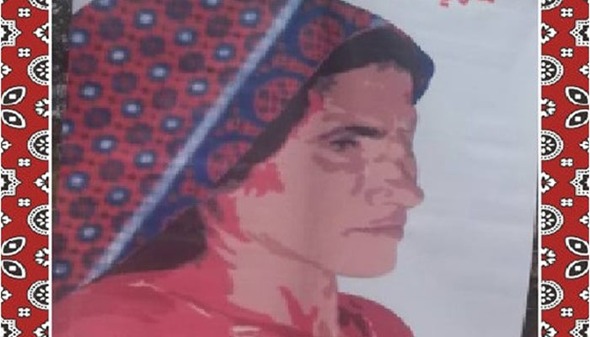 When the landlord’s men began lifting the grain, Mai Bakhtawar advanced and declared:
“Until my son returns, we will not allow you to take away this grain.”
She shoved one of the men so hard that he fell to the ground. Enraged, they opened fire. Both Mai Bakhtawar and her husband were shot. Wounded, she still clung to consciousness, repeating:
“Son, make sure they do not take away the grain.”
She even managed to snatch Chaudhry’s gun, but before she could strike, one of his men attacked her with an axe. Still resisting, she finally fell when Chaudhry’s manager, Khaliq, fired a fatal shot.
On that day, June 22, 1947, Mai Bakhtawar became the first martyr of the peasants’ movement—her blood forever watering the slogan: “He who sows, shall reap.”
Her Legacy
Just as Shah Latif immortalized Sassui, Sohni, Marvi, and other heroines of Sindh, the blood-stained grains of wheat sanctified by Mai Bakhtawar’s sacrifice became a living testament to resistance and justice.
Naming Thar’s airport after Mai Bakhtawar is indeed a commendable tribute. But her spirit will only truly rest when this land ensures that those who sow are the ones who reap.
Until then, Mai Bakhtawar’s story remains both a reminder and a call to action—a legacy of courage, resistance, and the undying demand for justice.

Comments are closed.