
Karoonjhar Hills: A Timeless Hub of Culture and Heritage
Ali Nawaz Rahimoo
Tharparkar: Pakistan’s landscape is a mosaic of contrasts—towering peaks in the north, fertile plains in the center, and sweeping deserts in the south. Each province contributes its own character, traditions, and treasures, enriching the nation’s cultural fabric and shaping its identity. Among these lesser-known treasures lies the Karoonjhar Hills of Sindh, a timeless symbol of resilience, heritage, and natural wonder. A Hidden Jewel
Tucked away in Nagarparkar at the southeastern edge of Tharparkar, the Karoonjhar mountain range rises modestly to 305 meters above sea level. Unlike the snow-clad giants of the Himalayas, Karakoram, or Hindu Kush, Karoonjhar stretches just 19 kilometers in length but what it lacks in size, it makes up for in history, culture, and ecological significance.
Read More: https://thepenpk.com/kp-opens-gandhara-heritage-for-independence-day/
Geologists believe the granite hills are an extension of India’s ancient Aravalli range, dating back to the Archean period—making them among the oldest rock formations in the world. Their reddish hues against the desert backdrop present a striking landscape, one that carries stories of civilizations, faiths, and traditions spanning thousands of years.
Rich in Nature, Rich in Life
Karoonjhar is more than just a rugged outcrop; it is a living ecosystem. Its varied habitats nurture more than 154 rare plant species, 26 mammals, and 400 flowering plants. The hills are also home to endangered animals and vibrant birdlife—most famously, the peacock, which adds a splash of color and majesty to the arid desert.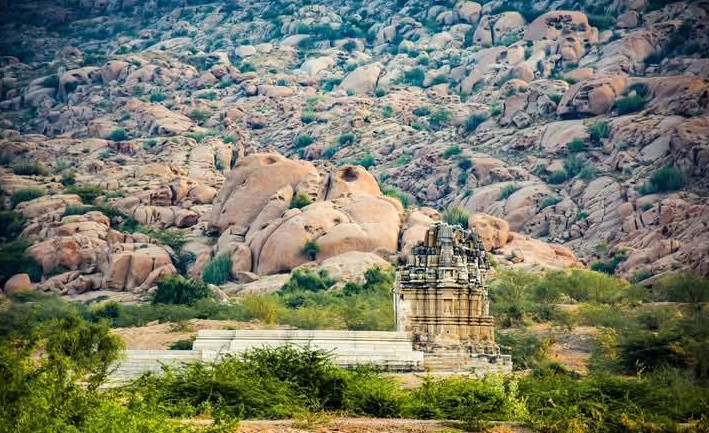 Seasonal rains breathe life into the range, filling temporary streams such as Bhatiani and Gordhro, while perennial springs like Anchleshwar and Sardharo sustain local communities year-round. For the people of Tharparkar, Karoonjhar is not merely a landmark but a lifeline—its resources, medicinal plants, and wildlife interwoven with daily survival and traditional healing practices.
Local healers still use native herbs like khokhro, gun wel, satawari, shiv jati, and gogaroo to treat ailments, keeping alive centuries-old wisdom rooted in the hills.
Echoes of History and Faith
The hills are steeped in legends, folklore, and spirituality. Ancient Jain temples, now weathered with time, still stand as relics of a once-flourishing civilization nourished by the now-vanished Hakaro River. Karoonjhar’s highest peak, Tarvat Jo Thalho—later known as Trott’s Peak—derives its name from a British officer who once held court there. Songs, poetry, and folklore of Thar celebrate Karoonjhar as a guardian of identity, faith, and cultural harmony. For the locals, it embodies more than stone and soil—it is a symbol of endurance, resilience, and belonging.
The Shadow of Exploitation
But this sanctuary faces grave threats. In the late 1980s, granite mining scarred the hills. Explosives tore through habitats, disrupting fragile ecosystems and eroding soil fertility. Though local communities resisted and halted large-scale operations, the lure of mineral wealth remains.
The Geological Survey of Pakistan estimates the hills contain nearly 15.86 billion tonnes of granite, including rare pink and grey varieties. They also hold marble, chromite, gypsum, salt, limestone, and kaolin, the latter widely used in ceramics, cosmetics, and paper industries. Such economic promise tempts investors, yet unchecked exploitation could erase centuries of ecological and cultural heritage in a single generation. A Call for Preservation
The dual identity of Karoonjhar—as both a cradle of history and a reservoir of resources—places it at a crossroads. Will it be mined for short-term gain, or protected as a symbol of Sindh’s heritage and biodiversity?
Environmentalists warn that deforestation, poaching, and mining have already accelerated the decline of rare species once native to the region. In 1996, the International Union for Conservation of Nature (IUCN) listed 25 wildlife species in the area as threatened. That number has grown alarmingly since. Similarly, UNDP and Pakistan’s environment ministry in 2010 classified several native arid-zone plants from Tharparkar as rare.
These warnings underscore the urgent need for sustainable policies—ones that balance economic opportunity with ecological preservation and cultural respect. The Legacy of Karoonjhar
To the uninitiated, Karoonjhar may appear as just another hill range in a distant desert. But for the people of Tharparkar, it is a living chronicle of history, faith, and survival. Its springs quench thirst, its plants heal, its temples whisper of civilizations past, and its peaks echo with folklore and song.
As Pakistan charts its path toward progress, the Karoonjhar Hills stand as a reminder: development must not come at the cost of erasing heritage. Protecting these ancient hills is not only about conserving biodiversity or minerals—it is about safeguarding identity, memory, and belonging for generations to come.

Comments are closed.