
How Threats & Pressure Shape News in Conflict Zones
Sehrish Kanwal
Gilgit: In the remote valleys of Gilgit-Baltistan, journalism is increasingly a battle not just against stories, but against fear. Senior journalist Durdana Sher of Aaj News recalls how a career dedicated to investigative reporting came to an abrupt halt.
“Due to fear of social isolation and continuous pressure from the community, I stopped reporting on suicides after 2019,” he says. For years, Sher investigated the rising suicide rates in the Ghizer district, exposing a crisis that many preferred to ignore. His reports, however, provoked outrage among community leaders, who accused him of “defaming” local families. Online trolling, verbal threats, and social boycotts followed — until Sher finally abandoned the beat.
He is far from alone. Wazir Muzaffar, President of the Skardu Press Club, acknowledges that self-censorship has quietly become the norm. “Many journalists, including myself, avoid certain topics or use vague language to stay safe,” Muzaffar explains.
“Some stories are never told — not because they aren’t important, but because the risks are too high. Sectarian conflicts or issues involving religious personalities are particularly sensitive. Audiences often view our work not through the lens of truth, but through sectarian divisions, which undermines the essence of journalism in conflict zones.”
During Muharram 2025, a sectarian clash erupted near the Karakoram Highway in Chamugarg. Yet local outlets largely glossed over the incident.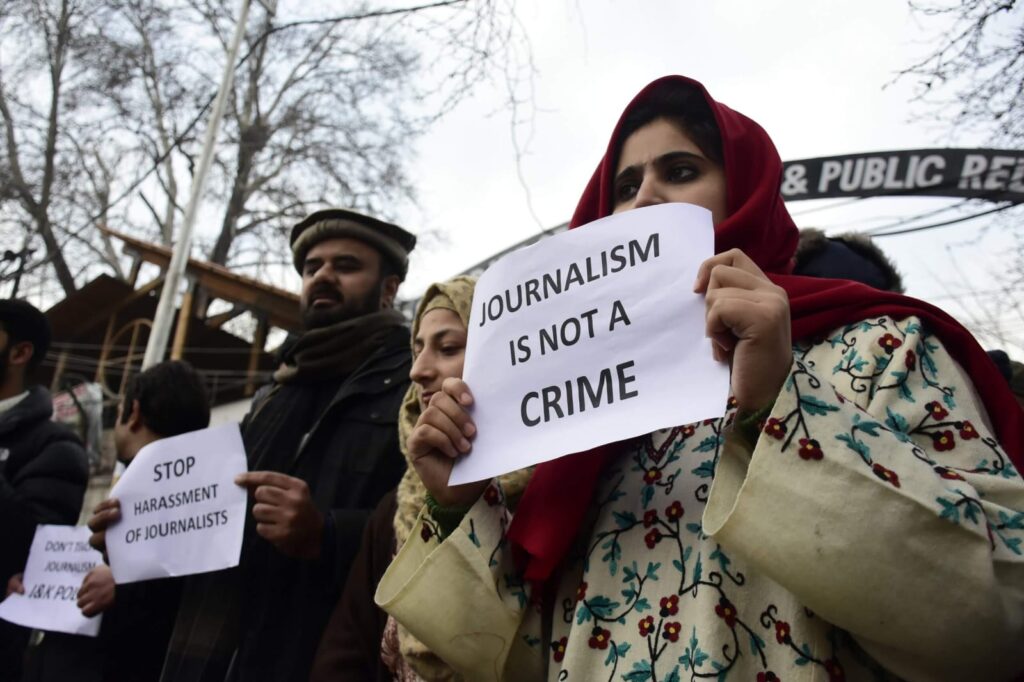 Senior journalist Shabbir Mir admits, “We chose not to report openly on such sensitive issues. We know the consequences — it could provoke further violence or retaliation. Self-censorship, in these cases, feels inevitable. But it comes at a cost: it denies the public their right to information.”
According to Muzaffar, stories most frequently avoided in Skardu include sectarian tensions, land disputes involving influential families, and corruption tied to local officials. Journalists have received threatening calls urging them to drop stories, been summoned by local administrations for “explanations,” and in some cases faced direct physical violence.
Support from press clubs and media organisations is limited; many journalists under pressure aren’t even members of such bodies, leaving them vulnerable.
Read More: https://thepenpk.com/11-pakistani-journalists-face-threats-in-january-fn-report/
“The pressure comes from multiple sources — socio-cultural, legal, economic, state actors, community leaders, and extremist groups,” explains Manzar Shigri, Bureau Chief of Samaa TV. “Journalists often bypass these challenges by avoiding reporting on sensitive issues, despite knowing it’s an injustice to their profession.”
Shigri himself has faced the consequences of covering contentious stories. In April 2024, while reporting on the high-profile child marriage case of Falak Noor, he was attacked in court by a group of lawyers and briefly arrested, later released on bail. In May 2025, he became the subject of a police FIR after tweeting support for journalist Amjad Barcha from Hunza, accused of defaming authorities.
Similarly, in August 2025, senior journalist Muhammad Ali Alam from District Ghanche was assaulted by Pakistan People’s Party (PPP) workers after reporting on the personal use of government vehicles by the provincial finance minister. His social media posts triggered political backlash, physical intimidation, and direct attacks.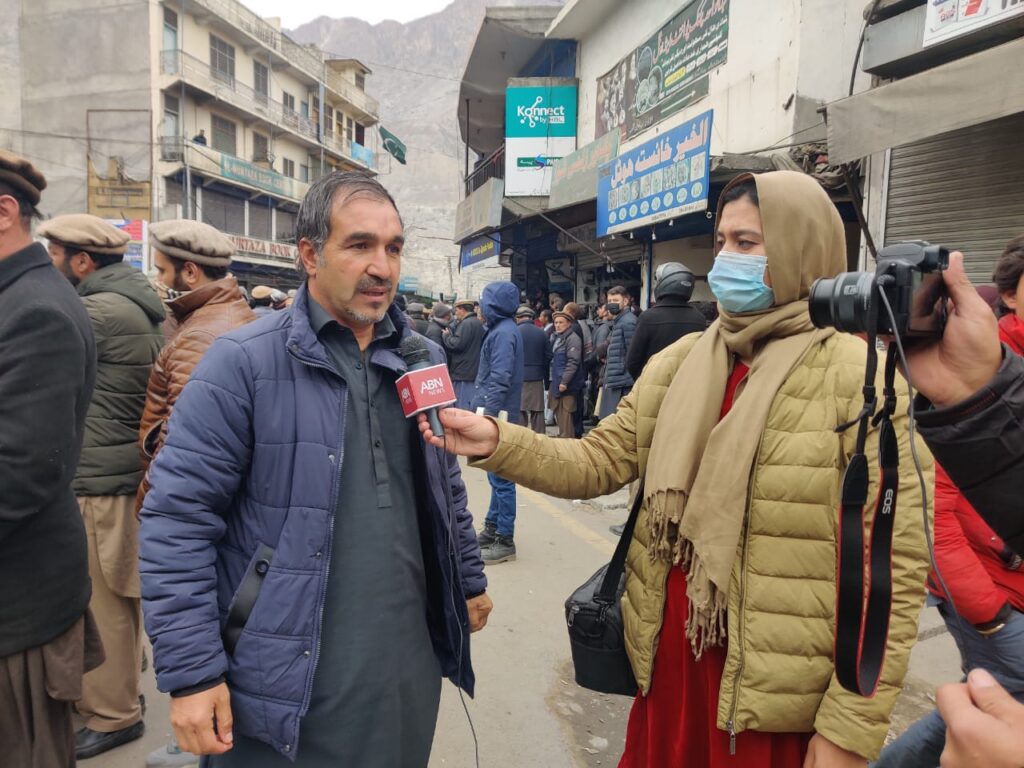 The experiences of Sher, Shigri, Alam, and others reveal a disturbing pattern: journalists in Gilgit-Baltistan are increasingly forced to weigh safety over storytelling. Stories that matter, of sectarian violence, corruption, and social injustice, are left untold.
As the culture of fear deepens, the public is left with gaps in information, while journalists navigate a fragile line between duty and self-preservation.
In a region where information can provoke both outrage and danger, the silent cost of self-censorship is becoming the most dangerous story of all.
For women, the risks are magnified.
Read More: https://thepenpk.com/voices-of-resilience-women-journalists-defy-norms-in-gb/
A 2024 report by Media Matters for Democracy (MMFD) ‘Women Journalists and the Double Bind’ found that online harassment forces many women journalists into preemptive silence. Gendered abuse, sexualized attacks, and trolling push them to avoid controversial topics altogether.
“You have to be extremely conscious and self-censored before appearing on screen. Any misstep, even if unintentional, can lead to character assassination or harassment,” shared Kiran Qasim, President of the Gilgit Union of Journalists.
Digital content creator Punjarash Wali shared: “We can’t speak about taboo topics, religion, bodily autonomy, reproductive rights, without risking violence. Trolls invade our inboxes. One threatened me, saying, ‘You are defaming Gilgit. I will kill you.’”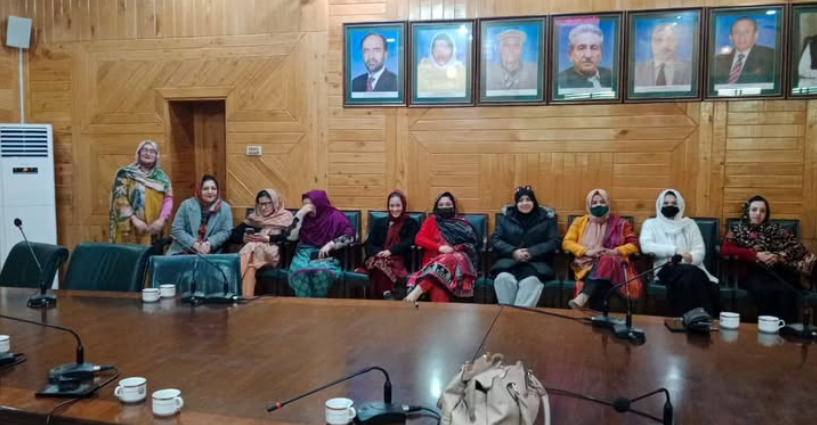 This is not an isolated case. As a result, many women in both traditional and digital media limit themselves to “safe” subjects like lifestyle or culture, while critical or challenging content remains off-limits.
“GB remains a semi-tribal society. FIRs are filed simply for publishing verified reports. Stories that challenge the status quo are softened or buried,” observed Rashid Hussain, media lecturer at Karakoram International University (KIU).
As Israr Uddin Israr, Chairperson of the Human Rights Commission of Pakistan (HRCP) GB chapter, explained, many cases, including honour killings and suicides that often conceal murder, go unreported due to safety risks and fear of isolation.
Read More: https://thepenpk.com/legal-grey-zone-leaves-gbs-journalists-exposed/
Dr Shams ur Rehman, Head of Media and Communication at Karakoram International University, calls today’s GB media landscape “self-censorship by design.” Journalists, he says, verify stories repeatedly, but often decide not to publish at all. “To avoid backlash,” he adds, “many now skip bylines, rely on official press releases, or stick to neutral community stories.”
With mainstream outlets constrained, digital media and social platforms have emerged as alternative spaces for expression. Facebook pages, YouTube channels, and TikTok influencers are amplifying local voices, especially among youth.
Yet, this digital democratisation carries its own dangers. Punjarash and Yaseen Azam, both content creators, have received death threats for allegedly “defaming culture and values.”
Yaseen describes the challenge, “Digital survival in Gilgit-Baltistan is very tough, not just because of weak internet, but because the conservative mindset can turn harmless content into controversy.” Journalists in the mainstream media also face backlash for their social media presence.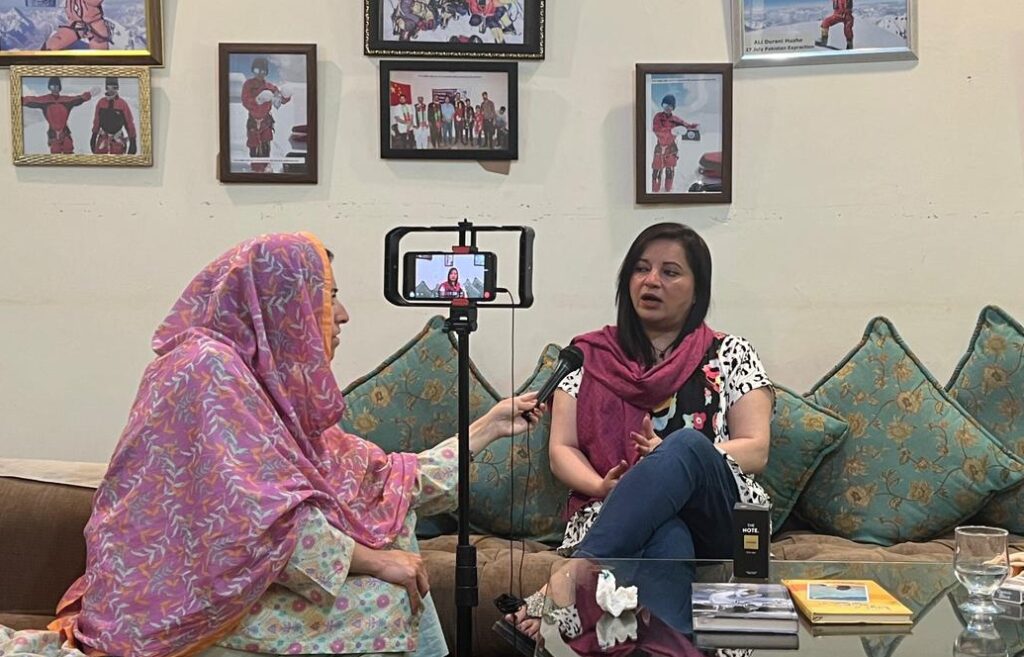 Muhammad Tariq Hussain, former Vice President of the Gilgit Union of Journalists, was attacked during Ramadan 2025 after a video report he made went viral. The report exposed irregularities in the government’s Rs 5,000 Ramadan relief packages distributed via EasyPaisa.
Many citizens were misinformed, and telecom companies had set up SIM distribution stalls in Gari Bagh, where about 200 women and children had gathered. Tariq’s footage prompted the local administration to shut down the stalls, but soon after, he began receiving anonymous threats and calls.
Later, he was attacked in the main market by an employee of one of the involved companies. The dispute was eventually settled through negotiation, yet intimidation persisted. Recently, Tariq received a Rs 100 million legal notice for allegedly defaming a government official and an NGO representative.
“GB needs local safety laws, dedicated training on journalistic rights, and an independent information commission,” says Rashid Hussain, lecturer at the KIU. “Without these, journalists are left to fend for themselves.”
Sehrish Kanwal is a young journalist and documentary filmmaker from Gilgit-Baltistan with a gold medal in media and communication studies from KIU.
