
Heritage in Crisis, Multan’s Blue Pottery at Risk
M Atif Ismail
Multan: Often referred to as “the city of saints”, Multan had a strong heritage of blue pottery and beautiful traditional art of Kashigari, detailed painting on ceramic surfaces.
The art used to be an attraction of every house, however, it is slowly starting to disappear. The reason being high production costs, lack of support, and fewer people with specific skills.
With deep roots in South Punjab, Kashigari traces its origin back to China, passing through Iran before ending up in Multan. It happened during the Arab conquest when Muhammad Bin Qasim brought skilled “Kashi” artisans with him.
“Kashigari” is believed to have been derived from cities of Koshan, Iran, and Kashgar, China. 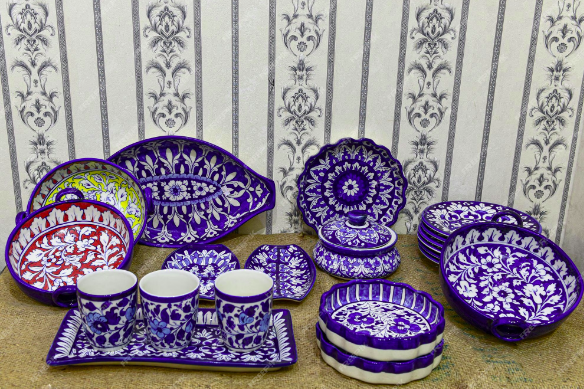 Over time, the beautiful artform became a part of Multan’s cultural identity. It was passed down through generations until now. With the rising costs of preparation material and declining support for the art and artists, many artisans have left it for a better-paying job.
Amidst the decline, a few passionate artisans, in collaboration with institutions, are working hard to keep the art alive.
Manager at The Institute of Blue Pottery Development (IBPD) in Multan, Asad Khan, reported that the institute is training youth and supporting local pottery businesses.
“”We also persistently look for ways to reduce costs, and effectively design pieces that show our culture while meeting modern artistic demands,” he added.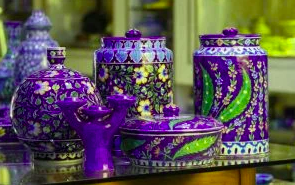 IBPD launched its training programs in 2006. The institute is currently training Kashigari, mould making, casting, and ceramic firing techniques. There is also a great focus on teaching computer graphics and use of AutoCAD, a computer assisted design software, for pottery design.
Around 100 students are currently enrolled at the institution, including many from local universities. IBPD also offers scholarships and internships to help young people build careers in this field.
Read More: https://thepenpk.com/pashto-traditional-music-fading-into-silence/
Deputy Manager Naveed Jameel reported that the institute produces over 200 different items, from dinner and tea sets to decorative planters and showpieces. Raw clay is sourced from Tharparkar, Swat, and Quetta, while maintaining the signature blue tones. These blue tones of the pottery are inspired by the shrines and buildings across Multan.
Master artisan Allah Rakha has spent years in blue pottery. He says that the craft involves many complex steps, from preparing the clay to shaping, firing, decorating, and glazing it. “You need skill, patience, and money, starting a unit requires around five million rupees,” he says.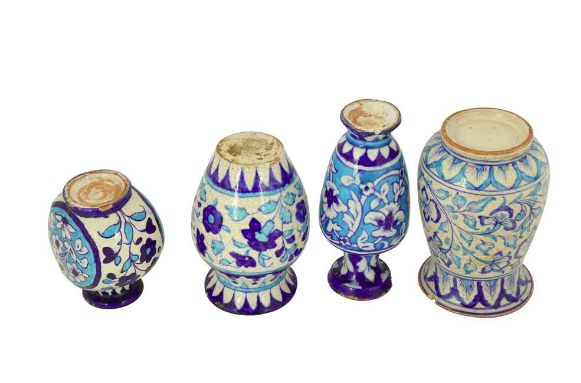 Furthermore, he mentioned high energy costs, expensive raw materials, and a lack of export support are the biggest challenges that restrict the artisans to continue.
“Even though the art is globally admired, it’s getting difficult to survive with it.” He suggested, “if the energy costs are reduced and it is promoted effectively, this art could thrive.”
Allah Rakha also noted that the blue pottery isn’t just an income source, but a symbol of our heritage. The patterns are influenced by Persian and Turkish designs which reflect the Sufi culture of the region. The artform attracts collectors and art lovers from around the world.
Allah Rakha, along with experts from the institute, urges the government and concerned authorities to provide relief in energy bills. They also appealed for marketing support and better export opportunities.
“This art has the potential to bring in foreign exchange and give artisans a decent livelihood,” they mentioned. “It is possible only if serious steps are taken.”

Comments are closed.