
G20 Summit Ends in Johannesburg Amid Deep Global Divisions
News Desk
Johannesburg: The G20 leaders’ summit concluded in Johannesburg on Sunday with member countries adopting a declaration focused on climate change, renewable energy, and debt relief for developing nations—despite the complete absence of the United States.
Hosted for the first time by an African nation, the summit highlighted a rapidly shifting global landscape, with leaders acknowledging both the growing influence of the Global South and the increasing fragmentation of multilateral cooperation.
Consensus Without the US
One of the most significant developments was the adoption of the G20 Leaders’ Declaration on Saturday without any US participation. The document includes language long resisted by the Trump administration, stressing the “seriousness of climate change” and endorsing stronger renewable energy ambitions while addressing mounting debt pressures on developing countries.
South Africa declared the draft “non-negotiable” after envoys finalized it on Friday. Although Argentina withdrew support at the last moment, officials proceeded under the principle of “sufficient consensus,” departing from the G20’s tradition of unanimous agreement.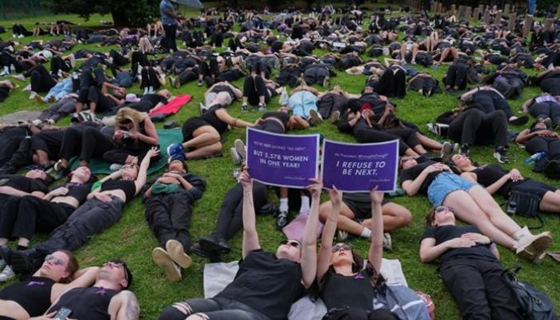 The US boycott loomed large, prompting warnings from several leaders. French President Emmanuel Macron remarked that the G20 “may be coming to the end of a cycle,” while Canadian Prime Minister Mark Carney described the current global moment as a “rupture,” rather than a transition.
Amid growing nationwide anger over gender-based violence, the South African government used the summit platform to declare GBV and femicide a national disaster. The announcement followed massive protests in which thousands of women staged silent demonstrations against rising femicide rates.
Global South Steps Forward
Despite geopolitical tensions, leaders from emerging economies emphasized renewed momentum for multilateral engagement. Brazilian President Luiz Inácio Lula da Silva said multilateralism was “more alive than ever,” underscoring the expanding role of the Global South in shaping global governance.
As the summit ended, President Cyril Ramaphosa symbolically passed the G20 gavel to a mid-level American diplomat, pointedly refusing to hand it to an “empty chair” amid the U.S. absence.
With South Africa’s presidency now concluded, the G20 will next convene under U.S. leadership in 2026. President Donald Trump has announced plans to host world leaders at one of his golf properties in Florida.

Comments are closed.